Colombian Laurina Low-Caffeine Coffee: Flavor & Farming Story
Introduction: Take you to learn about the rare Laurina pointed bourbon coffee beans from Colombia's La Esperanza farm—with only half the caffeine content of ordinary arabica, yet possessing a uniquely elegant flavor. This article provides a detailed introduction to its historical origins, flavor characteristics, processing methods, and market price background. Whether you are a coffee enthusiast or a professional, you can gain new inspiration for bean selection and tasting.
In the world of specialty coffee, there are always some varieties that attract much attention for their rarity and unique flavors, and among them is the pointed bourbon Laurina from Colombia's La Esperanza farm. This farm has always been known for growing rare varieties. In addition to the widely praised washed Geisha, this time they have also brought pointed bourbon coffee beans with a unique flavor and lower caffeine content. Compared with the 1.2% to 1.6% of ordinary arabica varieties, pointed bourbon has a caffeine content of only 0.4% to 0.75%, making it more suitable for consumers who are sensitive to caffeine but unwilling to sacrifice flavor.
The history of pointed bourbon can be traced back to the late 18th century. In 1715, the French transplanted Yemen Mocha coffee to Bourbon Island (now Réunion Island) in the Indian Ocean off the east coast of Africa. By 1810, local coffee farmers accidentally discovered a mutant plant whose tree shape was shorter than the original and whose coffee beans had changed from round and plump to long and pointed. The French named it Bourbon Pointu, meaning "pointed bourbon." This coffee not only had an elegant flavor, but because of its low caffeine content, it was regarded by the famous writer Balzac and others at the time as a delicious choice that could be drunk in larger quantities without affecting sleep.
However, it was not until the 20th century that scientists confirmed that the caffeine content of pointed bourbon coffee was indeed only half that of ordinary arabica beans. Although this characteristic made it uniquely attractive, because of its scarce yield and weak disease resistance, after the mid-20th century islanders gradually abandoned growing it and turned to sugarcane, which had higher economic value. It was not until 1999 that Yoshiaki Kawashima, an expert from Japan's UCC Ueshima Coffee, specially traveled to Bourbon Island to look for this low-caffeine delicious coffee after hearing about it in El Salvador many years earlier. Although that year's search was unsuccessful, in 2001 he received news that islanders had discovered what appeared to be wild pointed bourbon plants. Later, after joint identification by French and Japanese coffee experts, it was confirmed to be exactly the low-caffeine pointed bourbon recorded in 1810, thus beginning the path to reviving this variety.
At the end of 2006, pointed bourbon achieved small-scale production for the first time. Only 700 kilograms of green beans were harvested in the first batch, and after strict screening, only 240 kilograms remained available for market sale. After being roasted by Japan's Ueshima Coffee, these precious beans were once sold at a high price of 7,350 yen per 100 grams, more than four times the price of Blue Mountain coffee at that time. This high price not only reflected its rarity but also confirmed its extraordinary performance in flavor.
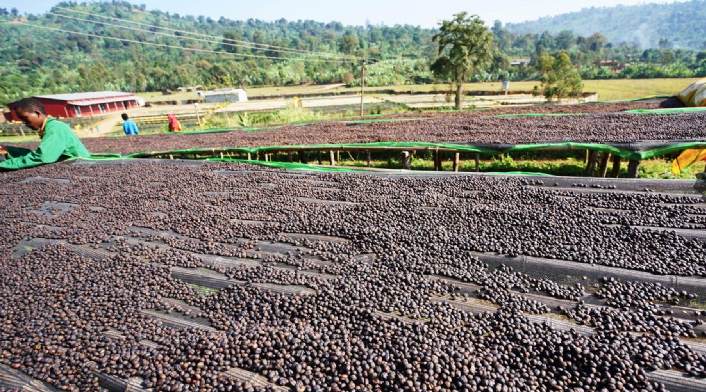
Today, we see a new side of this pointed bourbon at Colombia's La Esperanza farm. La Esperanza uses a unique honey processing method, allowing this coffee to show a rich layering completely different from traditional low-caffeine coffee. Under light roasting, the dry aroma has obvious nutty and oily aromas, accompanied by soft honeyed sweetness and cherry-like sweet-and-sour notes. After brewing, the wet aroma presents nutty tones blended with honey and caramel sweetness, while the acidity shows the fresh sour aroma of red cherries and grapes.
On the palate, the texture is clean and clearly layered, with an excellent oily coating. Fruit flavors such as sweet peach, cherry, and grape interweave, bringing lasting sweetness. After the temperature drops slightly, the juicy quality becomes more obvious, with a fresh pear-like taste. In the aftertaste, nutty aroma blends with a light tea note, leaving a long finish. Whether for pour-over or cupping, this coffee is suitable for medium-fine grinding. It is recommended to keep the water temperature between 90 and 92°C and maintain a steady pouring rhythm to fully release its multi-layered fruit aroma and sweetness.
For coffee lovers who want to try low-caffeine coffee but are unwilling to compromise on mediocre flavor, pointed bourbon is undoubtedly a choice very worth exploring. It not only meets the need to reduce caffeine intake, but also, with its elegant mouthfeel and complex flavors, adds a different depth and pleasure to the daily coffee experience.


