Colombia's Three Specialty Estates: Processing Methods and Flavor Profiles
Introduction: An in-depth visit to three renowned Colombian coffee estates—La Palma y El Túcan, Finca Santuario and its sister estate Immaculate Coffee Farm—analyzing comprehensively, from growing altitude and fermentation techniques to variety characteristics, how they present diverse flavors through unique processing methods. Whether you are a coffee enthusiast or a professional, you can learn about the craftsmanship and science behind specialty coffee.
Among Colombia's many coffee-growing regions, three estates stand out for their distinctive cultivation philosophies and innovative processing techniques: La Palma y El Túcan is known for its pioneering fermentation methods, Finca Santuario has attracted attention for its carefully managed native varieties and traditional sun-dried fermentation, and its sister estate Immaculate Coffee Farm focuses on the sustainable cultivation of rare varieties. These three estates not only demonstrate the diverse potential of Colombian coffee but also offer coffee lovers a rich range of flavor experiences.
La Palma y El Túcan (often translated into Chinese as "Palm and Toucan") was founded in 2011 by three young Colombians: Elisa Madrinan, Felipe Sardi and Carlos Arevalo. The estate is located in the Cundinamarca Department near the capital, Bogotá, an area on the eastern slopes of the Andes with 1,600 hours of annual sunshine, an average temperature of around 21°C and 75% humidity; together with the nourishment of volcanic soil, this provides an ideal environment for coffee cultivation. It is worth noting that this 18-hectare estate was originally farmland that had been abandoned for 15 years; after choosing the site, the team redeveloped it and carefully divided it into 14 plots with unique microclimates. They hand-pick fully ripe, flawless coffee cherries and process them using wet-milling equipment designed specifically for smallholders.
The estate's most representative feature is its diverse fermentation techniques, mainly three types: lactic acid fermentation (anaerobic fermentation), acetic acid fermentation (aerobic fermentation) and mixed/double fermentation. Lactic acid fermentation uses lactic acid bacteria to convert sugars in the mucilage into lactic acid under anaerobic conditions; this process can highlight the coffee's sweetness, chocolate notes, buttery texture and winey aroma while giving it a silky mouthfeel. Acetic acid fermentation uses yeast to first convert sugars into alcohol and then, under aerobic conditions, further produce acetic acid, thereby bringing citrus-like acidity, stone fruit (such as peach and plum) flavors and winey aroma. Mixed fermentation combines the two methods above, making the coffee's flavor more complex and often displaying red berry fruitiness, pronounced winey notes and a long finish. In addition, the estate also runs an Estate & Varietal project, growing rare varieties such as Geisha, SL-28, Sidra and Typica, offering more possibilities for flavor exploration.
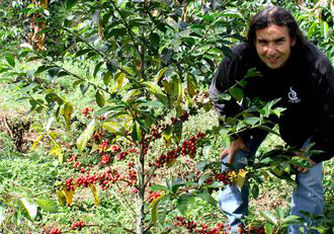
The story of Finca Santuario (meaning "Sanctuary") begins with the estate owner Camilo Merizalde. He was born in the Cauca Valley and was immersed in coffee growing from childhood; he later studied in the United States and worked at a food and beverage company, and ultimately chose to return to his homeland to promote Colombian specialty coffee. The estate is situated in a high-mountain volcanic zone at 1,890–2,010 meters above sea level, with a significant diurnal temperature difference; the coffee trees are mainly planted on slopes to optimize drainage and sunlight. Camilo uses 62 of the family's 135 hectares of farmland for coffee cultivation and innovatively divides the estate into 266 small blocks of only 0.25 hectares each (for example, named after Heliconias and Guayabos), making it easier to precisely observe the effects of different microenvironments on coffee growth. The planting area uses wide row spacing to reduce the risk of disease transmission, and leguminous plants (such as nitrogen-fixing tree species) are extensively planted, which not only provide natural nutrients to the soil but also provide shade, wind protection, moisture retention and soil stabilization.
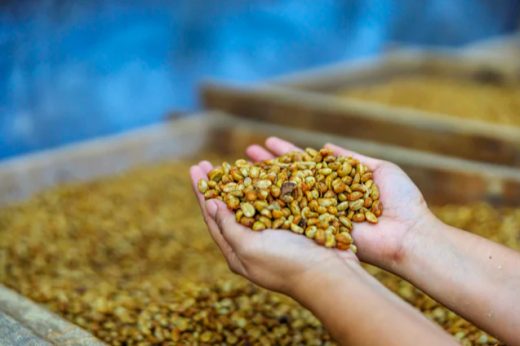
In terms of variety selection, Camilo insists on growing native varieties with excellent flavor despite low yields, such as Typica and Bourbon, while also introducing rare varieties such as Eugenoides, Geisha, Mibirizi, Mocha, Purpurescens and Sudan Rume. During the harvest period, the team selects only fully ripe coffee cherries, uses clean small-scale equipment for two rounds of depulping, and then carries out 35–40 hours of waterless fermentation; this dry fermentation process is believed to steadily enhance the coffee's acidity and sweetness. After fermentation is complete, the coffee beans are sun-dried for 14 days on UV-resistant parabolic beds. Several of the estate's star products, such as Sofia (Red Bourbon), named after his daughter, Heliconias (Red Bourbon), Guayabos (Yellow Typica) and Aquacatillo (Red Typica), have repeatedly received acclaim in international competitions and have become the designated beans of many barista champions.
Immaculate Coffee Farm is a specialty coffee project launched by Camilo in cooperation with his childhood friends Julian, Andres and Santiago Holguin. The Holguin family first entered the coffee field in 2010; their farmland is located in the Pichinde area of the Andes, with fertile soil and abundant sunshine and rainfall, suitable for high-altitude coffee cultivation. The estate system includes three sub-farms: Finca Inmaculada, Finca Monserrat and Las Nubes (Colombian Cloud Estate), with a total area expanded from the initial 5 hectares to 50 hectares today, of which 30 hectares are dedicated to coffee, focusing on rare varieties such as Sudan Rume, Laurina and Maragesha.
The three sub-farms each have their own characteristics: Finca Inmaculada covers 5.12 hectares at 1,670–1,700 meters above sea level and grows Geisha, Sudan Rume, Laurina and Eugenoides, with shade and soil improvement provided by Tephrosia, Guamos, guava trees, Calliandra lehmannii and lemon trees. Finca Monserrat covers 13.98 hectares at 1,700–1,800 meters above sea level and grows Sudan Rume, Laurina, Geisha, Yellow Bourbon, Red Bourbon and Caturra, among others; its shade trees include the aforementioned species as well as orange trees and plantain trees, which have both economic and ecological value. Finca Las Nubes covers 11.21 hectares at 1,750–2,000 meters above sea level; in addition to Sudan Rume, Yellow and Red Bourbon, Geisha and Laurina, it also introduces Eugenoides, while also growing organic orchids and vegetables. Among these, Sudan Rume, a rare variety originating from the Boma Plateau at the border of Sudan and Ethiopia, has strong disease resistance but low yield and small fruit, so it is not widely planted; however, it rose to fame at the 2015 WBC competition when a processing method of 50% natural and 50% carbonic maceration was used—this process, inspired by red wine fermentation, creates an anaerobic environment through carbon dioxide in sealed stainless steel containers, prompting pectin sugars to convert into alcohol and carbon dioxide and giving the coffee more complex aromatic layers.