Colombian Geisha coffee beans: flavor and pour-over guide
Introduction: This article takes an in-depth look at Geisha coffee beans produced in Colombia, the world's third-largest coffee-exporting country, from their origins and growing environment to their flavor characteristics and pour-over brewing plan, offering a comprehensive interpretation of this popular variety's unique appeal. Learn how high-altitude Geisha brings layered citrus and floral notes with bright fruit acidity, and master professional-grade brewing parameters to help you easily brew a balanced, smooth, high-quality cup.
The story of Geisha coffee begins in the high-altitude wild forests of southwestern Ethiopia, where, when first discovered, it was merely one of many disease-resistant coffee varieties awaiting selection. Because its growing site was near Mount Geisha, it was later named Geisha. In 1954 the variety was introduced to Costa Rica and registered as T2722, and was subsequently promoted to several coffee-producing regions in Central and South America during the 1950s and 1960s. However, because of its strict environmental requirements, low yield and relatively fragile plants, Geisha was not valued for a time. It was not until 2003 that the Peterson family of Panama's Hacienda La Esmeralda rediscovered its potential, and after winning the Best of Panama competition in 2004, Geisha truly joined the ranks of top-tier coffees.

Geisha is extremely sensitive to its growing environment, requiring high altitude, fertile and well-drained soil, and preferring cloud-shaded conditions while avoiding direct strong sunlight. During cultivation it needs plenty of shade trees to regulate light and traditional pruning management, otherwise seedling survival rates are extremely low. In addition, Geisha's leaf system is relatively thin, its photosynthetic efficiency is low, and its roots are fragile, absorbing water and nutrients slowly, which makes its ripening cycle longer and its per-unit yield far lower than mainstream varieties such as Caturra, usually only half of the latter. Although high-altitude cultivation lengthens the growing cycle, it also gives Geisha a more complex and layered flavor expression.

The key reason Geisha has become an object of pursuit for coffee lovers worldwide is its highly recognizable flavor. Common flavors include intense floral notes, fresh citrus aromas, and bright berry acidity, often with a juicy, refreshing sensation on the palate. As the temperature changes, the acidity becomes more delicate, the overall layers richer and the finish longer. Especially in Panama, Geisha has developed a unique flavor profile around the Chiriquí volcanic region and has repeatedly taken top honors in international competitions. However, beyond Panama, several producing regions, including Colombia, have also gradually cultivated distinctive Geisha coffees.

As the world's third-largest coffee exporter, Colombia is known for high-quality Arabica beans, and its coffee industry is called one of the country's "four treasures" alongside flowers, gold and emeralds. The country lies in northwestern South America, with terrain dominated by the Andes Mountains, among which mineral-rich volcanic soils are distributed, providing ideal conditions for coffee cultivation. The Huila department, where the Central and Eastern mountain ranges meet, is one of Colombia's important specialty coffee regions, centered on the city of Pitalito, with cultivation at altitudes between 1,750 and 1,950 meters, mainly using intensive smallholder farming. Thanks to its superior natural environment and refined processing, coffee from this region often carries warm notes of nuts and caramel along with soft berry sweetness and acidity, and is well received by the market.


In Colombia's Huila department, the introduction of Geisha coffee dates back to 2007, when the Herrera family of the well-known local Finca La Esperanza brought it in from Panama's Hacienda La Esmeralda. After several initial failures, years of exploration and adaptation finally paid off in 2011, when it won first place in the Specialty Coffee Association of America's Coffee of the Year (COTY) green coffee competition, marking Colombian Geisha's official entry onto the specialty coffee stage. Huila's high altitude and microclimate provide growing conditions close to Geisha's native environment, allowing the variety to show distinct floral notes and layering here as well.

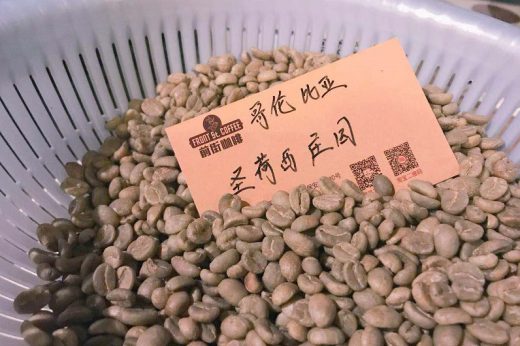
Finca Montblanco is located in the Verada La Tocola mountain area of Pitalito, run by the family of Rodrigo Sanchez Valencia, with a cultivation history dating back to his grandparents' time. The estate covers about 18 hectares on a hilltop site, with a stable water source and complete washing and drying facilities; it mainly uses the washed process and also experiments with various derivative specialty processes. In recent years the estate has also taken up Geisha cultivation, combining it with the local terroir to create a Geisha blend with a distinctive style.

In the Huila region, a coffee called "Hanami Geisha" is widely praised. It is a blend of three varieties—Geisha, Caturra and Catuai—processed with the traditional washed method, perfectly combining Colombia's classic nutty-caramel flavors with Geisha's distinctive fresh fruit aromas. At high temperatures this coffee shows pronounced chamomile and pink peppercorn aromas; at medium temperatures Geisha's citrus and honey notes are gradually released; and at low temperatures a slight almond-like acidity and bitterness emerges. The overall mouthfeel is balanced and smooth, with a sweet aftertaste.

This blend's estate introduced the Geisha variety in 2016; after several years of trials, it saw its first harvest only in 2020 and achieved stable commercial production in 2021. Although it is a blend of several varieties, because all of it comes from the same estate it still meets the definition of a "single-origin coffee bean"—that is, coffee from a single region or estate, not limited to a single variety. The Geisha variant has long, narrow leaves, and its green beans and fruit are relatively slender; it responds keenly to its growing environment and performs especially well in flavor at high altitude, though its yield is low.

The other two common varieties in the blend are Caturra and Catuai. Caturra is a natural mutation of Bourbon with a shorter tree; it inherits Bourbon's weakness to disease but yields more and suits cultivation in Central and South America, such as Colombia, Costa Rica and Nicaragua. Catuai is a man-made hybrid of Caturra and Mundo Novo; it not only inherits Caturra's stress tolerance and short stature but also has enhanced resistance to natural disasters, and its flavor often carries bright acidity, with two common types, red and yellow.

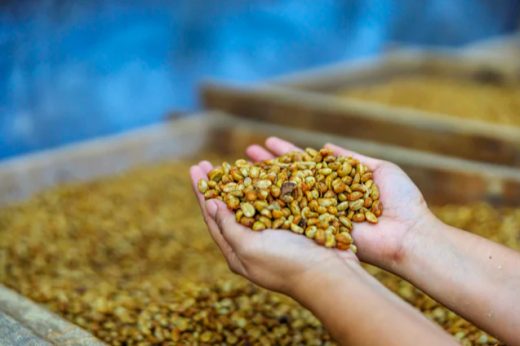
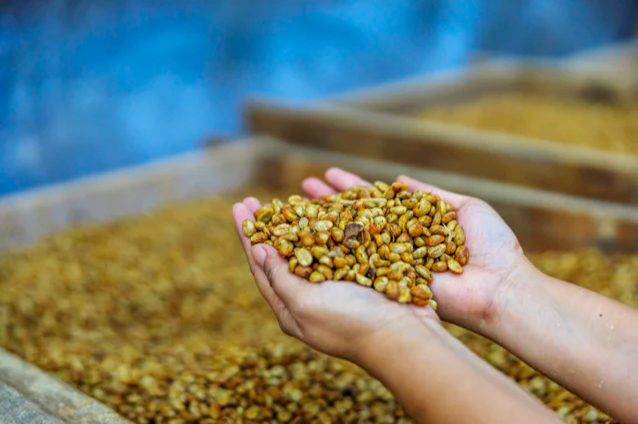
Colombia is a global leader in the washed coffee processing method, and most coffee beans use this traditional process. The specific steps are: first, float the harvested coffee cherries to remove beans that are insufficiently dense, rotten or contain impurities; then use a machine to remove the skin and pulp, and place the naked coffee seeds in a fermentation tank, where 18 to 36 hours of fermentation removes the pectin layer; after fermentation is complete, wash thoroughly, then sun-dry to reduce moisture content to about 11%, and finally store in parchment until export. This processing method fully preserves the coffee's purity and regional character, and is especially suited to delicate varieties like Geisha.

Given the generally high moisture content of green beans in the new crop season, roasters usually extend the dehydration stage to ensure the bean surface and core are heated evenly and to avoid localized overheating that could affect flavor. To highlight the sweetness, acidity and multi-layered aromas of the Geisha blend, a medium-light roast is recommended to retain more of the original flavor characteristics. For brewing, a medium-fine grind is suggested (close to fine granulated sugar, with about 80% passing through a No. 20 sieve), paired with a V60 dripper, a coffee-to-water ratio of 1:15, and a water temperature of 91°C. The specific operation can use three-stage pouring: first, bloom with twice the coffee dose in water (about 30 grams) for 30 seconds to awaken the coffee's activity; then, with a small stream, pour in circles up to 125 grams, continue pouring to 225 grams and stop, and once the dripper has finished dripping, remove it. The total extraction time is about 2 minutes. These parameters help balance the sweet and sour expression and highlight Geisha's floral and fruity notes.

The brewed Colombian Geisha coffee usually presents lively, bright acidity with rich floral and fruit aromas, a moderate body, an overall balanced and smooth character, and a sweet, lasting finish. Note that bean freshness greatly affects flavor; it is recommended to choose beans within 5 days of roasting, and after receiving them to let them rest for 4 to 7 days to reach the optimal flavor window. If you choose to buy ground coffee, although you can skip the resting period, it should be drunk as soon as possible to avoid flavor loss from oxidation. For the best experience, buying whole beans and grinding fresh before brewing is recommended.

In recent years, building on the washed process, Colombia has also gradually promoted special processes such as anaerobic fermentation, as with coffees like Flower Moon Night and Rose Valley; these processes often bring more intense floral, berry and fermentation layers, offering varieties like Geisha a different flavor expression. However, the washed process is still considered the classic way to showcase Colombian coffee's regional character—clean, full-bodied and with mild fruit acidity—and is a reliable choice for understanding Geisha's true flavor.