Costa Rica Canet Estate Raisin Honey Process: Pour-Over Parameters and Flavor Guide

Introduction: This article provides an in-depth analysis of the raisin honey process Yellow Catuai coffee beans from Canet Estate in Costa Rica's Tarrazú region, covering the growing environment, variety characteristics and details of the double-fermentation process to fully explain its production background. It focuses on precise pour-over parameter recommendations, including grind size, water temperature, coffee-to-water ratio and pouring rhythm, along with flavor descriptions to help coffee enthusiasts precisely capture its unique charm of honey sweetness, raisin finish and balanced acidity.
Canet Estate is located in the town of San Marcos in the Tarrazú region, one of the highest coffee-growing areas in the country. The estate is run by the Robles brothers' family and covers only 5 hectares, yet it has its own small wet mill. The family has been cultivating coffee for three generations, focusing on meticulous management of a single plot and especially on picking red cherries at very high ripeness—selecting only fully red, high-quality coffee cherries to ensure the flavor foundation.
The estate's main variety is Yellow Catuai, a hybrid developed by Brazil's Instituto Agronômico de Campinas (a cross of Mundo Novo and Catuai) that naturally has high disease resistance and high-altitude adaptability. Its flavor baseline is known for clean, bright acidity, and Canet Estate further amplifies sweetness and complexity through its distinctive raisin honey process.
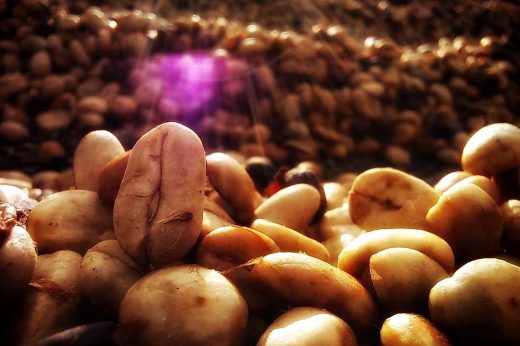
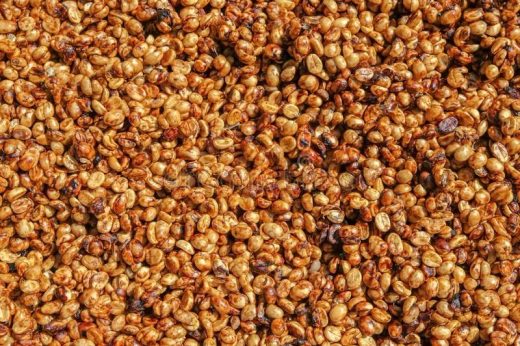
The so-called raisin honey process is essentially an upgraded version of double-fermentation honey processing: the whole coffee cherries are first dried to a raisin-like dehydrated state (requiring a shaded environment to prevent mold), and then the skin is removed for honey-process fermentation. This method can retain more than 90% of the mucilage layer, far higher than the 30%–70% of conventional honey processing, making the fermentation aroma more intense and ultimately producing complex flavors reminiscent of noble rot sweet wine—honey, dried apricot, raisin and peach.
This lot of coffee beans was grown on steep slopes at an altitude of 1,800–1,900 meters, graded SHB (Strictly Hard Bean), meaning high density and strong resistance to extraction. Cupping confirms a flavor profile of pronounced white-wine-like acidity, accompanied by honey sweetness and fermentation layers, with a sweet finish of peach and raisin and excellent overall balance.
Given the characteristics of the raisin honey process, pour-over brewing recommends a medium-fine grind (reference V60 4E setting) with water temperature controlled at 90°C (to avoid high temperatures making the fruit acidity sharp or causing excessive caramelization). A coffee-to-water ratio of 1:15 is recommended, which can fully extract the fermented fruit aromas and sweetness of the front and middle stages while preserving a rich finish. For pouring, staged extraction is recommended: the first stage uses 30% of the water for a 30-second bloom to awaken the coffee; the middle stage pours slowly in circles up to 125% of the water, focusing on extracting the core flavors over 1–2 minutes; the final stage fills to 150% of the total water to enhance overall body.
If using a siphon, note its short extraction characteristics—a slightly higher water temperature of 91°C is recommended, with a slightly coarser grind than pour-over (close to 5D setting), and a coffee-to-water ratio of 1:12 to highlight the front-end sweetness and acidity. In practice, first bring the water to a boil until fish-eye bubbles appear in the upper chamber, then add the grounds, stir in a cross pattern three times, bloom for 38 seconds, remove from heat and wait for the coffee liquid to return; the entire extraction takes about 52 seconds.
Common misconceptions to note: honey-process beans, due to their thick mucilage layer, are prone to over-extraction and a cloying sweetness; adjust by shortening the pouring time or lowering the water temperature. At the same time, the density of high-altitude beans places higher demands on grind uniformity, so using a conical burr grinder and regularly calibrating the burrs is recommended.