Panama Geisha Coffee: Origins and Red, Green, and Blue Label Flavor Grades
Introduction: Geisha coffee's legendary journey from Ethiopia to Panama has made it a benchmark in the specialty coffee world. This article provides an in-depth analysis of Geisha coffee beans' global growing regions, with a focus on the core differences and flavor characteristics of Panama Hacienda La Esmeralda's red, green, and blue labels, and offers professional pour-over parameter recommendations to help you fully master the tasting and brewing techniques of this star variety.
The Geisha coffee legend began in the Gori Gesha forest in southwestern Ethiopia. In 1931 the variety was first introduced to the Kenya Coffee Research Institute, then passed through Uganda, Tanzania, and Costa Rica, finally arriving in Panama around 1960.
What truly brought Geisha to fame was Panama Hacienda La Esmeralda selecting it from among many varieties in 2003. In 2004, this coffee won the BOP competition, defeating traditional varieties such as Bourbon and Caturra, establishing its place in specialty coffee, and in the following three years it consecutively won first prize in the Panama national treasure bean cupping competition.

Although Geisha originated in Ethiopia, it is now grown in many regions worldwide, each with distinctive flavors. Taking Panama, Costa Rica, and Ethiopia as examples, Geisha coffee from these three major regions shows significant differences in genetics and flavor expression.
Ethiopia, as the birthplace of Geisha, rediscovered wild Geisha varieties in the Gori Gesha forest in 2009. The Gesha Village Coffee Estate established there cultivates three main lines: Gori Gesha (GG) preserves the genetic diversity of the original forest; Illubabor Forest 1974 (IF) is a disease-resistant variety discovered in the Illubabor forest in 1974; and Gesha 1931 (G31), although closest in appearance and flavor to Panama Geisha, actually has low genetic similarity. It is worth noting that Ethiopian Geisha has no direct genetic connection to Panama Geisha.

Costa Rica, an important coffee-producing country in Central America, grows Geisha mainly in microclimates with significant day-night temperature differences. At the well-known La Candelilla Estate, for example, morning temperatures can drop to 9°C, rise to 35°C in the afternoon, and fall back to 9°C in the evening; this dramatic temperature variation helps the coffee fruit accumulate richer flavor compounds, creating a unique regional character.

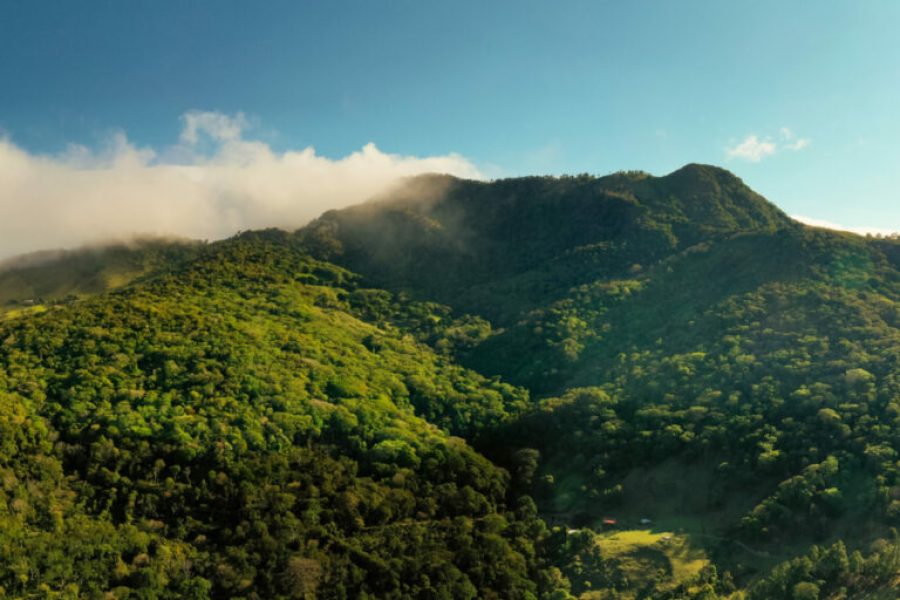
Panama Geisha's status as a global specialty coffee benchmark is largely due to Hacienda La Esmeralda's outstanding contribution. The estate grows Geisha in four areas: Jaramillo, Cannas Verdes, El Velo, and Palmira; the first three are at higher elevations and are the main source of top-tier Geisha.

Hacienda La Esmeralda's Geisha grading system is based mainly on elevation and cupping performance, divided into three signature grades:
Top Red Label (auction lot): Geisha beans grown at 1,600–1,800 meters with a cupping score above 90, limited to the two top areas of Jaramillo and Cannas Verdes. These beans are sold through the estate's separate auction; although non-auction Red Label lots also exist on the market (also from auction plots but not entered in the auction), the quality standard is identical, with only the price differing.

Second-tier Green Label (reserve lot): micro-lot blends from 1,600–1,800 meters, including quality Geisha from areas such as Jaramillo and Cannas Verdes, but not entered in the separate auction. Green Label typically shows classic Geisha flavors—a perfect balance of floral and fruity notes, citrus acidity, and a full body. It comes in washed and natural versions: the washed version highlights freshness, while the natural version adds fuller layers of body.

Standard Blue Label (selection lot): grown at 1,400–1,500 meters, blending Geisha beans from the three areas of Jaramillo, Cannas Verdes, and El Velo. Traditionally only washed processing was offered; since 2020 a natural option has been added. Washed Blue Label shows bright acidity and delicate floral notes, while the natural version brings a richer juicy feel and softer acidity.

For brewing Geisha coffee beans, it is recommended to use fresh beans within 5 days of roasting, when flavor is at its best. Professional roasters usually ensure the coffee is in its optimal 4–7 day resting period when it reaches you. A Hario V60 dripper is recommended, with these parameters: water temperature 90°C, 15 grams of coffee, 1:15 coffee-to-water ratio, grind size equivalent to 80% passing a Chinese standard No. 20 sieve (EK43S#10). Use a three-stage pour: bloom with 30 grams of water for 30 seconds, then pour in stages with a slow stream until 125 grams, and when the water level is about to expose the coffee bed, continue pouring to 225 grams, with total extraction time controlled at about 2 minutes.

Note that although Gesha Village Coffee in Ethiopia uses the name "Geisha," it has no direct genetic connection to Panama Geisha. The naming comes from a shared geographic origin—Ethiopia's Gori Gesha forest—rather than from a genetic relationship between varieties.

By understanding these key points, coffee lovers can more accurately choose the Geisha coffee that suits their taste preferences and master professional tasting and brewing methods to fully experience the unique appeal of this legendary variety.