Guatemala Coffee Beans: Washed Processing and Regional Terroir Guide

Introduction: Gain an in-depth understanding of Guatemalan specialty coffee, from its cultivation history to the core techniques of washed processing, and explore the distinctive terroir of well-known regions such as Lake Atitlán and Huehuetenango. This article explains in detail the plump beans and balanced flavor of Strictly Hard Bean coffee, analyzes how the washed processing steps enhance coffee's purity, and reveals the key parameters that affect quality, helping you master the practical essentials for selecting and brewing this classic Central American bean.
Guatemala's Strictly Hard Bean coffees are known for their plump beans and balanced flavor, and the coffee made from them is rich, full-bodied, and layered. This Central American country was once hailed as one of the world's top coffee origins. Although it experienced a brief fluctuation in quality, it is now gradually restoring its international reputation through continuous improvement of cultivation and processing techniques.
The history of coffee cultivation can be traced back to 1750, when Jesuit missionaries first introduced coffee trees to Guatemala. By the end of the 19th century, German immigrants had driven the large-scale development of the local coffee industry. Today, the southern region of the country, with the sloping terrain of the Sierra Madre volcanoes, has become the core producing area for high-quality coffee—the high-altitude environment gives the beans bright acidity and complex aromas, among which spicy mixed flavor profiles are especially favored by professional judges.
Guatemala's Strictly Hard Bean coffee is the country's star product, known not only for its plump, round beans but also for its stable balance of acidity and sweetness. It is worth noting that the region's distinctive giant coffee bean variety has also won it market attention. Although current yields of about 700 kg per hectare are lower than those of El Salvador (900 kg) and Costa Rica (1,700 kg), some top lots still export at US$3–4 per cup to high-end markets such as Japan thanks to their distinctive flavor characteristics.
Domestic production is mainly supported by smallholder groups of Mayan descent. Although the Bourbon variety coffee trees they grow have lower yields than modern dwarf varieties, they produce high-quality beans that are smaller but more concentrated in flavor. A US-funded "project" invested US$2.5 million to help these producers establish small specialty coffee farms and promote a full quality-control system from cultivation to initial processing.
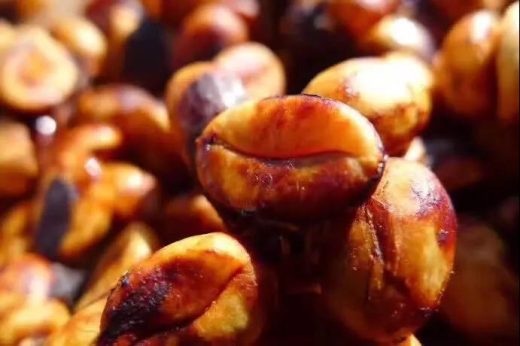
The washed processing method is the key technique by which Guatemalan coffee maintains its pure flavor: after picking, the coffee cherries must be pulped within 24 hours, and then the mucilage-covered seeds are placed in tanks to ferment for 18–36 hours (with duration adjusted according to temperature), using microbial action to break down the pectin layer. After fermentation is complete, the beans are thoroughly rinsed with clean water and then dried for 10–14 days on raised drying beds or in mechanical dryers, with the final moisture content controlled at around 11%. This process effectively highlights the signature citrus acidity and chocolate finish of Guatemalan coffee.
The Antigua region, as a historically famous producing area, is home to the Carmona estate, whose El Pulcal coffee has a rich smoky flavor because the volcanic soil is rich in nitrogen. Volcanic activity in the area on a 30-year cycle continuously replenishes soil nutrients, and together with abundant annual rainfall of 2,000 mm and stable sunshine, it creates a layered mouthfeel structure. Other important producing areas include San Marcos, Oriente-Cobán, and the Raman plantation in Zacapa; microclimate differences among these regions give the coffee different characteristics ranging from bright fruity notes to mellow nutty tones.
The establishment of the Guatemalan Specialty Coffee Association marks official attention to specialization. By standardizing cultivation altitude (usually requiring more than 1,500 meters) and promoting techniques such as shade growing, it continues to increase global market recognition of Guatemalan coffee. For coffee lovers, understanding these regional terroirs and processing details will help them precisely match their personal taste preferences when making purchases.