Guatemalan Washed Coffee Beans: Flavor Profile and Processing Guide
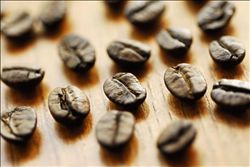
Introduction: Guatemala's high-altitude volcanic soils produce distinctive specialty coffee beans, with washed processing playing a particularly key role. This article takes a deep look at Guatemalan coffee beans, from growing history to the core techniques of washed processing, reveals how the dense beans and balanced acidity come about, and offers practical reference on regional terroir and processing details to help you understand this classic bean more deeply.
Guatemalan coffee beans are known for their full, plump beans and balanced flavor, and their washed processing creates a pure, rich coffee foundation. This Central American country was once hailed as one of the world's top coffee origins; although it has seen quality fluctuations, it is gradually restoring its reputation through process improvements.
Coffee cultivation here dates back to 1750, when Jesuit missionaries first introduced coffee trees. In the late 19th century, German immigrants drove the local coffee industry toward larger scale, and today the main growing regions are concentrated on the volcanic slopes of the southern Sierra Madre. The high-altitude environment gives the coffee bright acidity and rich spicy notes, and professional cuppers are especially fond of these complex flavors.
Terroir characteristics of core regions: The Antigua region lies in a zone of frequent volcanic activity, where eruptions roughly every 30 years replenish the soil with natural nitrogen; combined with ample year-round sunshine and rainfall, this produces classic beans such as El Pulcal from Finca Carmona, with prominent tobacco notes. Lake Atitlán and Huehuetenango are also high-quality regions, and the giant coffee beans produced in the latter have become a signature product of Guatemala.
Key steps in washed processing: After picking ripe cherries, depulping must be completed within 24 hours; the beans with mucilage still attached are then placed in fermentation tanks for 18-36 hours (adjusting the duration according to temperature), during which microorganisms break down the pectin layer. After fermentation, the beans are thoroughly rinsed with running clean water, and finally the parchment beans are spread on raised drying beds or African shade racks and turned 3-4 times a day to ensure even drying to a moisture content of 11%-12%.
It is worth noting that the country's coffee production capacity has declined in recent years, with current yields of about 700 kg per hectare, below El Salvador's 900 kg and Costa Rica's 1,700 kg. However, through a US-funded "project," the small high-quality plantation model is being promoted locally, encouraging farmers to process their own coffee to add value—the traditional intermediary purchasing model often leads to quality loss.
The national coffee committee (ANACAFE) coordinates industry standards, while private enterprises lead export trade. Top lots are mostly shipped to the Japanese market, where retail prices can reach US$3-4 per cup. Smallholder farmers of Mayan descent are the main producers; the Bourbon varieties they grow, though lower-yielding (compared with newer dwarf varieties), win over connoisseurs with their fuller body.
The involvement of the Specialty Coffee Association marks official recognition of the focus on quality, and micro-regions such as Antigua and San Marcos continue to refine washed-processing parameters, with fine-tuned control from fermentation duration to drying temperature. These practices not only carry on the traditional strengths of Guatemalan coffee but also offer global consumers a classic flavor choice that combines complexity and cleanliness.


