Espresso Tamping: The Science of Balancing Force and Evenness
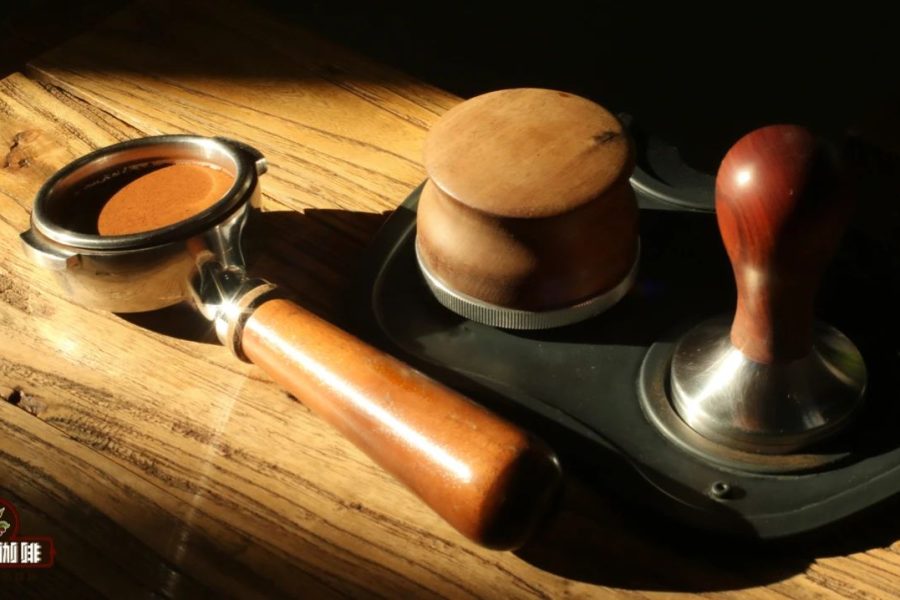
Introduction: Tamping is a key step in making espresso and directly affects the evenness of extraction and the final flavor. Through comparative experiments, this article reveals the actual impact of tamping force at different grind settings, teaches you the standard parameters of a 20-gram dose and 40-milliliter yield, and shows you how to adjust the reasonable pressure range of 1.5–3 kilograms according to grind coarseness, avoiding the channeling trap.

Watching the fluid wrist motion of a barista tamping, you will notice that every professional has a unique technique. Although ensuring an absolutely level puck surface is industry consensus—an uneven surface causes hot water to pass preferentially through loose areas and form channeling—baristas are divided into two camps on the question of “how much pressure should be used to compact.”
Conservative baristas advocate a gentle approach: simply rotate and press the tamper with light pressure. They believe the espresso machine’s 9-bar extraction pressure far exceeds the effect of manual compaction, and that excessive pressure may instead damage the structure of the coffee bed. The aggressive camp, by contrast, presses down with nearly their whole body’s strength, arm muscles tensed as if they were going to press the puck into the tabletop—these baristas firmly believe that greater initial pressure allows more precise control of water flow speed.


So what tamping force is actually scientific? We designed two sets of controlled experiments: using a Galileo Q18 grinder, we ground coffee at 1.5 setting (fine) and 2.5 setting (coarse), fixed the dose at 20 grams, and targeted a 40-milliliter yield. Using an electronic scale to monitor (3-kilogram limit; for limit tests we borrowed a 9-kilogram body scale), we compared changes in extraction time under different pressures.

The fine-grind group showed a significant difference: when using the conventional 1.5-kilogram pressure, reaching 40 milliliters of extraction took 30 seconds; after switching to full force (about 9 kilograms), the same liquid volume required 33 seconds—repeated verification gave consistent results. This shows that fine coffee particles need greater pressure to form a sufficiently dense puck structure, and 1.5 kilograms is clearly insufficient; when raised to about 2 kilograms, extraction time matches the full-force version.

The comparison results for the coarse-grind group were unexpected: whether using the conventional 1.5-kilogram pressure or full-force pressing, extraction time remained stable at around 20 seconds. This is because the gaps between coarser coffee particles are larger, and 1.5 kilograms is already enough to ensure puck density; additional force does not significantly change extraction efficiency.

The experimental conclusions reveal the core rule: coffee particle density determines the optimal compaction strategy. For fine grinding (such as 1.5 setting), apply 2–3 kilograms to ensure tiny particles are tightly packed; for coarse grinding (such as 2.5 setting), 1.5–2 kilograms is sufficient. During operation, pay attention to even distribution; it is recommended to first lightly tap the edge of the portafilter with the tamper to level the surface, then press down slowly in a circular motion, keeping the force vertical to avoid local over-compaction.