Colombian Coffee Beans: Flavor, Arabica Varieties and Key Regions

Introduction: Want to understand why Colombian coffee is so highly regarded? This article takes a deep look at the country's distinctive coffee bean flavor characteristics, introduces the traits of mainstream Arabica varieties in detail, and explains the distribution of the core growing regions for quality small-bean coffee. From growing environment to varietal advantages, from flavor expression to cultivation details, it helps you fully grasp the key knowledge about Colombian coffee and provides a professional reference for selecting and tasting.
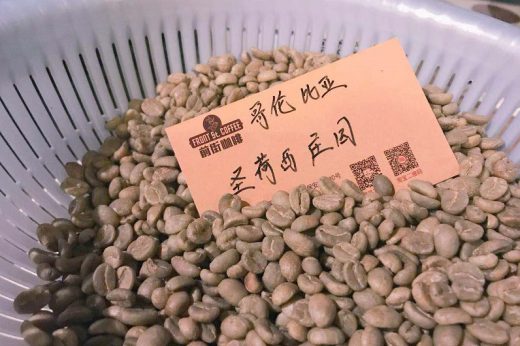
In the specialty coffee world, Colombian coffee (Cafe de Colombia) is one of the very few single-origin coffees named directly after a country, and its quality enjoys a very high reputation worldwide. Compared with other major coffee-producing countries, Colombia not only emphasizes the natural advantages of its coffee beans but also, through continuous product development and production optimization, achieves a balanced and harmonious flavor expression. Roasted Colombian coffee beans often give off a mild, sweet aroma, with soft acidity and a natural sweetness, moderate bitterness that is not overly strong, and an overall intensity that is just right, which is why they are often chosen as a base bean for high-end coffee blends.
Its flavor characteristics are especially distinct—it is neither as full-bodied and intense as Brazilian coffee nor as brightly acidic as some African coffees, but instead presents a low-key, elegant, delicate sweetness. This unique flavor balance makes it a popular choice among pour-over coffee enthusiasts, especially those who prefer mild complexity.
The outstanding quality of Colombian coffee stems first from its exceptional natural environment. The country has 1.07 million hectares of coffee-growing area, with about 302,000 coffee farms, and roughly 30%–40% of the rural population depends directly on the coffee industry for its livelihood. It is worth noting that local farms are generally small, with a single household's growing area usually only about 2 hectares, and more than 80% of coffee farms maintain a moderate density of 3,000–5,000 coffee trees. This agricultural model, dominated by "small farms," provides the foundation for fine-grained cultivation management.
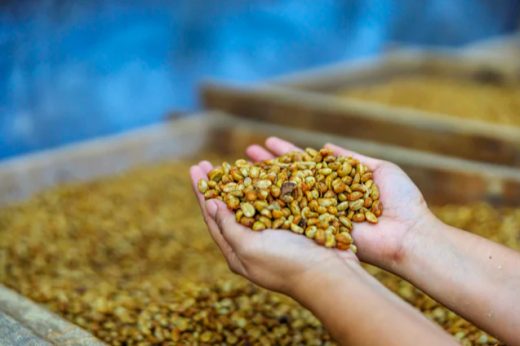
Local growers use a series of traditional methods to improve quality: planting tall trees or banana trees around the coffee trees, which both shade the young coffee trees and help regulate the microclimate; and building temporary shade structures to protect coffee seedlings, ensuring they get suitable cool, moist conditions in their early growth. In addition, the high humidity and small temperature fluctuations typical of coffee-growing areas slow the ripening of the coffee fruit, a process that promotes the full accumulation of caffeine and aromatic substances and ultimately forms high-quality coffee beans with full flavor and a fine mouthfeel.
From a varietal perspective, Colombian coffee is dominated by Arabica (small-bean coffee), in sharp contrast to the Robusta (large-bean coffee) common around the world—the latter is mostly found in its native Africa (such as Madagascar and elsewhere). Within Arabica there are several varieties; Brazil, as the world's largest coffee producer, has beans that tend to be larger, highly adaptable to the environment, and higher-yielding; while the mild Arabica coffee produced in Colombia, thanks to its special geographical latitude (highland areas near the equator) and three-dimensional climate conditions (marked day-night temperature differences), gives rise to quality varieties with better acid-bitter balance and richer aroma layers.
For coffee lovers, understanding this background not only helps with better tasting of Colombian coffee's flavor characteristics (such as common notes of citrus and a nutty finish) but also allows more accurate judgment of how the growing region and processing method affect the final taste when buying. If you plan to try pour-over, it is recommended to use medium-light roasted Colombian beans, with 90–93°C water and a 1:15 coffee-to-water ratio, pouring slowly in the center to better highlight its delicate sweetness and clean aftertaste.