Costa Rica Red Honey Process: Dawn Estate's 3 Main Coffee Varieties
Introduction: Want to know why Costa Rican coffee stands out for its sweetness? This article takes a deep look at the red honey process at Dawn Estate in the Tarrazú region and details the characteristics of the estate's three main varieties: Catuai, Ethíopia 47 and Geisha. From the ecological growing environment at 1,750 meters to the key parameters of honey processing, it walks you through every detail that shapes flavor.
In coffee tasting, sweetness is one of the key indicators of a coffee's flavor height. When it comes to regions known for sweet-toned profiles, Costa Rica draws attention for its diverse honey processing techniques. Among them, Dawn Estate in the Tarrazú region produces beans with layered flavors thanks to its distinctive red honey process.

Dawn Estate is located in Santa María de Dota, just 40 kilometers from the capital, San José. The estate sits on a highland at 1,750 meters above sea level and covers about 7 hectares in total, of which 6 hectares are planted with coffee, half a hectare is set aside as an ecological reserve, and the rest is used for processing and drying coffee cherries. The adjoining Los Santos Biological Corridor extends to the national forest reserve and encompasses three rainforest climates and 14 types of natural ecosystems; adjacent to the Talamanca Mountains, it is rich in ecological resources.

The area lies in the Los Santos Valley and, influenced by warm, humid Pacific air currents, receives an average annual rainfall of 2,400 millimeters, with an average temperature stable at 19°C; the microclimate at 1,500–2,100 meters provides ideal conditions for coffee tree growth. Many rare animals can often be seen around the estate, and the natural environment is excellent.

Dawn Estate was founded by Arturo Bonilla and Xinia Martínez after they purchased former pasture land in 1990, and it is now run jointly by the family. They divided the growing area into multiple micro-lot parcels and matched each with a dedicated processing method according to its terroir, striving to improve coffee quality and traceability. In 2015, the estate built an ecological micro-processing station called "Dawn," whose logo combines sunrise, coffee and natural elements to embody the philosophy of sustainable growing.

Founder Don Arturo Bonilla has focused on specialty coffee and environmentally friendly agriculture from the very start. It is said that in the first year of clearing the land, an endangered green frog jumped onto his back, an episode that strengthened his determination to protect the ecosystem. At present, the estate's main varieties include Catuai, Ethíopia 47 and Geisha, and several experimental varieties are also being cultivated. This article focuses on the Catuai lot processed as red honey.

Catuai is a common variety in Central America, bred in 1972 by the Agronomic Institute of Campinas (IAC) in São Paulo State, Brazil, through the artificial cross of yellow Caturra with Mundo Novo (a natural hybrid of Bourbon and Typica), originally numbered H-2077. It inherits Caturra's sun tolerance and bright acidity while offering Mundo Novo's high yield, disease resistance and strong cup quality, and it also withstands heavy rain, strong wind and other hazards. Its short stature (about half the height of conventional varieties) allows a planting density twice that of other varieties, making it easier to manage.

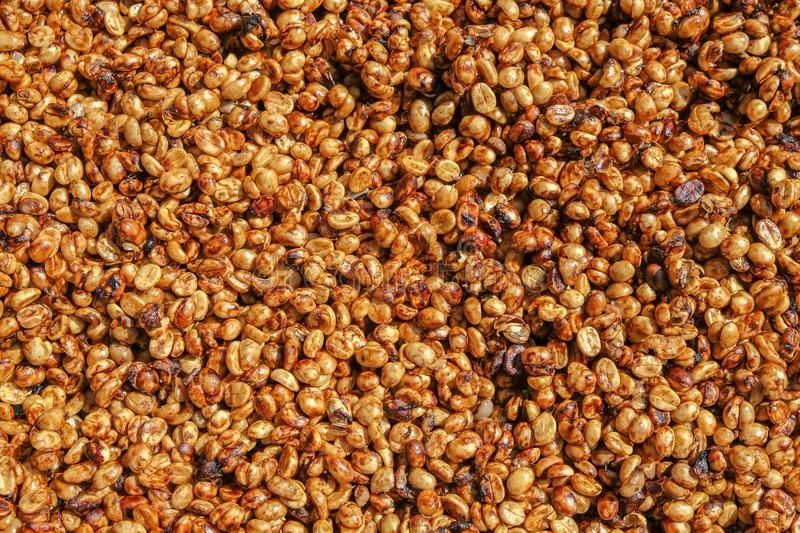
Red honey is a classic type of honey processing, whose core is retaining 50%–80% of the mucilage layer on the coffee cherry for sun drying. The mucilage is very high in water content and sugar and clings tightly to the seed, so the proportion retained directly affects the color of the dried bean and the direction of its flavor. Compared with black honey (nearly 100% mucilage retained) and yellow honey (about 20%–30% retained), red honey falls between the two, and drying usually takes about 12 days.

In practice, the thicker mucilage layer of red honey requires more frequent turning to ensure even drying (several times a day), whereas black honey, which dries slowly (under low sun intensity), may need turning only once a day, and yellow honey must be turned hourly to prevent mold. The Catuai red honey green beans are lighter in color than black honey before roasting and carry a slight fermented fruit aroma; after roasting, cupping typically shows rich fruit aromas and a clean finish, with prominent sweetness balanced by bright acidity and a light vinous quality.

To highlight the honeyed notes and caramelized compounds of this Catuai red honey bean, a medium-light roast is recommended. When brewing, note the following parameters: medium-fine grind (similar to fine sugar), water temperature 90–92°C, and a coffee-to-water ratio of 1:15–1:16. For staged pouring, first bloom for 30 seconds (about 30 grams of water), then pour in circles up to the target water weight, keeping total extraction time between 2:10 and 2:30. These parameters help balance flavors such as sweet orange, cream and grapefruit while avoiding over-extraction and bitterness.

In actual tasting, this Dawn Estate red honey Catuai has a pronounced dry aroma; once ground, it releases orange, candied fruit and creamy sweetness, accompanied by pink floral notes, hazelnut and a faint fermented note. When extracted at high temperature (above 90°C), the flavors are dominated by red florals, grape, prune and apricot; as the temperature drops to around 85°C, citrus acidity becomes bright, a subtle black tea note emerges, and the overall cup is clear with a lingering finish.