Panama Butterfly Natural vs Washed: Full Brew Guide
Introduction: Panama Butterfly coffee beans are known for their Geisha hybrid lineage, but beans from the same region at the same altitude differ markedly in flavor depending on whether they are natural or washed. This article takes a deep look at the appearance of the yellow-green natural beans and the blue-green washed beans, the differences in their roasting curves, and provides precise pour-over parameters and a flavor cupping report to help coffee lovers choose according to their taste preferences and master the key techniques for brewing either full-bodied fruitiness or bright floral acidity.
I recently received a special lot from the Boquete Barú Volcano region of Panama—a natural-process version of the Butterfly coffee beans. Compared with the common washed version, this process, in which the whole fruit is dried naturally, is more niche. This hybrid bean is a blend of 70% Geisha with 30% Caturra and Catuai, grown at 1,600 m in volcanic soil, where abundant rainfall and large day-night temperature swings create a unique flavor base.
The Butterfly variety combination already has excellent genes: Geisha brings its signature floral and citrus notes, while Caturra and Catuai add body and sweetness for support. The two processes, natural and washed, are like frying and steaming in cooking, turning the same raw material into very different flavor experiences.

Core differences in processing
Natural processing is the oldest method of coffee processing: after picking, the coffee fruit keeps its complete mucilage layer and is spread directly on drying beds or concrete patios, where it dries naturally over 2–4 weeks to a moisture content of 12%. This process requires turning several times a day to prevent over-fermentation, and in humid climates the risk of mold is relatively high. Washed processing first removes the skin and pulp by machine, then places the seeds with their mucilage in tanks to ferment for 18–36 hours to break down the pectin, and finally rinses them with running water and dries them to the same moisture content. The washed method depends on a stable water supply but allows more precise control of the fermentation level.


A direct visual comparison of the green beans
Observing the unroasted green beans reveals clear differences: the natural Butterfly has a yellow-green color with more silver skin attached, and up close you can smell the sweet aroma of ripe apple mixed with kumquat; the washed version is a vivid blue-green with less silver skin residue and gives off a fresh, grassy smell. The differences in the roasted beans are equally notable—the natural beans shed their silver skin more completely, while the washed beans often show more silver skin fragments on the surface.

Key parameters of the roasting curves
Tests on a Yangjia 800N semi-direct-fire roaster (550 g capacity) showed: the natural beans were charged with a drum temperature set at 200°C, which dropped to 160°C after 30 seconds; at the turning point of 1 min 38 s the heat was held at 160°C until 140°C, then gradually adjusted to 110°C to complete first-crack development; the washed beans reached the turning point 1 minute earlier (1 min 31 s), used lower heat during the drying phase (130°C), and dropped quickly to 70°C after first crack began to control the pace of development. Both were dropped at a target temperature of 193°C, but the natural beans started first crack about 1 minute later (9 min 18 s vs 8 min 31 s) and had 2 seconds more development time (1 min 30 s vs 1 min 28 s).


An in-depth look at flavor performance
Cupping experiments (8.3 g grounds + 150 ml water at 94°C, 4-minute extraction) revealed: the natural version shows complex fermented fruit, bright citrus acidity, a green tea base and a berry finish, with sweetness throughout, and greater layering and complexity than the washed version; the washed version centers on pure citrus notes, jasmine florals and honey sweetness, with clean acidity and no off-flavors, better suited to those who prefer a lighter taste.
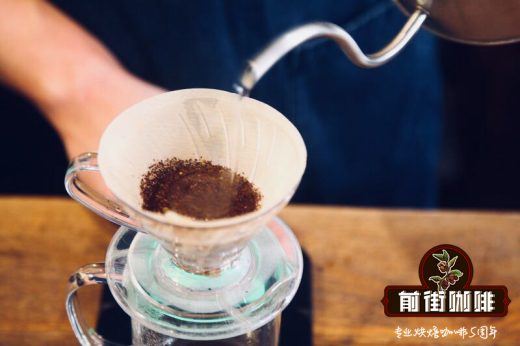
Pour-over practical recommendations: for the natural beans use 90°C water, BG 5R grind (about medium-fine) and a 1:15 coffee-to-water ratio—after blooming 32 g of grounds for 30 seconds, pour in stages with a small stream to 122 g/225 g, for a total time of 1 min 56 s, focusing on capturing the winey and spicy notes; the washed beans need the water raised to 91°C with the same grind—after blooming 30 g, pour in stages to 120 g/225 g, for a total of 2 min 03 s, to highlight the jasmine fragrance and sugarcane sweetness.


It is worth noting that natural processing gives the coffee a fuller body and richer mouthfeel, with a clear honey sweetness in the finish; the washed version keeps high acidity and clarity, and pairs well with light meals. Depending on personal taste preferences, you can also try adjusting the grind (slightly coarser for natural to reduce the fermented impression, slightly finer for washed to increase extraction) or changing the pouring technique (center pouring to highlight floral and fruit notes, circular pouring to balance acidity and bitterness).