Is Kopi Luwak a Black Coffee? Sourness Causes and Pour-Over Parameters
Introduction: Kopi Luwak, the world's most renowned special-process coffee, often sparks curiosity among enthusiasts with its high price and distinctive flavor. This article examines the essential nature of these in-vivo fermented coffee beans, explains the science behind their herbal aroma and full body, answers why some batches show pronounced acidity, and offers a professional pour-over recipe and flavor comparison advice to help you fully understand this precious coffee category.

When it comes to the world's top-priced coffees, Blue Mountain and Geisha each have their own character, and civet coffee (commonly known as Kopi Luwak) is equally famous for its unique origins. This coffee's value stems not only from its scarce yield but also from its special in-vivo fermentation process—after the coffee fruit passes through the civet's digestive system, the flavor changes markedly, forming a signature herbal aroma and full body, making it a special presence in the world of coffee collecting.

So-called Kopi Luwak is actually the common name for the Kopi Luwak processing method, not an independent coffee variety. Its production principle derives from the digestive traits of the wild Asian palm civet (a civet-family animal) in Indonesia: when the civet eats ripe coffee cherries, the coffee beans it cannot fully digest are excreted with its feces. During this process, the beans undergo a combined treatment of stomach acid, enzymatic reactions and microbial fermentation; digestive enzymes and gastric juices break down storage proteins in the pulp into short-chain peptides, and this biochemical change plays a key role in shaping the final flavor.
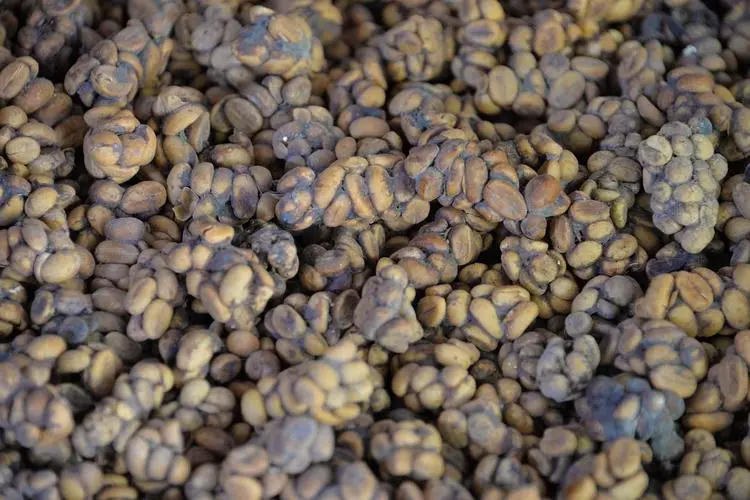
Wild civets mostly inhabit the edges of Southeast Asian tropical rainforests below 2,100 meters in altitude, and their omnivorous habits make them prefer high-protein animal foods. Notably, the early traditional practice was to collect beans naturally excreted by wild civets, but the caged farming that emerged in modern commercialization has led to animal health problems—civets forced to eat only coffee cherries cannot obtain balanced nutrition, and actual digestion time may be less than two hours, far short of the full fermentation period needed to develop ideal flavor.

On the scientific explanation of flavor formation: under ideal conditions, the strongly acidic environment of the civet's stomach (pH about 1.5-2.5) combined with specific proteases could theoretically break down long-chain proteins in the beans into small-molecule peptides and free amino acids. These substances not only affect the coffee's bitterness threshold but also participate in generating precursors for the Maillard reaction. However, actual testing has found that the flavor differences in most commercial products mainly come from raw material quality rather than the digestion process—the flavor characteristics of high-quality Arabica varieties themselves remain the decisive factor.

Professional brewing recommendations: for this type of medium-dark roasted (roast level about Agtron 45-55) Kopi Luwak, the following parameters are recommended to showcase its full-bodied character: water temperature at 86-87°C, grind size comparable to granulated sugar (about 700-800μm), and a 1:15 coffee-to-water ratio (15 grams of coffee to 225 milliliters of water). For pouring, a staged approach is recommended: first pour 30 grams of water for a 25-second bloom, then after the bed expands continue pouring to 125 grams and wait for the water level to drop by more than half, and in the final stage pour the remaining water to a total of 225 grams, keeping total extraction time between 1 minute 50 seconds and 2 minutes.

In terms of flavor characteristics, high-quality Kopi Luwak usually shows distinct herbal notes (similar to a mix of fresh mint and dried herbs), accompanied by roasted almond and hazelnut notes, with a mouthfeel of smooth creaminess and a lingering full finish. Note, however, that some batches may show slight citrus-like acidity due to uneven ripeness of raw materials or storage conditions; this is normal but not a typical feature of the category.
For coffee enthusiasts, understanding the special nature of Kopi Luwak helps build a more comprehensive tasting awareness. Although its rarity gives it high collectible value, the modern specialty coffee system has cultivated many regular varieties with excellent flavor—whether you seek the bright acidity of Ethiopian heirloom varieties, prefer the nutty notes of South American Arabica, or need a full-bodied base for creative coffee drinks, there are alternative choices that are easier to obtain and more consistent in quality. Consumers are advised to choose based on personal taste preferences and the flavor guidance of professional roasters.