Pink Bourbon Coffee: Growing, Flavor and Pour-Over Guide
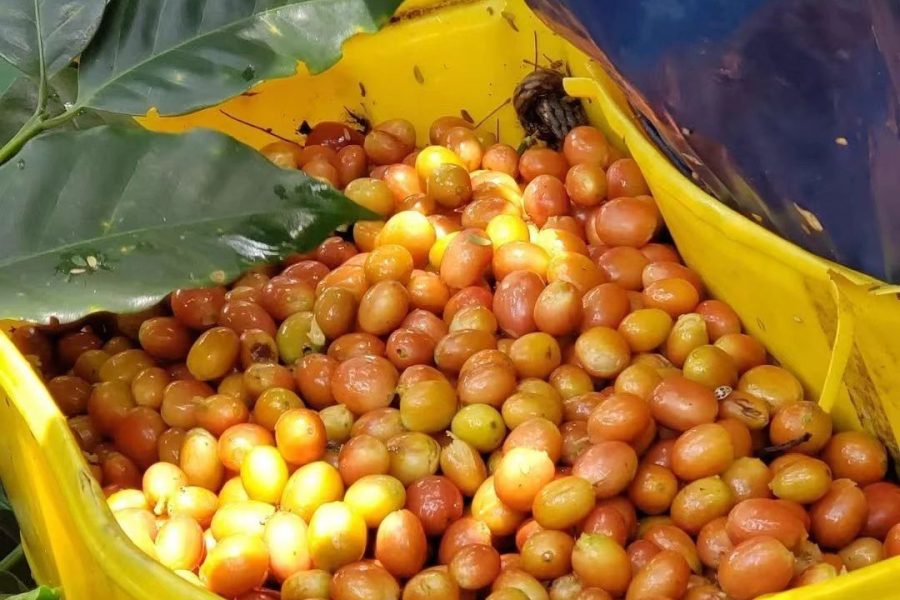
Introduction: Pink Bourbon, a scarce member of the Bourbon family, attracts attention for its distinctive pink fruit and complex flavors. This article examines its origin story, cultivation challenges, flavor characteristics and processing methods, and provides professional pour-over parameters to help you fully understand the unique appeal of this precious coffee variety.
Among coffee enthusiasts, Pink Bourbon is a focus of discussion for its rare pink coffee cherries and unique flavors. Compared with the common Red Bourbon and Yellow Bourbon, Pink Bourbon not only has extremely limited yields but also presents a challenging cultivation process. Behind this scarcity lie both genetic complexity and strict requirements for the growing environment.

Pink Bourbon is essentially a natural cross between Yellow Bourbon and Red Bourbon. Its beans have significantly higher density than ordinary commercial varieties, but overall yields are extremely low. These coffee trees are highly selective about their growing environment, with the optimal cultivation altitude between 1,500 and 2,000 meters. The core difficulty for growers is judging fruit ripeness—because of the special genetics, unripe Pink Bourbon looks very similar to ordinary Red Bourbon, often leading to underripe fruit being mixed in at harvest. More troublesome still, controlling the expression of the dominant gene requires meticulous management throughout, and any environmental fluctuation can affect the final fruit color.
The variety was first cultivated on a large scale by Gabriel Castaño at Finca La Granada in Colombia's Huila region. This farm at 1,800 meters has a significant day-night temperature difference, providing ideal growing conditions for the coffee trees. Although initially interplanted with other Bourbon varieties, after separate harvesting and processing its flavor characteristics gradually stood out: bright citrus notes accompanied by blueberry-juice sweetness, cherry in the mid-palate, and a gentle yellow-sugar-like sweetness in the finish. This layered flavor expression quickly earned it recognition in the specialty coffee world.

The genetics of fruit color are quite interesting—the pink phenotype requires a precise balance of the recessive yellow and red genes in the pollen. In practice, this balance is easily disrupted, leading to orange mutations or other transitional-colored fruit. Notably, even successfully cultivated Pink Bourbon still has its color stability affected by that year's climate conditions, which is an important reason the variety remains scarce.
Current main growing areas are concentrated in the high-altitude regions of Colombia and Guatemala. High-quality Pink Bourbon usually shows a three-stage flavor structure: sweet orange and sugarcane clarity at the start, tomato-like fruit acidity in the middle, and a finish with the bright acidity and full body common to Kenyan beans. These characteristics often earn it high scores in cupping, but growers must contend with roughly a 30% fruit color-difference loss rate each season.
Tracing the history of the Bourbon family, its origins go back to 18th-century Réunion Island (formerly Bourbon Island). A natural mutation of Typica, the original Bourbon variety has advantages such as broad leaves and relatively high yields, but it also inherited a susceptibility to leaf rust. Traditional Red Bourbon shows vivid bright red fruit when ripe, while later-derived variants such as Yellow Bourbon and Orange Bourbon achieved different colors through genetic selection.

The global spread of Bourbon is of considerable historical significance: it reached the South American continent via the Campinas region of Brazil in the 1860s, then spread to Central American countries. Although modern cultivation is dominated by hybrids such as Caturra, high-quality old Bourbon trees are still preserved in places such as El Salvador and Guatemala. Its spread across Africa was thanks to French missionaries; at the end of the 19th century, via a transit station in Zanzibar, it eventually formed the distinctive "Missionary Bourbon" growing tradition in Tanzania's Kilimanjaro region.
In modern coffee gene banks, the Bourbon line has developed many derived varieties. Besides the classic Yellow and Red Bourbon, these include high-yield, disease-resistant varieties such as Caturra and Pacas, as well as special morphological variants such as Pointed Bourbon. Together these varieties form an important genetic foundation of Arabica coffee, among which Yellow Bourbon, with its distinctive nutty notes and mild acidity, retains unique market value in high-altitude growing areas.

For brewing Pink Bourbon, a V60 dripper with a medium grind (similar to granulated sugar) is recommended. The specific parameters are: 15 g dose, 90°C water temperature, 1:15 coffee-to-water ratio, and a total extraction time of about 2 minutes. Key steps include: a 30 g bloom for 30 seconds to activate the coffee grounds; pour in a circular motion to 120 g, then pause; once the bed falls back to its initial height, continue pouring 105 g to complete extraction. This staged pouring method effectively highlights the balance between its citrus top notes and caramel finish.

Professional roasters advise paying particular attention when handling Pink Bourbon: avoid high-temperature, long roasting to prevent damaging the delicate flavor compounds; a light to medium roast (Agtron about 65-70) best presents its varietal character. For storage, use foil bags with one-way degassing valves and keep relative humidity below 50% to preserve the integrity of the fruit's original flavors.