Ethiopia Yirgacheffe vs Guji Coffee Beans: Flavor Comparison and Pour-Over Guide
Introduction: Ethiopia's Yirgacheffe and Guji regions are a focus for specialty coffee enthusiasts worldwide. This article provides an in-depth analysis of the terroir characteristics and coffee flavor differences of representative sub-regions within these two areas, and offers professional pour-over parameter recommendations to help you choose coffee beans that suit your personal taste preferences and enhance your tasting experience.
In 2010, Ethiopia's unique ECX trading system underwent an important adjustment—the Guji region, with its distinctive and highly recognizable flavor profile, was separated from the Sidama region to become a new independent region, administratively part of Oromia. This move not only highlighted the potential of the Guji region but also provided coffee lovers with more diverse flavor options.

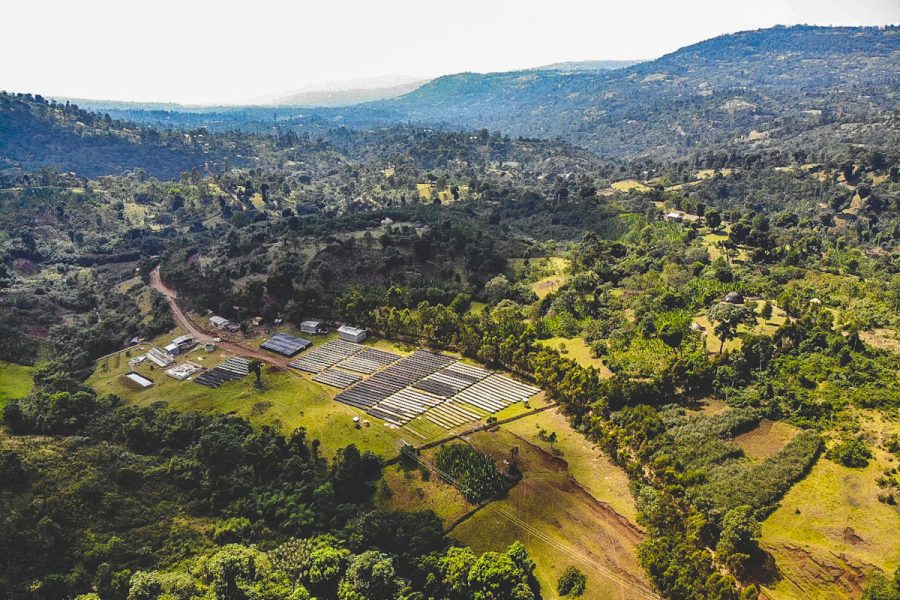
The Guji region is located in southern Ethiopia, with complex and diverse terrain including towering mountains, vast highlands, plateaus, valleys, and plains. The geology here is predominantly volcanic soil, with a soil layer nearly two meters deep, appearing dark brown or brown on the surface. Most areas remain in their pristine state, covered with dense forests; fallen leaves and plant residues provide natural nutrients for coffee trees. The average altitude of the region exceeds 1,800 meters, and the significant temperature difference between day and night slows the ripening of coffee cherries, prompting the beans to accumulate richer aromatic compounds, thus forming distinctive regional flavors. Guji encompasses several sub-regions renowned for high-quality coffee.
Hambella is one of the most representative sub-regions in Guji and the birthplace of the "Huakui" coffee bean, whose fame propelled the rise of the entire Guji region. Hambella is located west of Yirgacheffe's Kochere, separated by a 3,200-meter-high, 30-kilometer-wide highland, with diverse terrain. The coffee is grown at altitudes of 2,100–2,300 meters, with the harvest period concentrated from November to January. Hambella coffees typically exhibit prominent floral aromas and sweet fruit notes, with a balanced and complex mouthfeel.(Corresponding image:  )
Shakiso is another sub-region in Guji with a long history. Although the area was initially known for gold mining, with the northeastern part being a major gold production area, coffee gradually became an important cash crop starting in the 1990s. Haile Gebre, then governor of Oromia, settled in Guji after leaving office and collaborated with local farmers in Shakiso to promote coffee cultivation. As the specialty coffee market's demand for high value-for-money, distinctive-flavor beans grew, Shakiso attracted attention due to its proximity to Yirgacheffe and unique terroir. The average altitude of the region is 1,800–2,200 meters, and its coffee flavor is often described as having a "sweet lemon-honey note."(Corresponding image:  )
Uraga is located at the northernmost tip of the Guji region, at an altitude of up to 2,300 meters, relatively close to Yirgacheffe, and has fertile black soil. The region gained recognition relatively late; it only came into the public eye after its washed beans achieved excellent results in the 2019 TOH competition. Uraga coffees typically have a tea-like quality, along with rich floral and fruity aromas and excellent acidity.(Corresponding image:  )
According to the Guji coffee flavor profile map created by the Dutch green coffee company Trabocca, citrus fruit aromas account for the highest proportion in this region's coffee, followed by stone fruit, berry, floral, and chocolate flavors. The overall profile is lively and bright acidity, rich juice-like body, medium thickness, smooth mouthfeel, with a flavor positioning between Yirgacheffe and Sidama, and a complex aroma structure.(Corresponding image:  )
The geology of the Guji region is predominantly fertile black soil (Vertisol), with a soil layer nearly two meters deep and an average altitude exceeding 1,800 meters. The complex terrain (such as high mountains, valleys, and plains) and significant day-night temperature differences provide ideal conditions for growing high-quality specialty coffee. It is worth noting that the Guji region was initially classified as "Sidama A" in the ECX trading system, but with the emergence of many excellent coffee beans, the region successfully became independent, becoming the second region after Yirgacheffe to separate from Sidama, and obtained an independent traceability identity in the ECX trading center.(Corresponding image:  )
The Hambella region is one of the core areas of Guji and currently has about 20 processing plants of various sizes. In 2017, DW Company's "Buku Abel" processing plant won first place in the Ethiopia National Taste of Harvest Competition with a natural-process bean. This bean was named "Huakui" by a Chinese importer due to its intense strawberry and cream aroma. Subsequently, DW Company added multiple processing plants (such as "Buku Abel" and "Buku Saysay") in Dimtu, the core area of Hambella, with an annual output of about 1,100 tons. It should be noted that, strictly speaking, only the natural-process coffee beans produced by the "Buku Abel" processing plant can be called "Huakui."(Corresponding image:  )
During the coffee harvest season (December to January), the "Buku" processing plant selects only fully red cherries with a sugar content of 30 or above, and places them on African raised beds for natural sun-drying. The local day-night temperature difference is extreme; coffee farmers shade the cherries at noon to avoid excessive high-temperature fermentation, and use plastic sheets at night to protect against rain. The coffee cherries are turned continuously throughout, and the pile thickness is strictly controlled to ensure uniform drying and prevent sunburn or undesirable fermentation. After about 18 days of sun-drying, the green coffee beans' moisture content drops to 13%, after which they can be bagged and stored.(Corresponding image:  )
Given the characteristics of high-altitude hard beans, a medium-light roast is recommended to highlight floral and tropical fruit notes. Because such beans have weak water absorption after grinding, a medium-fine grind size is suggested, along with a higher water temperature (e.g., 92°C) and a V60 dripper to fully reveal the layered floral and fruity notes. Freshly roasted coffee beans (within 5 days of roasting) retain the maximum aromatic compounds; it is recommended to rest the beans for 4–7 days after roasting and consume within 4–30 days to experience the best flavor.(Corresponding image:  )
Pour-over parameter reference: Use a V60 dripper, water temperature 92°C, grind size with 80% passing through a No. 20 standard sieve (medium-fine), coffee-to-water ratio 1:15, coffee dose 15 grams. Procedure: Place the coffee grounds in the dripper and bloom with twice the coffee weight in water for 30 seconds; then pour in a slow, small stream in a circular motion from the center outward, pausing at 125 grams; when the coffee bed drops to half the dripper, continue pouring at the same flow rate until 225 grams, with a total time of about 2 minutes (allow 10 seconds margin).(Corresponding image:  )
The 2025 new-season Huakui coffee offers an entry of intense sweetness of tropical fruits like passion fruit and mango, accompanied by lively acidity of berries and citrus, a creamy smooth mouthfeel, and a lingering finish with black tea-like persistence.(Corresponding image:  )