Ethiopian Coffee Origins: From Legend to Global Coffee Culture
Introduction: Ethiopia is hailed as the birthplace of coffee. It is not only the cradle of coffee culture but also home to countless uniquely flavored coffee varieties. This article takes you deep into the legendary origins of Ethiopian coffee, its varietal diversity, and its unique grading system, offering a comprehensive analysis of the appeal of this coffee powerhouse, from ancient legend to the modern specialty coffee market.
Ethiopia is the cradle of coffee culture, where coffee is not only a daily beverage but also an important part of the social structure and economy. As the globally recognized birthplace of coffee, Ethiopia holds an important place in the global specialty coffee market, and coffee beans from this country can be found on the menu of almost every café.
Regarding the origin of coffee, the most widely circulated story is an ancient Ethiopian legend. It is said that in the coffee forests of the Ethiopian highlands, a goatherd named Kaldi discovered that his goats became unusually active after eating the berries of a certain tree, and even refused to sleep. After Kaldi tried the berries, he felt the same stimulating effect. He told the abbot of the local monastery of this discovery, and after the abbot boiled the berries in water and drank it, he found that he could remain alert during long periods of prayer. This discovery gradually spread, and eventually coffee reached the Arabian Peninsula, beginning its global journey.

The Arabian Peninsula was an early center of coffee cultivation and trade. By the 15th century, Yemen began cultivating coffee, and subsequently in the 16th century, Persia, Egypt, Syria, and Turkey introduced coffee one after another. Coffee not only became a common beverage in households but also became popular in public coffeehouses called qahveh khaneh. These coffeehouses became centers for socializing, music, performances, and information exchange, and were even called "schools of the wise." Pilgrims traveling to Mecca each year also spread coffee culture around the world.

The introduction of coffee to Europe is likewise full of stories. In the 17th century, European travelers introduced the dark beverage brought back from the Near East to the European continent. At first, coffee sparked controversy because of its unfamiliarity, and was even called "the bitter invention of Satan." In 1615, clergy in Venice condemned coffee, until Pope Clement VIII tasted it himself and gave it his approval. Thereafter, coffeehouses sprang up rapidly in major European cities, becoming important places for socializing and exchanging ideas. For example, Britain's "penny universities" offered coffee and conversation space at low prices, promoting the spread of knowledge.

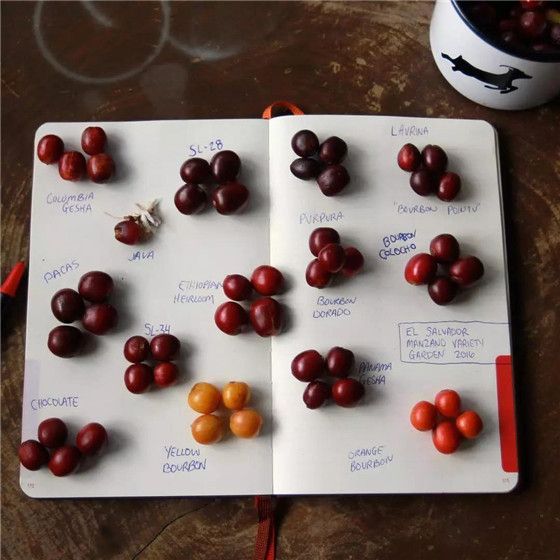
Ethiopian coffee varieties are mainly "Heirloom," but this name does not refer to a single variety; rather, it is a collective term for many local varieties. According to the Oxford English Dictionary, "Heirloom" means "a valuable item passed down through a family for generations," and so it is also translated as "heirloom" varieties. Ethiopia has nearly 2,000 coffee varieties (of which 1,927 are native varieties and 128 are introduced varieties), and the number of unrecorded varieties is even larger. For example, Gesha Village Estate discovered wild Gesha varieties through forest exploration and named them "Gori Gesha" and "Gesha 1931."

Because the number of varieties is vast and classification is difficult, the Ethiopian government, for protection reasons, has not disclosed detailed variety information, and so they are collectively called "Heirloom." However, at the 2020 Ethiopia Cup of Excellence (COE), some coffee beans began to be labeled with specific variety names, such as 74158, 74110, Kurume, and Typica. Coffee varieties directly affect the appearance and flavor of the beans; for example, Gesha beans are rather long, Maragogype is large, and Caturra and Catuai have longer bodies with slightly upturned tails.
Ethiopian coffee varieties can be broadly divided into two categories: JARC Released Variety and Regional Land Race Variety. The Jimma center is an institution of the Ethiopian Institute of Agricultural Research, focusing on breeding for pest and disease resistance and high yield. Its representative varieties include 74110, 74112, 74148, and 74158, released in 1974 and 1975, with the first two digits representing the year of release. In the early 21st century, the Jimma center launched the "local strong varieties program," selecting high-quality varieties adapted to various regions, such as Harusa and Bultum in the Harar region, and Koti and Odicha in the Yirgacheffe region.

Regional land race varieties are wild varieties growing in the wild, vast in number and not yet fully recorded. Common varieties include Dega, Wolisho, and Kurume in Yirgacheffe; Shinkyi, Abadir, and Guracha in the Harar region; and Sinde, Gotu, Kuburi, and Mia in the southwest.
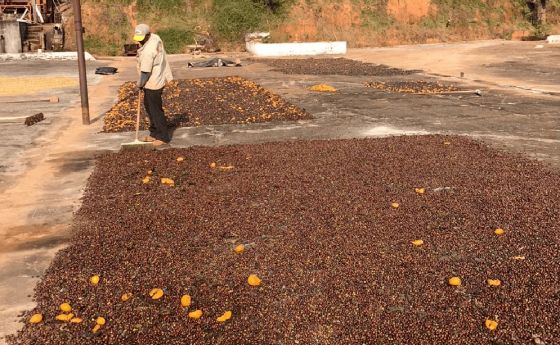
Another reason Ethiopian coffee beans vary in size is its grading system. Before the establishment of the Ethiopia Commodity Exchange (ECX), coffee grading was set by the CLU department of the Ministry of Agriculture, mainly based on the number of defective beans in a 300-gram sample. Today, the ECX grading process is as follows: first, coffee is divided by processing method into washed and unwashed; second, based on physical characteristics and cup quality scores (40% and 60%), it is divided into nine grades, G1 to G9; then, coffee beans of grades G1 to G3 are cupped again according to SCAA standards, with those scoring above 85 rated Q1 (specialty grade), 80 to 85 rated Q2, and those below 80 downgraded to G3. Ultimately, Q1 and Q2 are classified as specialty coffee grade, and G4 to G9 as commercial coffee grade.
It is worth noting that Ethiopian coffee grading is not strictly classified by bean size. The only related requirements are that the moisture content of the coffee beans does not exceed 11.5%, and at least 85% of the beans are not smaller than screen 14. The physical characteristic score for washed coffee beans includes a 10% appearance size score, while the unwashed group has no such requirement. This is also one of the reasons for the diversity of Ethiopian coffee bean sizes.