A Complete Guide to Coffee Mills and Regional Character in Brazil's Cerrado
Introduction: Brazil is the world's largest coffee producer, and the Cerrado region is one of its most representative specialty regions. This article takes you through the distribution of Brazil's main coffee regions, focusing on the geography, climate conditions and mainstream processing methods of the Cerrado region, and profiles the well-known coffee mills in the area, helping you fully grasp the unique appeal of this classic coffee region and the key points for buying its coffee.
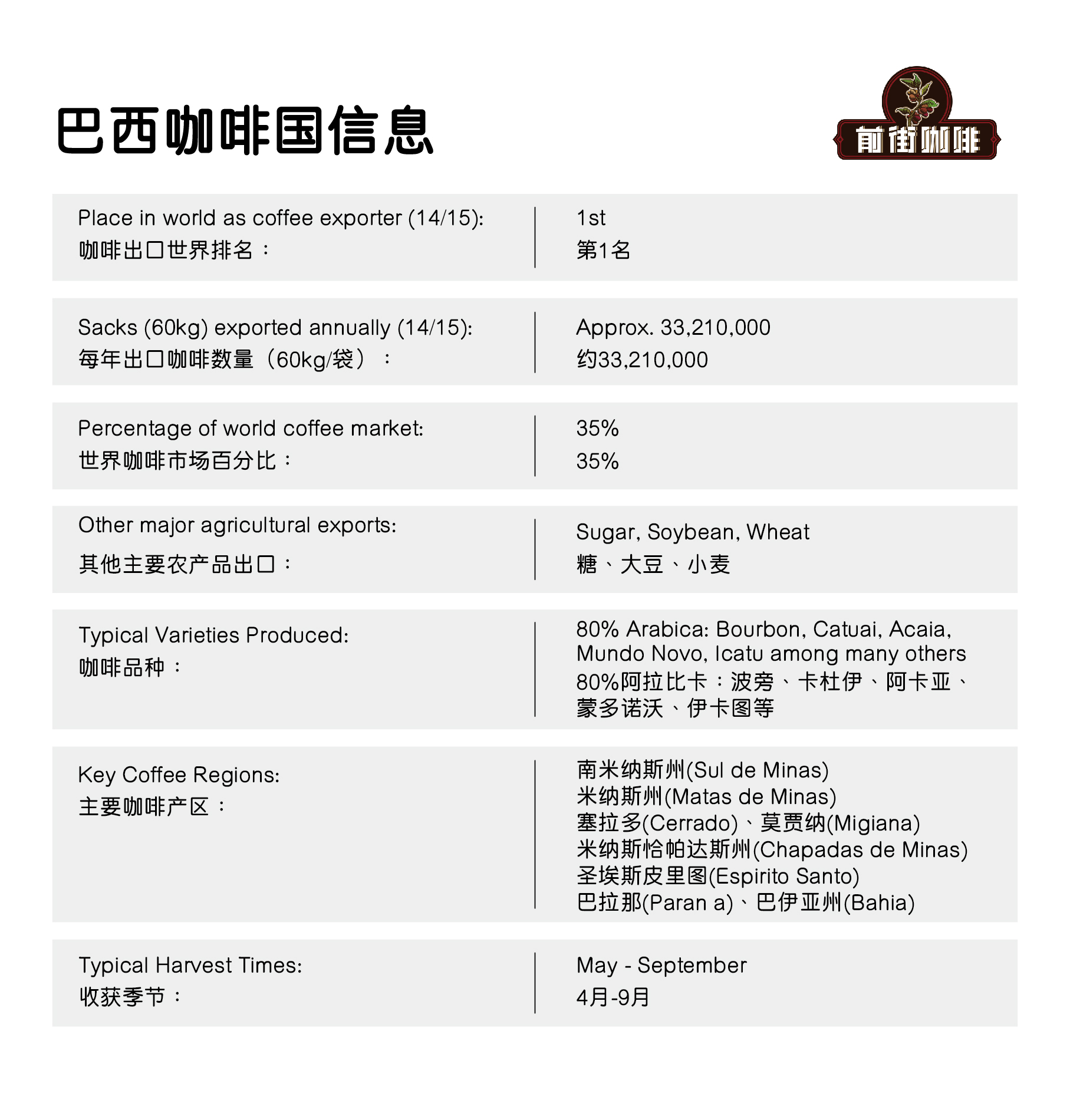
As the world's number one coffee-producing country, Brazil produces about 40 million bags of coffee each year, accounting for roughly 30% of global output. The country has 21 states in total, 17 of which grow coffee, but only 7 states account for the bulk of production; together these states make up 98% of the national output. Understanding these regions is the first step toward understanding Brazilian coffee.
Brazil's main coffee regions include: São Paulo (such as Mogiana and Centro-Oeste), Paraná (such as Norte Pioneiro do Paraná), Bahia (such as Atlantico Baiano, Cerrado da Bahia and Planalto da Bahia), Espírito Santo (such as Montanhas do Espírito Santo and Conilon Capixaba), Minas Gerais (such as Sul de Minas, Cerrado Mineiro, Chapada de Minas and Matas de Minas), Rondônia and Rio de Janeiro. Each region shows different coffee flavor characteristics due to differences in geography, climate and growing methods.
The Cerrado Coffee Region is one of Brazil's most important specialty coffee regions. Located in central Brazil and spanning eight provinces, it is part of the Cerrado savanna climate zone. This vast grassland covers about two million square kilometers and is South America's largest tropical savanna, rich in ecological diversity and in stark contrast to the Amazon rainforest in northern Brazil.
Specifically, the Cerrado coffee region is concentrated in Minas Gerais on plateau terrain at elevations of 850 to 1,200 meters. The land here is flat and open, very suitable for establishing large-scale plantations. In addition, the region has distinct wet and dry seasons, and the plateau's cooler temperatures make the coffee cherries ripen more uniformly, which helps improve harvest quality and consistency in subsequent processing.
The Cerrado region is known for the natural process. Green coffee processed this way usually gives off a faint dry aroma of green grass and strawberry berries; acidity is low but the body is rich and full, with a pronounced molasses sweetness and a soft, delicate texture. As the coffee cools, bittersweet almond and chocolate flavors gradually emerge, accompanied by a blueberry and strawberry finish, layered and balanced. This processing method not only highlights the unique character of Cerrado coffee but also reflects local growers' exploration of combining traditional and modern techniques.
Beyond the natural process, Cerrado coffee as a whole shows low acidity, a full body and prominent sweetness, with a smooth mouthfeel and a slight grassy note balanced by sweetness and bitterness. It is very well suited to espresso, hence the saying, "without a good Brazil, there is no good espresso." Many roasters and baristas regard it as a cornerstone bean in blends.
It is worth noting that the Cerrado region is not only a geographical concept but has also gradually become synonymous with high-quality Brazilian coffee. Modern growing and processing techniques are widely used here, especially in irrigation, harvesting and drying; many large estates have introduced precision agriculture equipment and scientific management processes to ensure and improve coffee quality. Although there are also some small-scale growers in the area, the dominance of large plantations gives Cerrado coffee strong market competitiveness in both volume and quality.
In Minas Gerais, besides Cerrado Mineiro, there are several distinctive sub-regions worth noting. Sul de Minas, for example, is dominated by small estates at moderate elevations with a dry, stable climate, producing about 8-10 million bags of coffee a year and serving as an important source of Brazilian specialty coffee; Chapada de Minas, though small in area, is known for high-quality green coffee; Matas de Minas is one of Brazil's oldest coffee-growing areas, with diverse ecosystems and varied coffee styles, and is much favored by the specialty coffee market.
In addition, other important Brazilian regions—such as Mogiana and Centro-Oeste in São Paulo, Norte Pioneiro do Paraná in Paraná, the Atlantic coastal and plateau areas of Bahia, and the main robusta regions of Espírito Santo and Rondônia—each have their own distinctive growing and processing features, together building Brazil's rich and varied coffee landscape.
In summary, with its exceptional natural conditions, advanced growing management systems and distinctive natural processing, the Cerrado region has become an important window for coffee lovers worldwide to understand Brazilian specialty coffee. If you want to gain a deeper understanding of the essence of Brazilian coffee, starting from Cerrado is undoubtedly an excellent choice.