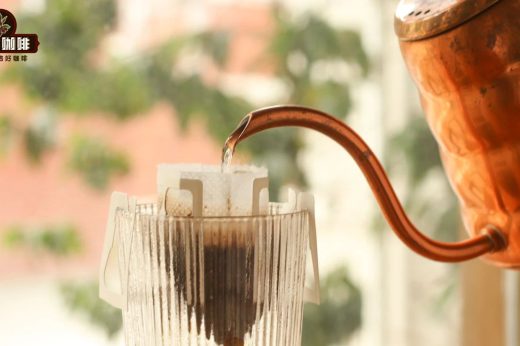
Drip Bag Coffee Guide: Brazilian Bean Suitability and Cold Brew Flavor Pairing

Introduction: Drip bag coffee has become a popular choice for home brewing due to its convenience, but not all coffee beans are suitable for making drip bags. This article takes an in-depth look at which coffee beans are better suited for drip bags, especially the unique advantages of Brazilian beans in cold brew scenarios, and provides practical references on flavor characteristics and brewing parameters to help you choose the right coffee beans for your needs.
There are many types of coffee beans on the market, and many enthusiasts are confused when trying to make cold brew coffee at home: which coffee beans are actually more suitable? In fact, in theory, coffee beans from all regions can be used for cold brew, but beans from different regions present differentiated flavor characteristics, and understanding these characteristics can help you choose better.
Among them, Brazilian coffee beans are often considered a high-quality choice for making drip bags and cold brew due to their stable flavor performance. These beans usually have a mild acid-bitterness balance, moderate body, and a unique sweet-bitter aftertaste. In cold brew applications, Brazilian beans can display a fresh herbal aroma, accompanied by moderate nut and chocolate notes, suitable for people who pursue a balanced taste.
The origin of cold brew coffee did not come from the promotion of commercial brands, although Starbucks did make this category more widely known. According to records, this brewing method can be traced back to the Netherlands in the 17th century, when sailors tried soaking coffee grounds in cold water for a long time to solve the problem of being unable to heat coffee at sea, and unexpectedly discovered a unique flavor. By the 19th century, cold brew gradually spread around the world, especially favored in the military field because it was easy to store and prepare. The prototype of the modern cold brew system was improved and promoted by a traveler in the 1960s, and eventually became a popular home brewing method.
Coffee beans produced in Brazil's Cerrado region are often rated by local associations as "Strictly Soft·Fine Cup" (i.e., the highest quality grade). Taking the common "Brazil NY.2SC – 17/18 FC Cerrado" as an example, its numbering means country Brazil, defect rate grade 2, green bean screen size 17–18, cup quality fine, and origin Cerrado. This type of commercial-grade Brazilian bean is a soft bean, with flavor characteristics of a mild acid-bitterness balance, soft aroma, and a comfortable sweet-bitter aftertaste; it is smooth on the palate, with a faint grassy aroma and moderate bitterness, and a refreshing finish.
Brazilian coffee beans usually grow at an altitude of 1000–1300 meters, so the bean density is relatively low. Common Bourbon varieties (such as Bourbon) mostly use natural or semi-natural processing, with moderate moisture content, softer bean quality, and thinner parchment, which means they are not suitable for roasting at too high a temperature—excessively high drum temperatures can easily scorch the bean surface, resulting in burnt bitter flavors. Therefore, when making drip bags, attention must be paid to controlling the roast level and brewing parameters.
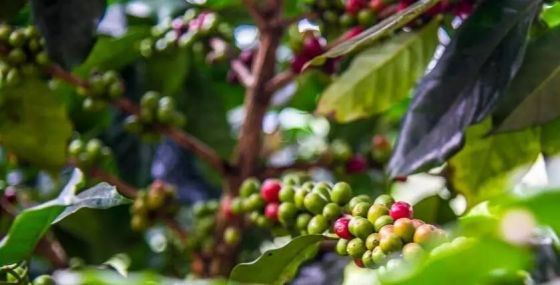
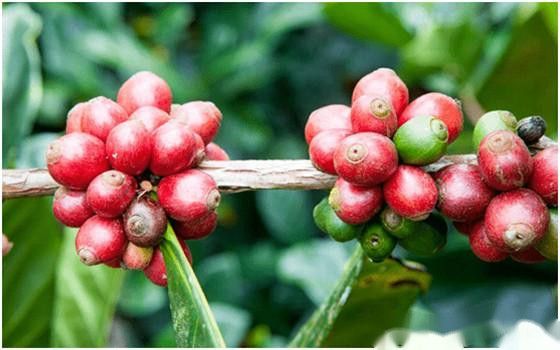
In addition to Brazilian beans, Red Bourbon and Yellow Bourbon are also varieties worth noting. Red Bourbon coffee cherries are wine-red when ripe, with a rounder bean shape, usually planted at high altitudes, and can display brighter acidity and complex aromas similar to red wine. Yellow Bourbon is named because the fruit turns yellow when ripe; it was first discovered in Brazil in 1930 and may have originated from a hybrid mutation between Red Bourbon and a yellow Typica variant. Although Yellow Bourbon has lower yields and higher environmental requirements, it can express unique flavors when grown at high altitudes and has gradually attracted attention in recent years.
Take a certain Red Bourbon coffee from the South Minas region as an example (not a specific brand); its flavor characteristics are distinctive: obvious sweetness on entry, accompanied by a faint lemon aroma, rich nutty flavor, and a black chocolate aftertaste emerging in the finish, with an overall round and full mouthfeel. This type of bean is very suitable for making drip bag coffee, as it can restore rich layers through simple brewing.
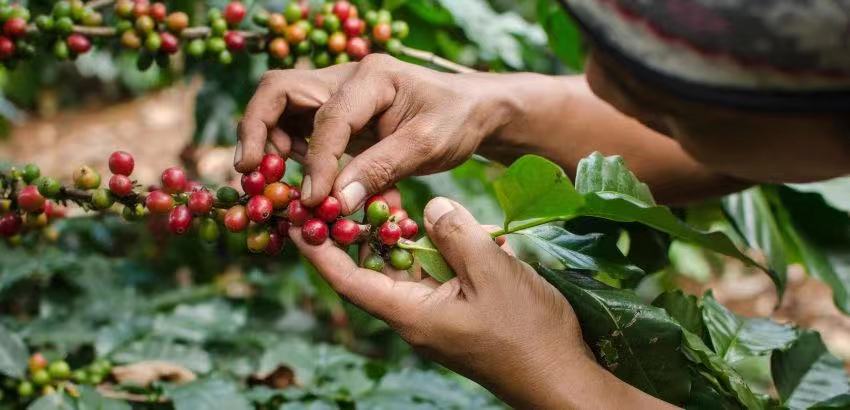
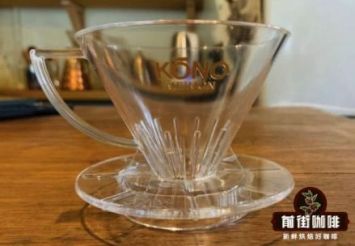
For coffee beans with a darker roast level (such as some Brazilian beans), if you want to highlight their body, it is recommended to choose a dripper with an immersion function (such as the Kono dripper). The design of this type of dripper can extend the contact time between water and coffee by slowing the water flow, thereby improving extraction efficiency. At the same time, a lower brewing water temperature (such as 88°C) can effectively avoid the excessive release of off-flavors in dark-roasted beans and maintain flavor purity.
For the specific brewing, a staged extraction can be used: first use 30 grams of water for a 30-second bloom, then pour in a small stream in circles until 125 grams for a stage, and when the water level drops and is about to expose the coffee bed, continue pouring to 225 grams, with the total extraction time controlled at about 2 minutes. Maintaining a stable technique helps balance the flavor; whether Brazilian beans or other varieties, ideal taste can be achieved through reasonable parameter adjustments.