Does drip bag coffee with milk count as a latte? Is milk powder viable? A full guide to pour-over alternatives
Introduction: Many coffee lovers keep drip bags at home but struggle to recreate latte flavor. This article explores the feasibility of pairing drip bag coffee with milk, from scientific principles to practical techniques, analyzing how to adjust concentration, brewing method and ingredient choices so that ordinary drip bags can present a texture close to a latte. It offers detailed solutions to common questions such as "can I brew directly with milk?" and "does adding milk powder affect flavor?", and includes four practical methods to help you easily enjoy the perfect fusion of coffee and milk at home.
In everyday coffee drinking, many consumers have encountered this confusion: when only drip coffee bags are on hand but they long for a silky latte-like texture, can the goal be achieved through simple adjustments? From a professional perspective, the black coffee brewed from traditional drip bags is usually lower in concentration than the espresso standard, and adding milk directly tends to cause flavor imbalance—the coffee's body is diluted by the milk, the two struggle to form an ideal synergy, and the final result may be a thin, separated mouthfeel.

It is worth noting that drip bag coffee essentially comes from the pour-over process, and its flavor compatibility is notably better than standardized coffee products. By reasonably controlling variables, it is entirely possible to adjust it into a coffee base with high compatibility with milk. The key is to increase the concentration of the coffee liquid itself, ensuring that clear flavor layers remain after milk is added. Practice shows that drip bags made from medium-dark roasted coffee beans have more advantages; having undergone longer heat treatment, such beans accumulate rich caramelization reaction products internally and naturally possess low acidity, a full body and a fluffy structure, effectively releasing ample aroma when brewed with hot water and forming a harmonious taste combination with milk.
For drinkers who prefer dairy fusion, drip products with a darker roast level are recommended first. Such coffees usually show pronounced nutty, caramel and chocolate notes, which naturally match the sweet, mellow character of milk and can build a balanced flavor framework similar to a classic latte.
Method 1: Physical stirring to enhance extraction
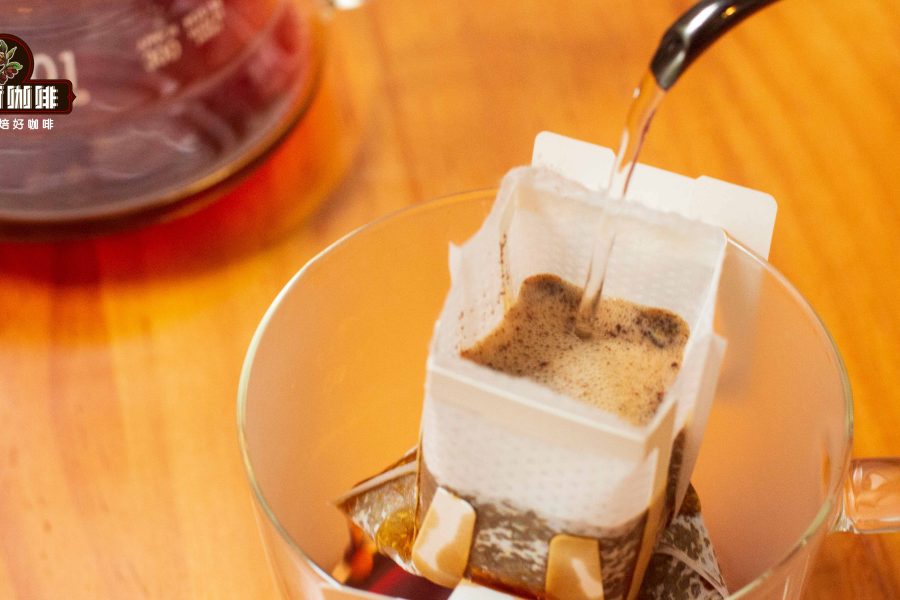
The design parameters of standard drip bags (including filter bag porosity, powder bed distribution and fixed grind size) limit the room for adjusting conventional variables; at this point, external intervention can increase the concentration of soluble substances per unit volume. In practice, it is recommended to use a stirring tool to break the static state of the powder bed, accelerating gas release while promoting the dissolution of flavor substances. Taking a common 10-gram drip bag as an example (two bags can actually be stacked to expand the coffee liquid base), using a household spoon to stir the powder bed in circles after pouring water can significantly improve extraction efficiency.


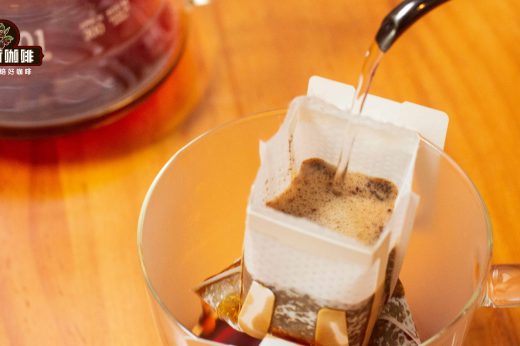
Suggested procedure: first pour boiling water to 50% of the filter bag's capacity (let it sit for 1 minute with the lid off to cool to 92-96°C), then immediately stir about 10 times from the center outward until obvious bubbling appears on the surface; after the expansion stops, pour water a second time to 80% capacity and repeat the stirring motion for 3-5 circles; finally pour in all the remaining hot water to complete the third cycle. This method ultimately yields about 90-110 ml of high-concentration coffee liquid; mixed 1:1 with an equal amount of whole milk, it retains the coffee's original nutty-chocolate base while softening the overall mouthfeel through the milk.



Method 2: Staged water control and repeated extraction
Based on the principles of coffee dissolution kinetics, the liquid flowing out early in a single pour usually contains a higher proportion of flavor substances. To maximize concentration with a limited amount of water, a stepped extraction strategy of multiple small pours can be used. In practice, prepare two clean containers for alternating use: first pour water to 80% of the filter bag's height to complete the first round of extraction; once the liquid has dripped through, immediately refill and do a second round; then transfer the moistened filter bag to the spare container, pour the coffee liquid obtained the first time back into the filter bag for reverse extraction, and repeat this process three times in total.

The advantage of this technical path is that by controlling the amount of water per pour (total water is about 1/3 of conventional brewing), the water is forced to contact the gaps between coffee particles more fully, thereby extracting more mid- and late-stage flavor substances. The final 80-100 ml of concentrated liquid, mixed 1:1 with warmed milk, maintains a moderate concentration level and, thanks to the complex aroma brought by repeated extraction, avoids a thin taste.


Method 3: Liquid medium substitution experiment
Breaking through the limitation of the traditional water medium, using milk directly as the extraction carrier has unique advantages—the lactose and fat naturally present in hot milk can participate in flavor fusion already at the extraction stage. Key operating points include: use hot water above 90°C to pre-wet the coffee powder in the filter bag (covering 50% of capacity); after the initial water flow ends, switch to hot milk at 60-75°C and pour in stages (filling to 90% of capacity each time), with total addition controlled at around 150 g (the number of milk stages can be increased according to personal preference). For a refreshing iced experience, place the whole drip bag in 200 ml of refrigerated milk, seal and shake, and slow-extract at low temperature for 8 hours to obtain a cold brew version with a distinctive flavor.


Method 4: Solid dairy source substitution
To address the concentration dilution that liquid milk may cause, choosing dehydrated milk powder becomes an effective improvement path. As a concentrated form of milk (moisture content <5%), milk powder can significantly enhance overall body when mixed with coffee liquid without affecting flavor purity. Recommended formula: place milk powder weighing twice the coffee powder weight in the cup in advance, fully extract by pouring hot water above 90°C three times (80% capacity each time), then completely dissolve the milk powder into the coffee base. The drink prepared this way has both a rich taste and a smooth texture, and avoids the protein precipitation issues that liquid milk may introduce.