Brazil Coffee Beans: Flavor Profile and History of the World's Largest Region

Introduction: As the world's leader in both coffee production and exports, Brazil supplies nearly 40% of the global coffee supply. This article takes you deep into the industry landscape of this South American coffee kingdom, reveals the flavor characteristics of its signature Arabica beans, and traces through history how Brazil transformed from a colonial economy into a modern coffee powerhouse, helping you build a comprehensive understanding of Brazilian coffee.
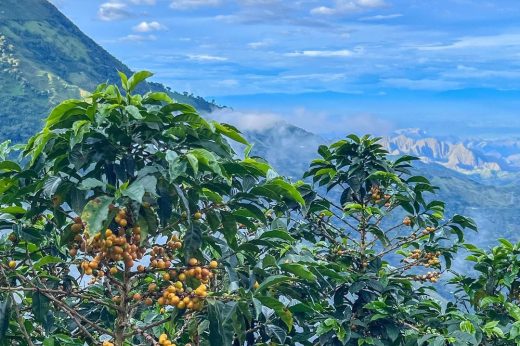
Brazil ranks first in the world with 19,000 square kilometers of coffee planting area, and its Arabica coffee bean production and exports together account for nearly 40% of the global total. According to official Brazilian data, in 2014 alone it produced over 60 million bags (each bag is a standard 60 kg), a figure that remains an industry benchmark to this day.
The rise of the country's coffee industry began against a special historical backdrop in the 19th century. After gaining independence from Portugal in 1822, Brazil retained colonial economic structures such as the large estate system, which in turn created conditions for the expansion of coffee plantations. The Paraíba Valley produced an annual average of 2.6 million bags of coffee between 1851 and 1860, enabling the Port of Rio de Janeiro to control 88% of the nation's coffee exports; this extensive development led to large-scale deforestation of the rainforest.
The geographical shift of the coffee economy was quite dramatic. When the Rio region slowed down due to land exhaustion, the state of São Paulo overtook it by leveraging more fertile newly cleared land. After 1880, its production surpassed Rio, and by 1906 Brazil's annual production soared to 22 million bags, with coffee exports reaching an astonishing 53% share in 1908.
The success of Brazil's coffee industry stems from a combination of multiple advantages: first, the tropical climate spanning multiple latitude zones provides an ideal growing environment; second, the coffee consumption boom that emerged in 18th-century Europe created sustained demand; furthermore, the primitive capital accumulated from earlier brazilwood and sugarcane trade laid the foundation. Notably, after the abolition of slavery in 1850, European and Asian immigrants filled the labor gap.
Modern logistics development also played an indispensable role. Between 1874 and 1889, Brazil's railway network expanded from 1,200 kilometers to 9,600 kilometers, with dedicated coffee transport lines reaching hub ports such as Santos. Data from 1821-1844 show that per capita Brazilian coffee consumption in the United States increased nearly a hundredfold, confirming the role of maritime networks in promoting trade.
The flavor characteristics of Brazilian coffee have distinct regionality: common medium-light roasts present nutty and chocolatey base notes, with low acidity and full body. Premium regions such as Mogiana often carry caramel sweetness, while the southern Cerrado region, due to high-altitude cultivation, can develop brighter citrus tones. Professional roasters recommend medium roast to preserve its balanced characteristics, and for pour-over, a water temperature of 90-93°C and a coffee-to-water ratio of 1:15 are suggested to highlight the full-bodied mouthfeel.
From slash-and-burn farming to precision agriculture, Brazil has built a complete coffee industry chain over two hundred years. Understanding the development history and flavor secrets of this coffee kingdom not only enhances your tasting perspective but also provides practical reference for selecting Brazilian beans.