Single vs. double espresso: a complete guide from basket to flavor
Introduction: Single and double espresso differ not only in volume but also in basket choice, extraction parameters and flavor expression. This article analyzes the key differences between the two in dose, extraction time and concentration, reveals the uneven extraction caused by the structure of the single basket, and provides professional-grade extraction parameter references to help coffee lovers understand the essence of espresso.
When ordering at a café, saying "an espresso" or "a shot" will both get you an espresso. One shot is a single espresso, while a double shot is a double. But beyond the difference in quantity, the two have deeper differences in preparation and flavor experience.

From the consumer's perspective, the main difference between single and double is volume—a single is about 30ml, a double about 60ml. But for the barista, this means choosing a completely different basket system. A standard single basket usually holds 7-9 grams, while a double holds 18-20 grams, and this difference directly affects all subsequent extraction parameters.

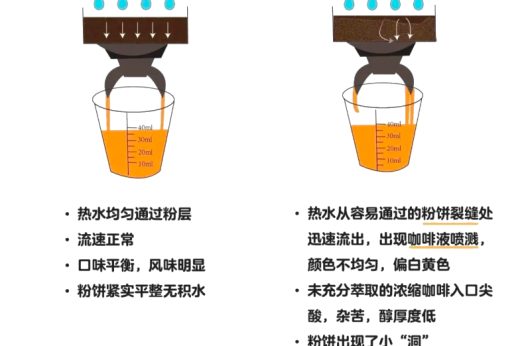
Basket structure is the core factor behind the flavor differences. The double basket uses a straight cylindrical design ( ), with an even puck depth and balanced pressure distribution during tamping. This structure allows hot water to penetrate the coffee bed evenly, forming a stable flow rate. The single basket, however, uses a narrowed inverted-cone design at the bottom to maintain the same group head interface as the double (
 ), causing uneven pressure in the lower half of the puck and making channeling likely.

Actual extraction data show significant differences: a double extraction using 20 grams of coffee (basket capacity 18-20 grams) has standard parameters of a 1:2 brew ratio (40 grams of liquid), an extraction time of 28-30 seconds, and a concentration of about 10-11%. A single extraction with a 10-gram dose (basket capacity 7-9 grams), at the same 1:2 ratio yielding 20 grams of liquid, takes only 22 seconds and reaches a concentration of only 8-9% ( ). To bring a single close to the performance of a double, the dose must be increased to 12.5 grams, which significantly raises cost and operational complexity.

The standard double extraction process recommended by professional baristas: choose 18-20 grams of freshly roasted blend or single-origin beans, and adjust the grind to medium-fine (similar to fine sugar). During pre-infusion, use a small amount of hot water (about 2-3 seconds) to wet the puck, keep the main extraction time in the 25-35 second range, and target 36-40 grams of liquid. The key is to observe the crema—a high-quality extraction should show a dense reddish-brown foam about 3-5 mm thick.

Special handling techniques for single espresso: due to structural limitations, when using an 11-12 gram dose, it is recommended to grind one step finer (finer than for a double), or to appropriately extend the extraction time to about 25 seconds. Note that the pre-infusion time for a single basket should be shorter (1-2 seconds) to avoid fine particles clogging too early. Professional equipment can compensate for uneven tamping by adjusting the portafilter pressure ring.
Key tasting points: freshly extracted espresso should be observed immediately for its layers—the clarity of the boundary between the amber crema on top and the dark brown liquid below reflects extraction evenness. The best tasting temperature is 65-70°C; first smell the nutty and caramel aromas, then stir with a small spoon to blend the crema with the liquid. When drinking it straight, note the balance of acidity, sweetness and bitterness on the tongue; after adding an appropriate amount of steamed milk (as when making a latte), the coffee's sweetness and body are better displayed.
Solutions to common problems: when channeling occurs (shown by thin crema on one side or a sudden increase in flow), try redistributing the grounds or making a minor grind adjustment. If the extraction is insufficient (liquid weight on target but flavor flat), extend the extraction time by 1-2 seconds; over-extraction (obvious burnt-bitter taste) requires a coarser grind or a smaller dose. When ambient humidity changes, the same recipe may need a daily fine adjustment of 1-2 grams of dose.

Equipment maintenance tips: after each use, immediately clean residual coffee grounds from the basket to prevent oil oxidation from affecting subsequent extractions. A deep clean of the tamper and portafilter is recommended weekly, and a check of group head wear monthly. Double baskets are best used with commercial-grade espresso machines; if a home machine has insufficient pressure (below 9 bar), it is advisable to use single mode first for more stable performance.

Advanced techniques: for coffee lovers pursuing the ultimate flavor, staged extraction can be attempted—extract the first half at a faster rate (to obtain bright acidity), then adjust the flow rate to obtain the full body of the latter stage. This technique requires precise control of the portafilter angle and pressure, and usually takes months of practice in professional training to master.