What Is a Flat White? Differences from Latte and Standard Recipe

Introduction: Flat White is a coffee drink popular in Australia and New Zealand, but how does it differ from a latte? This article explains the origins of the flat white, the differences from a latte in cup size, milk foam thickness, and flavor, and provides standard preparation parameters for a 220ml glass, including coffee powder dose, extraction time, and milk steaming techniques. It also compares the taste characteristics of the two milk coffees to help you master professional-level flat white preparation.
On many coffee shop menus, classics such as lattes and cappuccinos are always available, but if you want to try a more refined flat white, you may need to ask the staff whether this hidden recommendation is available. This coffee, which originated in Australia and New Zealand, is essentially a localized variant of the latte, yet it is sought after for its more balanced ratio of coffee to milk.

The core composition of a flat white is similar to that of a latte; both use espresso as the base and add steamed milk and a small amount of milk foam. However, the differences between the two are reflected in the details: from cup capacity to milk foam thickness, and then to the final flavor layers. Taking common serving standards as an example, a standard flat white usually uses a 220ml glass, while a latte mostly uses a 300ml ceramic cup. This difference directly affects the overall taste experience of the drink.
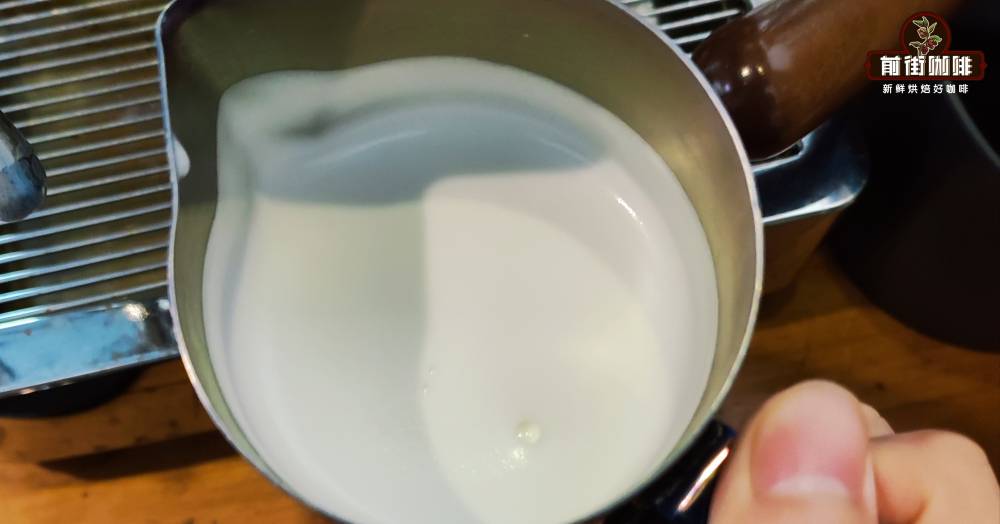
In terms of specific parameters, the standard latte recipe is usually 40g espresso liquid combined with 260ml milk and milk foam, with a milk foam thickness of about 1 cm; when steaming, milk filled to the 5-point level needs to be expanded to the 7-point level. This configuration gives the latte a more obvious milk foam layer and a more prominent milky aroma on the palate, making it suitable for consumers who prefer a rich, dense texture. For a flat white, the espresso dose drops to 30g, the total liquid volume (milk + milk foam) is controlled at 190ml, the milk foam thickness is only about 0.5 cm, and the steaming degree is milk filled to the 5-point level expanded to the 5.5-6-point level, forming a thin milk foam that is almost level with the coffee liquid surface.

Visually, the milk foam layer of a latte is slightly raised, and the surface is suitable for pouring complex patterns; the thin milk foam of a flat white presents a flat effect, and when pouring latte art it is recommended to simplify it to a heart shape or dots, or even skip latte art to ensure the purity of the flavor. In terms of flavor performance, a latte is often described as "coffee-flavored milk" because of its high proportion of milk, while a flat white, because of its higher proportion of espresso, highlights a clearer coffee aroma and acidity and is jokingly called "milk-flavored coffee"—in essence, it is closer to the true taste of coffee.

To make a standard flat white, pay attention to the following key steps: First, choose a medium-dark roasted blend (such as a mixed bean variety with sherry notes and citrus tones), and adjust the grind to a medium-fine particle size suitable for espresso extraction. During extraction, use 20g of coffee powder and extract 30g of espresso liquid at 9-10 atmospheres within 20 seconds, ensuring that the golden crema is intact and has good fluidity. For the milk, it is recommended to use whole fresh milk with a fat content of 3%-4%; control the steam wand temperature at 55-60°C and steam until it reaches a dense, fine microbubble state, avoiding overly large bubbles that affect the smoothness of the taste.
Incorporate the steamed milk into the espresso using a "center pour + slight shaking" technique. In the initial stage, maintain a relatively thick flow rate so that the milk and coffee mix quickly; in the later stage, tighten the flow rate and control the liquid surface height so that it does not exceed the 8-point level of the cup. Finally, use the remaining milk foam to lightly dot the surface; if you want simplicity, you can omit the latte art step—the characteristics of thin milk foam make it more suitable for presenting clean dot or line decorations.

Common misconceptions include: mistakenly equating a flat white with a "small latte" (in fact, the proportions and logic of the two are different), milk foam that is too thick and masks the coffee flavor, and insufficient extraction time that makes the espresso lack body. Professional advice for first-time attempts is to strictly measure the cup volume and ingredient proportions, and by comparing lattes and flat whites, gradually understand the impact of subtle differences on the overall flavor.

In summary, the charm of the flat white lies in its precise art of balance—a smaller cup volume (220ml), a smaller amount of milk (190ml), and an extremely thin milk foam layer (0.5cm) together create a unique experience dominated by coffee aroma and supported by smooth milk. Whether as a daily refreshment choice or an advanced attempt to explore coffee flavors, mastering the key points of flat white preparation can take your coffee experience to the next level.