Indonesian Coffee Beans: Mandheling Flavor and Wet-Hulling Explained
Introduction: Indonesia is a major global coffee-producing region, and its Mandheling coffee is renowned for its uniquely rich and full-bodied flavor. This article provides an in-depth analysis of the historical origins, regional characteristics, and classic processing methods of Sumatra Mandheling, explains the flavor differences between Golden Mandheling and Lintong Mandheling, and interprets how the wet-hulling process shapes its signature low-acidity, high-body taste, offering a practical guide from variety selection to brewing parameters.
In the hearts of coffee enthusiasts, Indonesian coffee beans have always held a unique position, with Mandheling being a representative of Asian flavors. This Arabica coffee from Sumatra is known for its complex aroma of pine, herbs, nuts, and caramel. Although its rich body may not appeal to everyone, those who understand it find it endlessly memorable.

Most Indonesian coffees are named according to country, region, or variety, but Mandheling is an exception—it is neither a region name, a port, nor a variety, but a product of historical misunderstanding. During World War II, a Japanese soldier tasted a rich coffee in a Sumatran café and asked about its origin. The shop owner mistakenly thought he was asking about his ethnic identity and replied "Mandailing." After the war, when the soldier returned home to seek the beans, he mispronounced "Mandailing" as "Mandheling," and the name stuck.
Indonesia's coffee cultivation history dates back to the colonial period. In 1699, the Dutch first introduced coffee seedlings. Although the initial attempt failed due to floods in Batavia (Jakarta), after a second introduction in 1699, the first coffee was exported to Europe in 1711. Java was the earliest planting site, later expanding to Sumatra. However, nearly two centuries later, an outbreak of leaf rust caused widespread withering of coffee trees and severely damaged production.
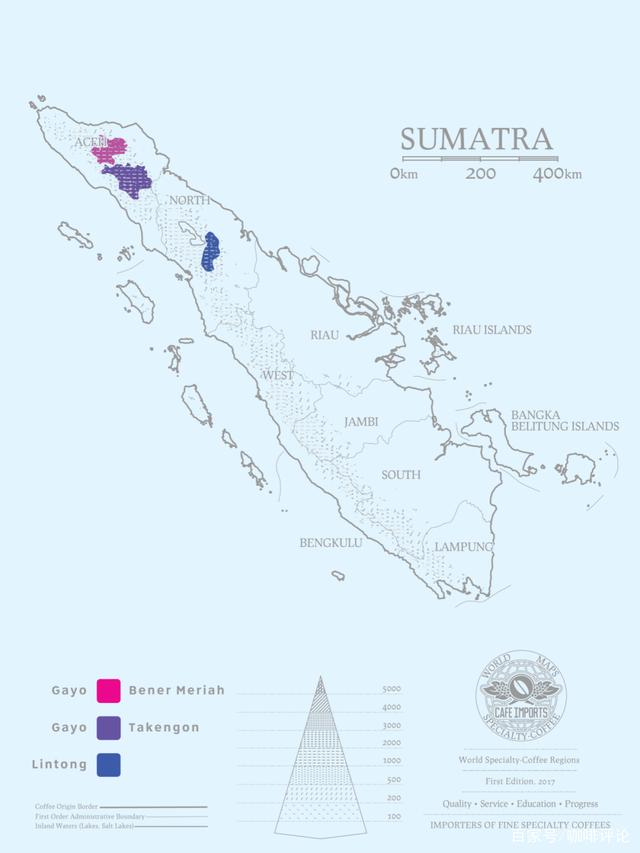
Indonesia consists of over 17,000 volcanic islands, straddling the equator with fertile volcanic soil, creating three major producing regions: Sumatra, Sulawesi, and Java. Among them, Aceh Province (ACEH) and North Sumatra Province (Sumatera Utara) in northern Sumatra are the core Mandheling regions, each surrounded by Lake Tawar and Lake Toba, respectively. Lake Toba, the world's largest volcanic lake at about 1,400 meters above sea level, provides an ideal growing environment with its tropical rainforest climate and abundant rainfall; the Lintong region to its south is a well-known coffee trading area. Around Lake Tawar in Aceh, the Gayo Mountain brings elevations above 1,500 meters. Although trade was once affected by political instability, the industry gradually recovered after the 2005 tsunami.
Mandheling coffee from the Lintong highlands grows in volcanic terrain at 1,000-1,500 meters above sea level. The fertile soil and humid climate should produce high-quality flavors, but because some planting areas switched to new varieties for higher yields, quality has declined compared to earlier times. In contrast, the Lake Tawar region in Aceh persists in planting the ancient Typica variety, maintaining higher quality, and some large exporters also focus their efforts there. Note that Lintong Mandheling without careful sorting of green beans may show flavor fluctuations, but it still retains the classic Sumatran rich body and spicy herbal aroma, making it a cost-effective choice for experiencing Indonesian coffee characteristics.

The evolution of Mandheling varieties is closely related to leaf rust. The originally planted Typica is one of the oldest Arabica varieties, with a conical plant shape, long branch spacing, and pointed oval beans (commonly known as "red-top coffee"). It has a clean, delicate, and well-balanced flavor but is demanding in terms of altitude and disease resistance. After the leaf rust epidemic at the end of the 19th century, Indonesia gradually switched to the more disease-resistant Catimor. Typica's characteristics include a main stem up to 5 meters, bronze-colored top leaves, and a unique flavor profile; Catimor, a hybrid descendant of the Bourbon variant Caturra and Timor, is often criticized for flavor defects, but in Sumatra's unique environment, it instead shows advantages of woody notes and a rich body. In addition, Tim Tim (a natural hybrid of Typica and Robusta) and Ateng (another name for Catimor) are also commonly planted locally due to their high yield and disease resistance.

Indonesia's unique wet-hulling process (Giling Basah) is the core of its coffee processing. Because the climate is rainy and humid year-round, the sun-drying method common in Africa cannot be used, so locals developed this efficient process: first, the fruit skin is removed with a depulper; the mucilage-covered beans are fermented overnight, then washed with running water to remove the mucilage (at this point the bean surface becomes rough to the touch); next, preliminary drying is done, and when the moisture content drops to 30%-50% (usually requiring 1-2 days of sun drying), a special huller is used to frictionally remove the still-hard parchment layer (this step is forceful and easily deforms the bean surface, forming so-called "goat hoof beans"—these are not defective beans but a typical feature of wet-hulling); finally, drying continues to 12% moisture content for storage.

Wet-hulling significantly reduces coffee acidity while enhancing body and sweetness. Unlike the washed method, it removes the parchment while the green beans are semi-dry and semi-wet (rather than completely dry), greatly shortening processing time and better suited to Indonesia's hot and humid environment. This process gives Mandheling its classic low-acidity, full-bodied flavor. Although it may cause some beans to deform in appearance, it becomes their unique identifier.

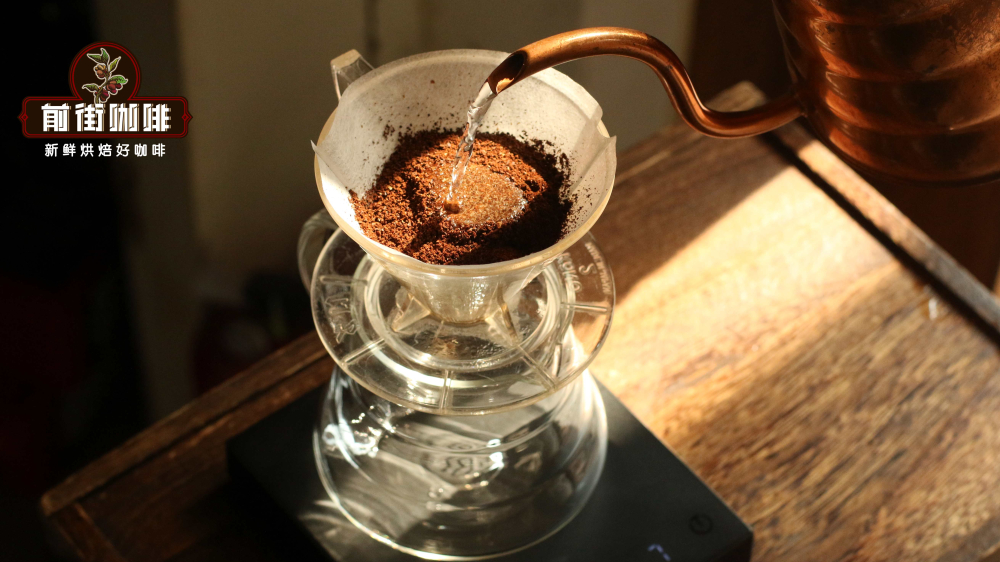
For coffee enthusiasts, understanding Mandheling's brewing parameters can better reveal its flavor potential. A medium-dark roast is recommended (beans are loose and highly absorbent, so avoid over-extraction which causes bitterness), with a medium-coarse grind (e.g., 75% passing through a Chinese standard No. 20 sieve, roughly equivalent to the medium-coarse particles commonly used for pour-over), and water temperature around 88°C. The KONO dripper is recommended—its smooth upper curve fits tightly against the filter paper, reducing steam rise; the lower ribs accelerate water flow, extending contact time between water and coffee grounds, enhancing extraction concentration. Specific steps: coffee-to-water ratio 1:15 (e.g., 15g coffee to 225ml water), first pour 30g water for a 30-second bloom (to release carbon dioxide), then pour in a small stream in circles to 125g, pause, continue to 225g, and stop; total extraction time about 2 minutes. After completion, gently swirl the cup before drinking to experience the flavor layers more evenly.

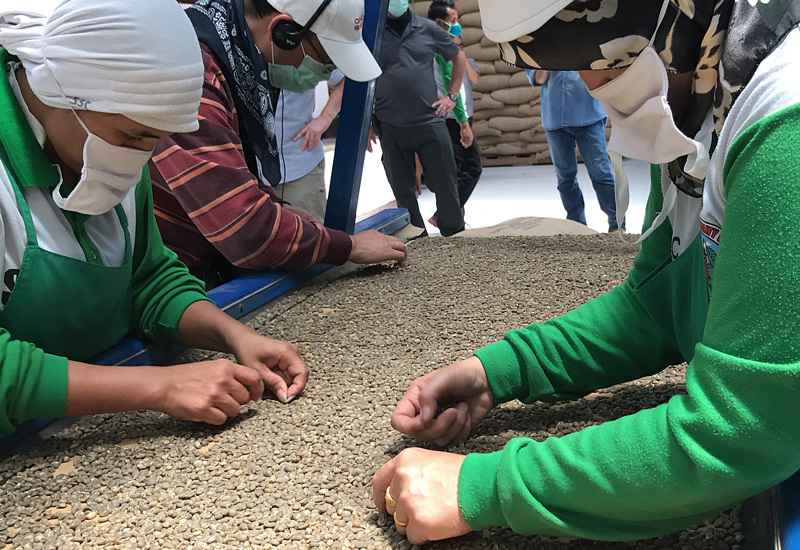
Mandheling from different regions has distinct flavor characteristics: Lintong Mandheling features herbal, chocolate, and caramel notes with overall balance and harmony; Golden Mandheling (typically G1 grade beans that have undergone four rounds of manual sorting by PWN, with more uniform color and size) presents rich layers of nuts, spices, herbs, licorice, and caramel, with a cleaner and brighter mouthfeel. Both classic types, due to wet-hulling, exhibit the signature low-acidity, high-body taste, making them excellent introductory choices for exploring Indonesian coffee flavors.