Brazil's Coffee Legacy: How the World's Largest Origin Shapes Flavor and Innovation
Introduction: As the dominant producer accounting for over 30% of global coffee output, Brazil not only supplies one-sixth of the world's coffee beans but also defines the modern coffee industry through its distinctive cultivation techniques and processing methods. This article takes you deep into how Brazil transformed from traditional plantations into a technology-driven origin, analyzes the flavor characteristics and processing innovations of its signature beans, and reveals the secrets behind champions' winning recipes at top competitions.
Brazil is not only the world's largest coffee producer and exporter but also supports the global coffee supply chain with over 30% of worldwide output. This South American country produces more than 5 billion kilograms of coffee beans each year, about one-sixth of which flows to the global market, and it is also the world's second-largest coffee-consuming nation after the United States. Some 300,000 coffee farmers work the land here, and their labor has not only shaped Brazil's economy but also profoundly influenced the direction of global coffee culture—from the base of espresso to the raw material for instant coffee, Brazilian coffee is everywhere.
When it comes to the flavor impression of Brazilian coffee, most people first think of its mild, smooth, full-bodied character with prominent sweetness. Because the main growing regions sit mostly at elevations of 600–1,000 meters (only a few specialty regions such as Sul de Minas, Cerrado, and Mogiana exceed 1,300 meters), Brazilian coffee lacks the intense floral and fruity acidity common at high altitudes, instead developing a distinctive low-acid, rounded style. This quality makes it an ideal base for espresso blends, effectively enhancing crema stability and contributing a lingering caramel finish.
In terms of core varieties and cultivation features, Brazil widely grows disease-resistant, low-altitude-adapted varieties such as Caturra, New Hybrid (Mundo Novo), and Catuai. These coffee trees generally do not require complex shade systems, and together with the local flat terrain and large-scale planting model, they form a distinctive industrial landscape. Notably, Brazilian coffee rarely exhibits extreme flavor characteristics—it has neither the bright fruity acidity of African beans nor the heavy earthy notes of Indonesian beans, but is known for its balanced sweetness, moderate body, and neutral flavor background.
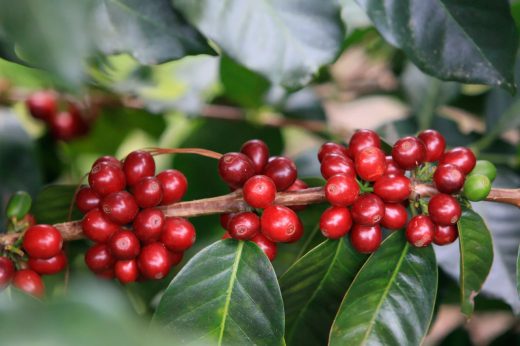
Processing innovations have profoundly changed the quality image of Brazilian coffee. Before the 1990s, Brazil commonly used the traditional natural process, but because the eastern growing regions often experience drought, the coffee cherries were susceptible to rain during the two-week drying process, leading to mold, and Brazilian beans were once regarded as synonymous with mid-to-low-end quality. To address this, Brazilian agricultural research institutions developed the globally unique pulped natural method: the coffee pulp is first removed while the mucilage layer is retained for 1–3 days of sun drying, then mechanically dried to 12% moisture content. This method drastically shortens the processing cycle from 21 days to 3–5 days, significantly reducing the risk of mold while preserving the natural method's advantage of enhanced sweetness, creating cleaner fruity notes and honey-like character.
Today Brazilian estates can flexibly choose processing methods according to microclimate: the dry Cerrado region (such as central-western Minas) still adheres to the traditional natural process to intensify nutty flavors; Sul de Minas combines pulped natural, washed, and natural processes; and the emerging honey process is gradually gaining popularity in specialty regions. This trend of processing diversification has allowed Brazilian coffee to break free from the limitations of a single flavor profile.
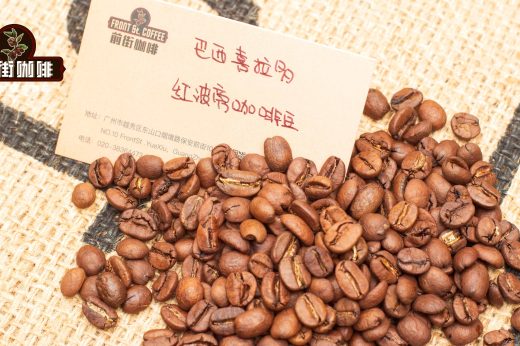
Among the many Brazilian coffees, Daterra Estate's "Sweet Collection" stands as a representative work that brings together the best of these techniques (as shown in the image ). This technology-driven estate in the Cerrado region of Minas Gerais has, through more than twenty years of research and development, cultivated four star varieties: Yellow Bourbon, Yellow Catuai, New World, and Icatú 3282. These varieties are harvested in batches according to differences in ripeness (some fruits are picked on the first day they turn red, others delayed to the third or even fifth day), and processed with a mix of natural and pulped natural methods, ultimately creating a signature multi-layered sweetness—progressing from caramel sweetness to maple syrup sweetness, while breakthroughly displaying the elegant acidity and long finish rarely seen in Brazilian coffee.
This recipe has helped multiple baristas win championships: 2005 World Barista Championship winner Troels Poulsen took the title with his espresso recipe, and in 2006 Klaus Thomsen blended it with beans from Costa Rica's La Minita Estate to win again. These achievements confirm Brazilian coffee's potential in the specialty field—through precise variety selection, scientific harvesting strategies, and innovative processing techniques, it is entirely capable of producing high-end beans that combine sweet, smooth mouthfeel with complex layers.
For coffee lovers, the value of Brazilian beans lies not only in the consistency of their commercial-grade products but also in their irreplaceable role as a blending base. Whether for home pour-over or commercial roasting, adding 10%–30% Brazilian beans can effectively balance the overall flavor structure. It is especially recommended to try Brazilian single origins with different processing methods: natural-processed versions are suited to showcasing chocolate and nutty notes, pulped natural versions better highlight tropical fruit sweetness, and honey-processed versions bring unique caramelized flavor layers.