Brazilian Ethiopian Native Variety Moonlight Box: Pour-Over Parameters and Latte Guide
Introduction: This unique coffee from Brazil, though grown in Brazil, uses an Ethiopian native variety and is given a distinctive flavor profile through an innovative low-temperature anaerobic processing method. This article introduces this coffee bean, known as "Moonlight Box," in detail—from its origin background and processing method to its flavor characteristics, and how to fully bring out its layers of citrus, red date and caramel through precise pour-over parameters and a latte recipe, taking you to explore the endless possibilities of this specialty coffee.
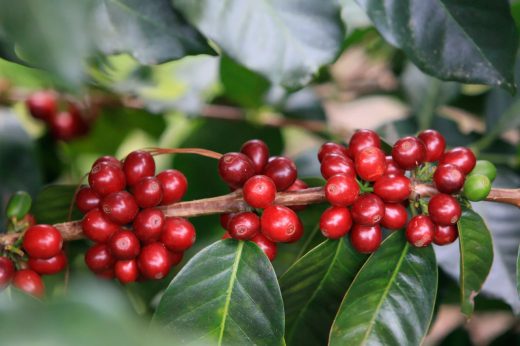
This is a rather distinctive Brazilian coffee bean; although it grows in Brazil, it uses a native coffee variety from Ethiopia. This lot is produced by one of the regions with the most awards in the history of Brazil's COE (Cup of Excellence)—the Carmo de Minas region—and more specifically, it comes from the region's famous Fazenda Irmas Pereira estate, which won second place in the 2015 Brazil COE competition.
The driving force behind this coffee is Luiz Paulo, the fifth-generation descendant of the Pereira family. He is not only a leading figure in the local coffee industry but also serves as president of the Brazil Specialty Coffee Association (BSCA). Luiz Paulo has long been committed to innovation in coffee cultivation and processing; he boldly introduced the Ethiopian native variety, planted it in the high-altitude area of Carmo de Minas, and combined it with a unique "anaerobic processing method" to create a coffee with a distinctive flavor.
During processing, after the coffee cherries are picked, they are first soaked in cold water overnight, then washed at low temperature. The entire drying stage deliberately avoids sunlight and relies only on moonlight for natural drying at night, which is why this coffee is also romantically called "Moonlight Box." This processing method not only improves the coffee's cleanliness but also further releases the floral and fruity aromas and sweetness characteristic of the Ethiopian native variety.
After professional roasting, this coffee shows rich layers of flavor, including aromas of citrus, red date, caramel, brown sugar and malt. The body is full and round, with prominent sweetness; overall it is rich and fragrant with a viscous texture, and the finish is lively with a long aftertaste. Many professional cuppers have described it as "a highly representative high-quality Brazilian coffee."
If you want to brew this coffee's unique flavor at home, here are practical pour-over parameter suggestions: use about 15 grams of ground coffee, with a grind size referencing medium-fine leaning toward medium, similar to the texture of table salt; a typical home grinder can be set at a setting where about 50% passes a standard sieve (for example, the 6A setting on some brands of grinders). The water temperature is recommended at around 88°C, using a flat-bottom dripper such as Kono or Kalita, with a recommended coffee-to-water ratio of 1:14.
During the pour-over, it is recommended to use the center of the dripper as the circle's center and slowly pour in a clockwise circle. First, pour about 30 grams of water within 15 seconds for pre-infusion, then pause pouring. After about 1 minute, continue pouring in the same way, being careful that the water stream does not directly hit the edge where the filter paper contacts the coffee grounds, to prevent channeling. When pouring, leave an outer ring of the dripper unpoured, then gradually move toward the center. The entire pouring should be completed in about 2 minutes 10 seconds, with total water controlled at around 210 grams.
In addition to regular pour-over, this coffee is also very suitable for Japanese-style iced pour-over. For iced pour-over, a medium-dark roast level is recommended, and the grind can be slightly finer, for example about 60% passing a standard sieve (for example, setting 5R on some grinders; for iced pour-over it can be adjusted to setting 3, half a step finer than regular). A recommended dose is 20 grams, paired with 150 grams of ice and 150 grams of hot water, with an overall coffee-to-water ratio (including ice) of 1:15.
For the bloom stage of iced pour-over, it is recommended to pour 40 grams of hot water, with a bloom time of about 30 seconds. Then pour in stages: 60 grams of water in the first stage and 40 grams in the second stage. During pouring, the stream can be slightly thinner but kept at a certain height, and gently stir to help the coffee grounds absorb water evenly, but be careful that the liquid level does not get too high to avoid water overflowing the edge of the filter paper. The entire iced pour-over process is also completed in about 2.5 minutes.
If you want to use this "Moonlight Box" to make a latte, it is recommended to use medium-dark roasted beans, which better complement the milk's silkiness and the coffee's sweetness. The grind can be slightly coarser than for pour-over to suit the extraction needs of an espresso machine; grinding to a texture close to granulated sugar is usually recommended. When extracting espresso, a dose of 18–20 grams is recommended, with extraction time controlled at 25–30 seconds and a yield of about 36–40 grams, so as to obtain a rich and balanced Espresso base. Paired with an appropriate amount of fresh steamed milk, with a recommended ratio of 1:2 to 1:3 (espresso:milk), you can enjoy a full-flavored Brazilian latte with prominent sweetness.
Overall, this "Moonlight Box" coffee can show its distinctive layers of flavor and sweet, smooth texture whether brewed as pour-over or made into a latte, making it very suitable for coffee enthusiasts to explore and try in depth. Master the above parameters and techniques, and you can easily reproduce the unique charm of this specialty coffee.