Brazil Specialty Coffee: Regions, Varieties, Flavor and Pour-Over Guide
Introduction: As the world's largest coffee producer, Brazil is favored for its beans' consistent quality and distinctive neutral flavor. This article takes an in-depth look at the growing characteristics of Brazil's main coffee regions, the traits of its mainstream varieties, and how these beans perform in terms of flavor, acidity and body. It also offers practical pour-over parameter suggestions to help coffee lovers better understand and appreciate the unique appeal of Brazilian coffee.
Since coffee trees were introduced from French Guiana in 1720, Brazil's coffee industry has undergone a shift from strict control to market-oriented reform. Before 1990, the government exercised tight regulation over the coffee sector, including price supports and minimum purchase price policies. While this safeguarded farmers' incomes, it also led to severe overproduction—on the eve of World War II, stockpiles reached as high as 78 million bags, and some beans were even destroyed.
After 1990, with the opening of the free market, the former "Brazilian Coffee Institute" was replaced by a non-profit national economic association. The new body adopted a non-interventionist policy, allowing producers and exporters to deal directly with each other, while regulating export procedures through legislation to protect the rights of compliant operators. This reform drove the modernization of Brazil's coffee industry.
Core Regions and Production Distribution
Brazil has 21 states, 17 of which grow coffee, but production is highly concentrated in four main regions—Minas Gerais, São Paulo, Mato Grosso do Sul and Paraná—which together account for 98% of the country's output. These areas mostly sit at elevations of 800–1,200 meters, with large temperature differences between day and night, giving the beans rich layers of flavor.
Variety Characteristics and Processing Methods
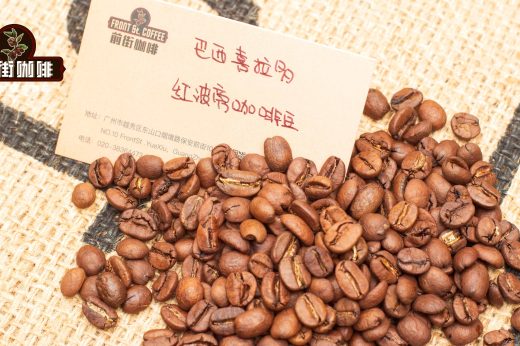
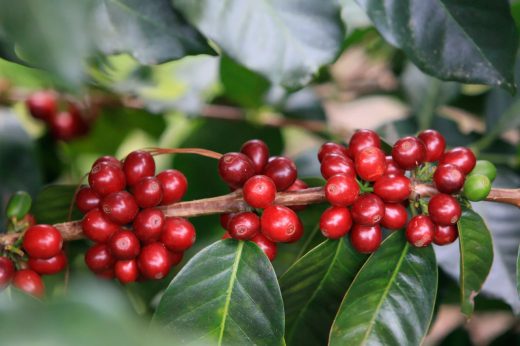
Brazilian coffee is known for its low acidity and mild, full body. Most is processed using the natural (dry) method (without washing), and is named after the producing state and export port. Common varieties include Bourbon and Catuai, among which Catuai has become mainstream in recent years due to its strong disease resistance and stable yields. The beans are plump and rich in oils, making them suitable for dark roasting.
Flavor Profile and Tasting Experience
Typical Brazilian coffee presents nutty, chocolate and caramel base notes, accompanied by moderate citrus acidity; the mouthfeel is round and smooth, with a clean, lingering finish.On entry you can sense a soft balance of sweetness and bitterness, with a faint grassy aroma, transitioning to a warm malt sweetness in the aftertaste. This balanced character makes it an ideal base for espresso blends and also suitable for cold brew.
Practical Brewing Suggestions
For pour-over, a medium-fine grind (similar to fine sugar) is recommended, with water temperature controlled at 90–93°C. A coffee-to-water ratio of 1:15–1:16 is suggested, using a three-stage pouring method: first pour for a 30-second bloom, then add 60% and 40% of the total water in subsequent stages, with a total extraction time of about 2 minutes 10 seconds. This fully brings out the nutty notes and full body of Brazilian beans.
For consumers who prefer milk coffee, Brazilian coffee pairs extremely well with milk. Its mild acidity and rich sweetness perfectly complement the silky texture of fresh milk; when making lattes or cappuccinos, a medium-dark roast is recommended to enhance the expression of caramelized flavors.