Brazil vs. Colombia coffee: flavor comparison and Colombia's regional grading system

Introduction: Brazil and Colombia are the world's two largest coffee-producing countries, yet the beans from their regions differ markedly in variety characteristics, flavor expression and grading standards. This article examines the flavor differences between Brazilian and Colombian coffee, details Colombia's more than 200 sub-grades and the characteristics of its core regions, and explains the seven-tier quality system based on altitude, to help coffee lovers choose beans that suit their taste more precisely.
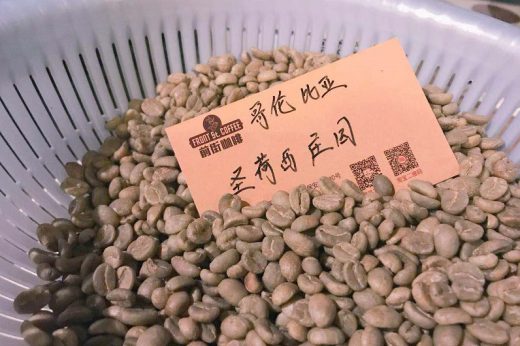
In the coffee world, Brazil and Colombia are undoubtedly two giants. Brazil mainly grows medium- to large-bean Arabica coffee; these beans tend to be larger, adapt well to their environment, and yield more per unit area. By contrast, although Colombian coffee is also Arabica, the varieties grown there generally have softer, more delicate flavors, which is inseparable from the country's unique geography and microclimates.
Colombia's coffee grading system is extremely detailed, with more than 200 different quality tiers nationwide. Among them, the Special Selection grade (SUPERMO) represents the highest quality, followed closely by the Superior Selection grade (EXCELSO). Note that only Special Selection coffee with a bean size of 18/64 inch (about No. 18) or above qualifies to be classified as Select coffee. This strict screening mechanism ensures that the high-quality beans circulating in the market all meet a fairly consistent high standard.
In terms of flavor characteristics, Colombian coffee overall shows excellent balance, with a smooth mouthfeel and rich layers; many industry insiders describe it as the "gentleman" of the coffee world—understated yet deeply substantial. The country's coffee regions are widely distributed, but coffee from the Central Cordillera is the most outstanding; coffees from these regions usually have a heavier body and more distinct flavor characteristics. Among them, the three regions of Medellin, Armenia and Manizales are known together as the "MAM" combination, a byword for quality assurance. The Narino region in the higher-altitude south is known for specialty coffee with particularly vivid flavors and bright acidity.
Colombia's specific coffee grading standards are based mainly on growing altitude and fall into seven main grades:
• Special grade beans: grown above 1,500 meters
• Superior grade beans: 1,200–1,500 meters
• Medium grade beans: 1,000–1,200 meters
• Special washed beans: 900–1,000 meters
• Superior washed beans: 760–900 meters
• Premium washed beans: 610–760 meters
• Fine washed beans: below 610 meters
It is worth noting that higher altitude usually means a greater temperature difference between day and night and slower ripening of the coffee fruit, which favors the accumulation of flavor compounds; as a result, coffee from high-altitude regions often has more complex flavor expression and brighter acidity. For coffee lovers pursuing a high-quality pour-over experience, choosing Colombian beans grown above 1,200 meters usually yields more satisfying extraction results. Brazilian coffee, with its larger bean size, is better suited to brewing methods that call for a fuller body, such as espresso or French press.