Colombia vs Brazil Coffee Beans: A Complete Guide from Farm to Flavor

Introduction: This guide takes an in-depth look at the core differences between Colombian and Brazilian coffee beans, covering botanical characteristics, the microclimates of major growing regions, and how processing methods influence flavor. By comparing the typical traits of washed and natural processing, it reveals the essential distinctions between the "green gold" and the "king of hard beans" in acidity layers, body, and finish, offering coffee lovers practical reference for choosing beans and brewing.
In the specialty coffee world, Colombia and Brazil, the world's two largest producers, have bean characteristics that directly shape the final flavor. The Arabica coffee mainly grown in Colombia has a typical plant form—this small tree, 5-8 meters tall, has young branches with a distinctive flattened structure and leathery, glossy leaves. Its flower clusters grow in the leaf axils, with 2-5 flowers per cluster, an arrangement that directly affects picking efficiency—which is also an important reason the region insists on hand-selecting ripe cherries.
Observing fruit development, Colombian coffee berries take on a signature broad oval shape when ripe, 12-16 mm in diameter with a bright red color; the seeds inside have a pronounced longitudinal groove. This anatomical feature makes for more even heat conduction during roasting, laying the foundation for the floral and fruity notes that follow.
Three core regions form the famous "coffee triangle": the Medellín region is known for high-altitude growing, with bean density reaching above 0.78 g/cm³, and washed processing highlights citrus acidity; the mixed growing area of Armenia and Manizales, with day-night temperature swings of 8-10°C, creates richer sugar accumulation. Notably, the local practice of selective picking, collecting only fully red cherries, keeps the defect rate below 3%.
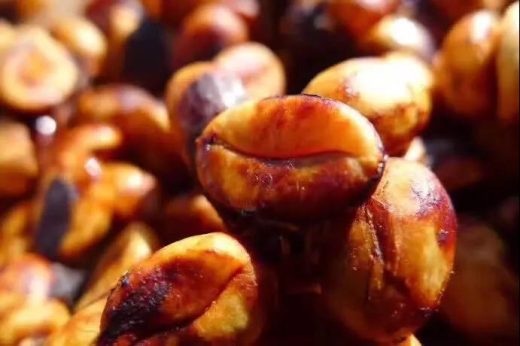
Brazil's coffee growing ecology differs markedly, concentrated mainly in hilly areas at 800-1200 meters. Its Bourbon varietals adapt to extensive management, and the fruit ripening cycle is about 15 days longer than Colombia's, resulting in a higher starch conversion rate. The common natural processing gives the bean surface distinctive wrinkles, a physical trait directly linked to the formation of a full body.
A flavor comparison shows: Colombian specialty beans in the SCAA cupping system have acidity values stable in the pH 5.8-6.2 range, with pronounced apricot-peach notes; Brazilian coffee's pH is usually as low as 5.4-5.7, showing a more prominent chocolate finish. For extraction parameters, Colombian beans suit 92-94°C water with a medium-fine grind (75% passing a Chinese standard No. 20 sieve), while Brazilian beans tolerate lower temperatures (88-90°C) with a medium-coarse grind.
A common consumer misconception is that "Brazilian beans are always intense." In fact, the high-altitude growing areas of southern Minas Gerais can also produce balanced specialty beans with both sweetness and acidity; the key is distinguishing traditional commercial beans from micro-lot products. Professional roasters suggest beginners start with washed beans from Colombia's Huila region, whose clear contrast between citric acidity and caramel sweetness helps build a basic flavor framework.
Storage conditions also affect the two coffees significantly. Because Colombian beans are denser, their optimal flavor window at 60% relative humidity is 21-28 days after roasting; Brazilian beans need a longer resting period (30-45 days) to fully develop nutty flavor compounds. In brewing practice, when using a V60 dripper, adjusting the coffee-to-water ratio to 1:15-1:16 better highlights the layered changes in Colombian beans.