Why Colombian Coffee Isn't Sour: Flavor Differences vs. Brazil and Key Regions

Introduction: This in-depth analysis examines the acidity characteristics of Colombian coffee and the roots of its flavor differences from Brazilian coffee, with a comprehensive introduction to the geographic advantages, variety characteristics and flavor profiles of representative beans from Colombia's main regions. From growing altitude and climate conditions to processing methods, it helps coffee enthusiasts gain a systematic understanding of Colombian coffee's unique appeal and key points for purchasing.
Colombia, with its dual-port advantage adjacent to both the Atlantic and Pacific oceans, holds a unique logistics-cost edge among South American coffee-exporting countries, allowing its coffee products to circulate efficiently in global markets. The country's coffee cultivation is concentrated in the Eastern Cordillera, Central Cordillera and the three premium southern regions of Huila, Cauca and Nariño. Among these, the MAM (Medellín, Armenia, Manizales) Golden Triangle region is known for its mid-altitude growing belt of 1,400–1,600 meters, while the southern high-altitude regions produce high-acidity specialty beans thanks to their distinctive terroir.

Among the central core regions, beans from the Medellín area are characterized by full bean size, intense aroma and moderate acidity, making them a balanced, high-quality bean; together with Armenia and Manizales, this region forms the MAM Golden Triangle, often used by roasters as a baseline bean for medium-dark roasts. The eastern department of Santander, Colombia's earliest coffee-growing area (now about 5% of national output), produces beans from its 1,400–1,600-meter belt with a distinct fresh, herbaceous character; note that although its output is not high, the department has deep historical roots.

The southern high-altitude regions show distinctly different flavor characteristics: Huila (12% of output) produces mainly nut, dark chocolate and caramel flavors at 1,500–1,800 meters, and its sub-regions often circulate as independent brands; Cauca (8% of output), relying on a maximum altitude of 2,100 meters and a notable 11°C day-night temperature difference, cultivates coffee with bright acidity and outstanding sweetness—the region's 80% mountainous environment and extreme high-mountain growing conditions at 2,050 meters create unique flavor layers. The Nariño region lies in the far southwest, where a plantable altitude of 2,300 meters near the equator at 1° north latitude and the microclimate formed by year-round snow-capped peaks, together with volcanic soil and an eight-month rainy season (October to May), make it a potential growing area for top Geisha varieties—although this region accounts for only 3% of national output, the dew supply brought by trade winds during the alternation of dry and wet seasons effectively alleviates water shortages in the dry season.
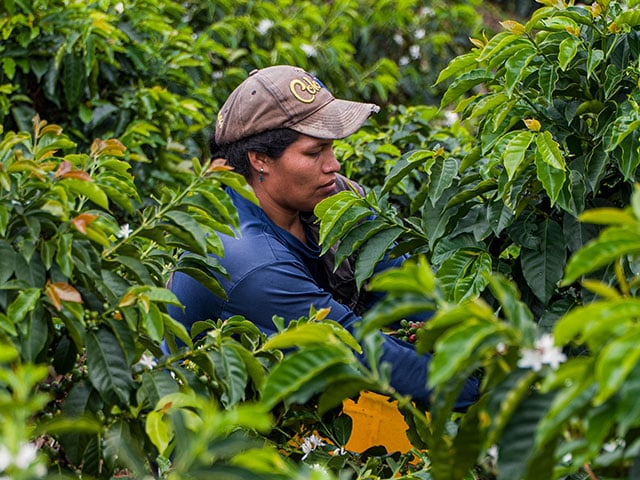
On the acidity question that consumers care about, Colombian coffee as a whole shows low to moderate acidity: the central MAM region has mild, rounded acidity, while southern Huila and Cauca use high altitude (1,758–2,100 meters) and day-night temperature differences (11°C in Cauca) to slow the ripening of coffee cherries, prompting the fruit to accumulate more sugars and aromatic compounds and ultimately presenting bright citrus acidity and berry notes; Brazilian coffee, by contrast, is mainly grown at 800–1,200 meters in flat areas (such as Minas Gerais), and with low-acidity varieties like Bourbon and Catuai plus semi-washed processing, it forms a low-acidity, full-bodied style dominated by nut and chocolate notes. The difference between the two essentially stems from the dual influence of altitude and variety.

In terms of varieties, Colombia mainly grows Caturra (strong wind resistance, a short plant of 1.2–1.5 meters), Castillo (a high-altitude-adapted variety) and a small amount of Geisha; Caturra accounts for more than 60% of the planted area, and its 1.8–2.2% caffeine content and balanced flavor make it a base variety across many regions. In processing, southern regions prefer double anaerobic washed (such as Cauca Cherry Blossom beans) and anaerobic enzyme-washed (such as Santander Rose Valley), enhancing specific flavors (such as berry and rose) by controlling the fermentation environment; the central region mostly uses traditional washing to ensure cleanliness.

Roasting recommendations for reference: beans from the MAM region are best given a medium-dark roast (charge temperature 180–185°C, 1–1.5 minutes of development after first crack) to highlight caramelized aromas; southern high-altitude beans are suited to a light-medium roast (charge temperature 165–180°C, 90–120 seconds of development after first crack) to preserve acidity and floral-fruity notes. Example pour-over parameters: V60 dripper with 15 g of coffee, 90–91°C water, 1:15 coffee-to-water ratio, medium-fine grind (80% passing a No. 20 sieve), three-stage extraction (30 g bloom for 30 seconds → 125 g in stages → finish at 225 g), total time 2 minutes 10 seconds, to fully reveal the layered character of Colombian beans.

When buying, note: products labeled with origin names such as "Huila" or "Cauca" usually have more distinct flavors, while MAM Golden Triangle beans suit everyday needs for a balanced taste; freshness directly affects flavor performance, so choose beans within 5–14 days after roasting, with a resting period of 4–7 days being ideal. By understanding the links between regional altitude, variety characteristics and processing methods, coffee enthusiasts can more precisely match their personal taste preferences.