Bottomed vs Bottomless Portafilters: Function and Espresso Extraction
Introduction: Espresso machine portafilters come in two types, bottomed and bottomless, and they directly affect observation of the coffee's flow rate, judgment of channeling, and the final flavor presentation. This article analyzes in depth the structural differences between the two types of portafilters, compares their advantages and disadvantages, and provides reference professional extraction parameters to help coffee enthusiasts choose the right tool according to their needs and improve extraction quality at home or in a café.
In the use of semi-automatic espresso machines, the portafilter is the core component connecting the filter basket and the group head, and differences in its design significantly affect the coffee-making process and the final product. Currently, mainstream portafilters fall into two types: bottomed spouted portafilters and bottomless straight-through portafilters, each with its own characteristics in structure, function, and suitable scenarios.
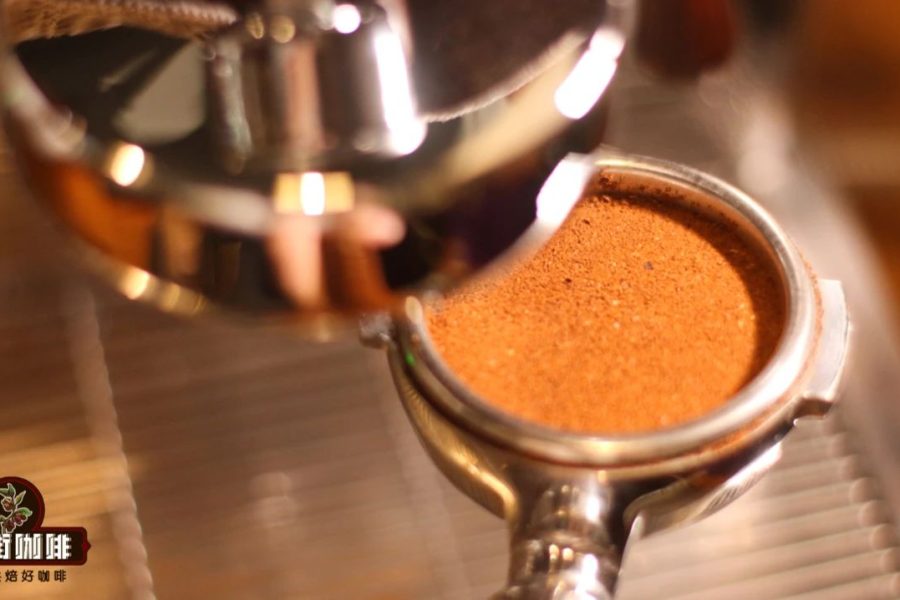
Distinguished by appearance, a bottomed portafilter is closed at the outlet, retaining only a small drainage opening, and is usually equipped with a spout that can split a single espresso evenly between two cups; a bottomless portafilter removes the bottom cover, directly exposing the bottom of the filter basket for easy observation of extraction dynamics.
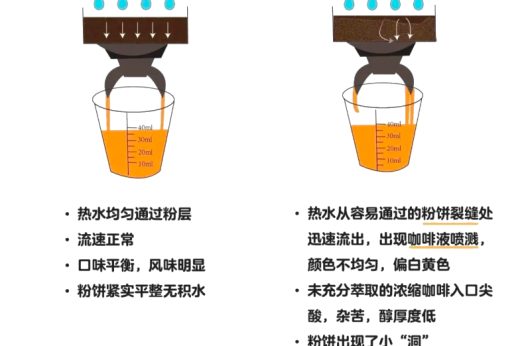
The core advantage of the bottomless portafilter is the visualization of the extraction process. Because the bottom of the filter basket is fully open, the operator can clearly see the flow state of the coffee—when channeling occurs, obvious liquid jetting appears at the bottom of the basket, a problem that is hard to detect with a bottomed portafilter because it is covered. In addition, if the distance between the machine's group head and the cup platform is short (for example, when making a layered coffee such as a Dirty), a bottomless portafilter saves about 3-4 cm of height, avoiding the trouble of being unable to place tall cups.

The original design of the bottomed portafilter includes practical considerations: first, the bottom drainage opening effectively buffers the impact of the coffee, reducing the risk of splashing when pouring into a cup; second, the spout supports splitting a standard single espresso of 30-36 ml evenly between two cups, suitable for sharing between two people. But this type of portafilter also has obvious shortcomings—the metal bottom absorbs heat from the group head, and if not fully preheated it may cause extraction temperature fluctuations; and the basket and bottom structure easily retain coffee grounds, and long-term failure to clean will accumulate oils and affect subsequent flavor.
The disadvantages of the bottomless portafilter are equally obvious: the open design lets the coffee fall directly, and the lack of buffering easily causes splashing at the cup rim, so attention must be paid to the angle and distance of the cup. But because it solves the key pain points of the bottomed portafilter, it has become the tool of choice for many professional baristas.
If you want to convert a bottomed portafilter into a bottomless version, this can theoretically be achieved by cutting away the closed bottom structure (requiring professional tools), but the cut surface must be flat to avoid affecting the sealing when the filter basket is installed.
For users pursuing fine extraction control, the bottomless portafilter provides more direct parameter feedback. For example, by observing the speed of crema formation, changes in the thickness of the crema layer, and the uniformity of the flow thickness, you can quickly judge how well the grind size, dose, or pressure match. When the flow appears too thick in the center or breaks off at the edges, adjusting the grind size or tamping force promptly can optimize the extraction result.
The following are reference parameters for professional-grade espresso extraction (calibrated based on common commercial equipment):
Grind size: very fine (similar to fine granulated sugar; it is recommended to adjust a conical burr grinder to the 2.1-2.3 setting)
Dose: 18-20 g (capacity of a standard single filter basket)
Yield: 30-36 ml (a double can be increased to 60 ml)
Extraction time: 25-30 seconds
Water temperature: 90-96°C (fine-tune according to the bean variety and roast level)
Pressure: 9±2 bar (home machines may differ slightly)
In the actual operation process, pay attention to the following details:
1. Preheating stage: after turning on the coffee machine, wait for the boiler temperature to stabilize (about 15-20 minutes), and at the same time rinse the portafilter and filter basket with hot water to preheat them;
2. Distribution and tamping: fill the freshly ground coffee evenly into the filter basket, and press down vertically with a tamper to 30-40 lb of force (about 13-18 kg), ensuring the surface is flat without depressions;
3. Extraction monitoring: lock in the portafilter and start extraction, focusing on whether fine golden crema forms in the initial stage (the first 3-5 seconds); in the middle stage the flow should maintain an even tiger-stripe pattern, and before the end avoid sudden color changes or an accelerated flow rate.
Through the intuitive observation of the bottomless portafilter, abnormal extraction signals can be captured more precisely—for example, channeling will cause high-speed jetting in a specific area of the basket bottom, at which point you need to check whether the puck is tamped evenly or whether the grind size is appropriate. After mastering these techniques, whether for home users or commercial scenarios, the quality stability of espresso can be significantly improved.