The Ultimate Guide to Manual Coffee: French Press, AeroPress, or Pour-Over?
Introduction: From the classic richness of the French press to the versatility of the AeroPress and the delicate layers of pour-over coffee, how do different brewing tools affect coffee flavor? This article explains the core differences among five mainstream manual brewing methods, covering practical techniques such as equipment selection, grind parameters, and water temperature control, with an analysis of common mistakes to help you find the brewing solution best suited to home or office.
In today's thriving specialty coffee culture, manual brewing has gradually moved from a craft exclusive to professional cafés into home settings. While chain brands are still promoting convenient capsule coffee machines, more and more coffee lovers are discovering that a hands-on brewing process not only reveals coffee's richer aromatic layers but can also be flexibly adjusted to personal taste. This article systematically compares five mainstream manual brewing methods—French press, AeroPress, pour-over, and others—to help you gain a deeper understanding of each method's unique advantages.
Although traditional automatic drip coffee machines are known for their ease of operation—just insert a filter, add coffee grounds and water, and press a button—their flavor performance is often limited by fixed parameters. Professional reviews show that the default extraction temperature of such devices is usually below the ideal range (88-96°C), and both grind size and water flow rate cannot be adjusted, resulting in incomplete extraction of some flavor compounds. In contrast, manual brewing can better showcase the regional characteristics of coffee beans through precise control of variables.
The French press, with its market share of over 90%, has become the entry-level choice for many households. Its stainless steel mesh design inevitably lets extremely fine particles into the cup; medium-coarse grinding (similar to the texture of sea salt) is recommended to avoid excessive bitterness. It is worth noting that ordinary glass models have poor heat retention; if you want to maintain the optimal extraction temperature (92-94°C), choose a double-walled stainless steel version. During actual brewing, after pouring the water, let it sit for 4 minutes before pressing down slowly; this duration effectively balances body and sediment content.
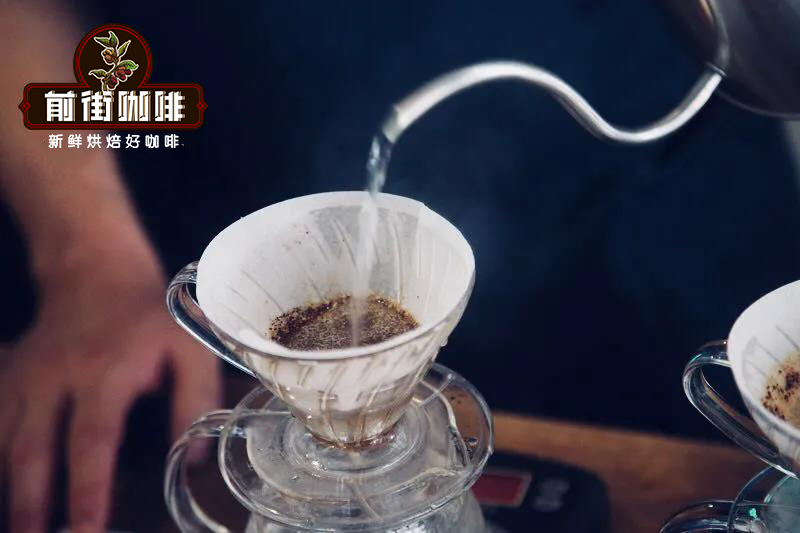
The essence of pour-over brewing (such as hand-poured coffee) is extracting flavor through a controlled stream of water. Unlike automatic drip, the turbulence created by manual pouring more evenly saturates the coffee bed. The choice of filter paper directly affects the cup—white bleached filters deliver a clean flavor, while brown unbleached filters add a slight papery note but retain more oils. Advanced brewers can highlight floral and fruity notes or caramel notes by adjusting pouring technique (such as a center spiral pour or staged extraction).
The versatility of the AeroPress is often underestimated. With a standard paper filter, its extraction principle is similar to pour-over, producing a clear, bright cup; switching to a metal filter retains more coffee oils, bringing the texture closer to espresso. Experiments show that extending extraction time to 2 minutes at a low temperature of 85-90°C can produce an americano with low acidity and pronounced sweetness. Its special piston structure can also enhance extraction efficiency through the inverted brewing method.
For users seeking convenience, a smart drip brewer with parameter adjustment (such as the Brazen series) is a good compromise. Such devices usually allow you to set basic parameters such as water temperature (accuracy ±1°C) and pre-infusion time, but limited by their mechanical structure, they still cannot adjust grind size as freely as manual brewing. It is recommended to use them with a flat-bottom dripper and to ensure grind uniformity (achievable through the setting adjustments of a hand grinder).
Common mistakes among beginners include: over-pursuing a fine grind, which clogs the filter; neglecting the effect of water hardness on flavor (the ideal TDS value should be between 50-150 ppm); and failing to adjust water temperature according to the roast level of the beans (for dark roasts, lowering the temperature by 1-2°C is recommended). Once you master these basic points, you can choose the most suitable brewing solution for different scenarios—whether it is a quick French press coffee in the morning or a leisurely pour-over ritual on the weekend.