Why Yunnan Coffee Draws Criticism: Flavor Flaws and Buying Tips
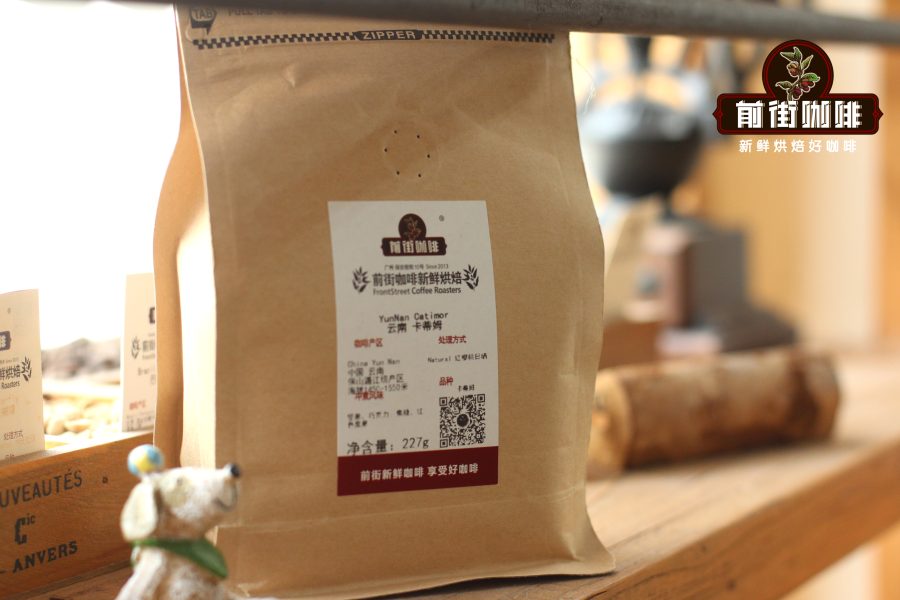
Introduction: Yunnan small-bean coffee, the flagship of domestic Chinese coffee, is often described as "flat" or even "unpleasant." This is closely tied to its growing environment, variety characteristics and historical processing methods. This article analyzes the root causes from the angles of altitude suitability, flaws in mainstream varieties and the evolution of processing techniques, and offers bean-selection guidance for pour-over, espresso and other scenarios to help beginners avoid problematic choices.
In China's coffee landscape, the Yunnan growing region is a topic impossible to avoid—as the country's only region with large-scale coffee cultivation, it accounts for more than 98% of national output. But many consumers, after trying Yunnan small-bean coffee for the first time, are left with impressions of "monotonous," "burnt-bitter" or even "like roasted peanuts." Behind this gap in evaluations lie multiple factors including geography, variety selection and processing methods.

Geographically, although Yunnan lies within the "coffee golden belt" between 15° and 20° north latitude, most of the province's coffee fields sit at elevations of 1,000–1,500 meters. Note that the ideal growing altitude for high-quality arabica is usually above 1,200 meters, and southern Yunnan (such as Baoshan, Lincang, Pu'er and Dehong), with higher elevations and more pronounced day-night temperature swings, has become the main high-quality producing area today. By contrast, coffee trees in lower-altitude areas are more easily affected by high temperatures, and the fruit ripens too quickly, leading to insufficient accumulation of flavor compounds.

The flavor controversy surrounding Yunnan coffee is closely tied to its development history. In the 1980s, with technology introduced by international coffee giants (such as Nestlé), the region began large-scale planting of the Catimor hybrid, which has strong disease resistance and high yields. This variety, a cross between Timor and Caturra, is highly adaptable and can yield 2–3 tons per hectare (ordinary arabica yields about 1–1.5 tons), but its innate genetics set a ceiling on flavor—typically showing prominent woody notes, weak sweetness and stricter demands on farm management and processing. In the early days, to meet the raw-material needs of instant coffee, farmers focused more on yield than quality, further cementing the market perception that "Yunnan beans = commodity beans."

Currently, the mainstream processing methods for Yunnan coffee remain traditional washed and natural. Washed processing, by removing the mucilage layer for fermentation, preserves clear acidity and a clean mouthfeel, commonly described as herbaceous aroma, mild citrus acidity and a honey finish; the natural method relies on drying whole fruit, giving the coffee richer sweetness and tropical-fruit notes, but improper light control can easily produce overripe fermented flavors. However, because most farmers lack fine-grained temperature and humidity control equipment, the risk of defects during processing (such as mold or over-fermentation) remains relatively common—which is also a direct cause of the poor flavor of some Yunnan beans.
For consumers trying Yunnan coffee for the first time, choosing the right beans for the brewing method is especially important. For pour-over or cold brew, prioritize traditional varieties such as Typica from high-altitude regions; these beans typically have bright apricot-peach acidity, nutty aroma and a soft black-tea finish, and the optimal roast level is medium-light (from dense first crack to its end), which better showcases terroir. For everyday Americanos or entry-level pour-over, medium-roasted washed Catimor is a safe choice—its nutty base, chocolate finish and moderate acid-bitter balance suit both milk pairing and drinking straight. For espresso, a blend of Yunnan and Brazilian beans (such as Red Bourbon + Catimor) is recommended; a medium-dark roast strengthens the rich chocolate and roasted-nut character while reducing the risk of flavor fluctuation from a single origin.
Notably, the quality of Yunnan coffee has improved significantly in recent years. Some regions have begun promoting specialty coffee techniques such as shade growing and precision fermentation, and a few estates, through high-altitude planting (above 1,500 meters) and strict screening, can already produce specialty-grade beans with jasmine aroma and blueberry acidity. When buying, consumers can focus on three key parameters—"growing altitude," "processing station information" and "roast date": higher altitude usually means richer flavor, and freshly roasted beans (within 1–2 weeks of roasting) better express their true flavor characteristics.

In summary, Yunnan small-bean coffee is not inherently "unpleasant"; its flavor shortcomings stem more from its historical planting positioning and limitations in processing technology. As specialty coffee concepts spread, as long as you choose the right region, variety and processing method, you can fully experience the charm of domestic specialty beans that combine body with a distinctive terroir.