Coffee's Global History: From Ethiopia to the Americas

Introduction: Did you know the world drinks 2.25 billion cups of coffee every day? From an Ethiopian shepherd's accidental discovery to Europe's café culture revolution and the global expansion of plantations in the Americas, this article takes you through coffee's 700-year legendary journey. We'll reveal the linguistic evolution of the word "coffee," the Dutch East India Company's plantation monopoly, how the Boston Tea Party changed Americans' beverage choices, and how a single royal coffee seedling gave rise to the entire Caribbean coffee industry. At the end, we also include a key terrain analysis for early coffee estate site selection.
You can find a Starbucks on every street corner in New York, and behind this phenomenon lies an interesting statistic: New Yorkers consume 7 times the national average of coffee. Globally, people consume 2.25 billion cups of coffee each day—equivalent to about 27,000 cups per second. From the legendary French philosopher Voltaire, who reportedly drank 40-50 cups a day, to the morning pick-me-up modern professionals can't live without, coffee has long transcended being just a beverage to become a cultural symbol. Let's trace this aromatic journey across five continents.
The most famous legend about coffee's origin takes place in Ethiopia. A shepherd named Kaldi noticed his flock became unusually energetic after eating certain red berries, and when he tried them himself, he experienced a remarkable stimulating effect. The secret of this highland shrub's fruit lies in its 1.1%-1.5% natural caffeine—which both stimulates the central nervous system and naturally repels pests. Interestingly, the etymology of the word "coffee" is a linguistic marvel: from the original Ethiopian term, through Yemen's "qahwah" (originally meaning romantic wine), to Turkish "kahveh," Dutch "koffie," and finally English "coffee."
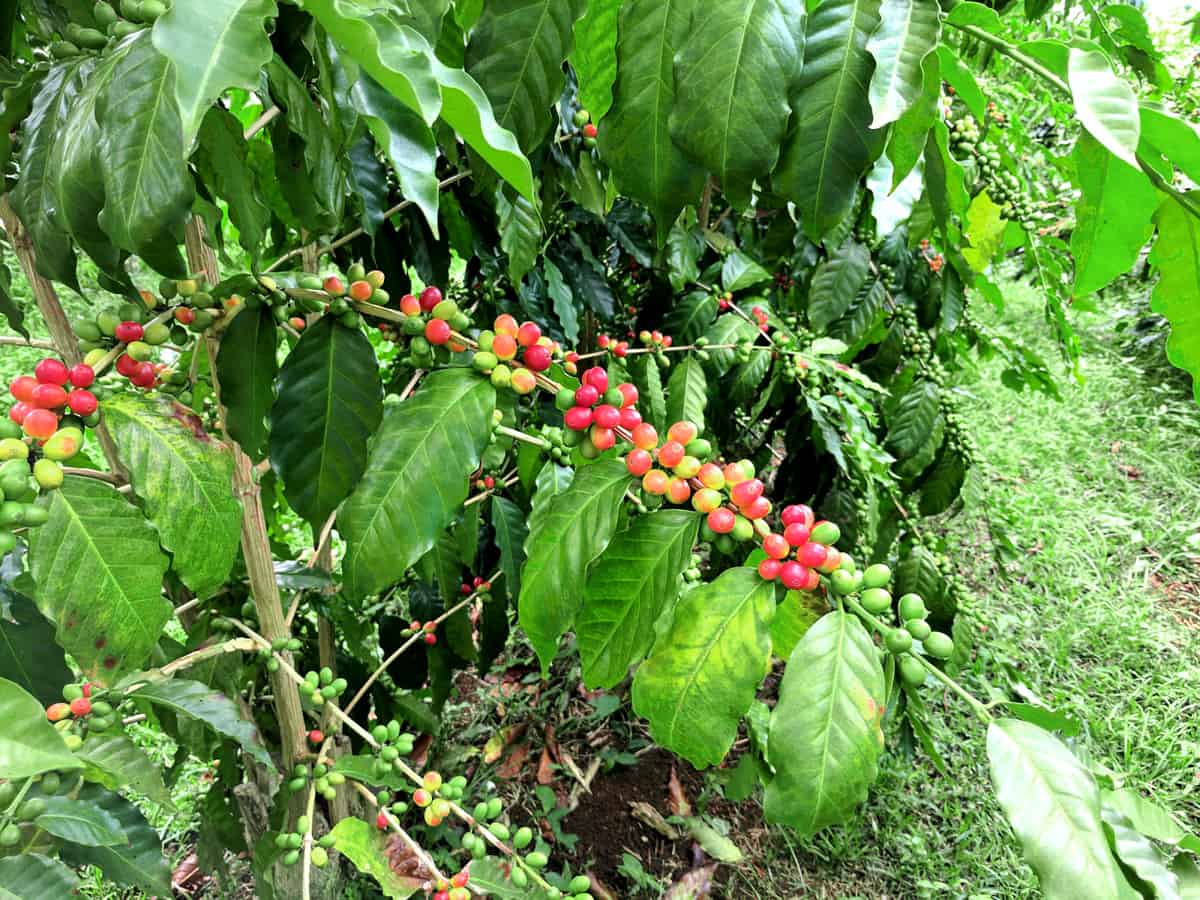
Modern coffee roasting was born on the Arabian Peninsula. In the 13th century, Muslim worshippers discovered that roasted coffee beans retained their stimulating effects while solving the problem of fresh fruit being difficult to preserve. By controlling the degree of roasting and boiling methods, Arabs successfully monopolized the coffee trade for hundreds of years. It wasn't until the 1600s that an Indian pilgrim named Baba Budan secretly smuggled seven fertile coffee beans out of Mecca hidden in his undergarments—these precious seeds eventually took root in Karnataka, breaking the Arab world's coffee monopoly. During the same period, the Dutch East India Company began establishing plantations in Sri Lanka (1616) and Java (1696), while the French developed coffee farms in the Caribbean.
When coffee was introduced to Europe, it sparked religious controversy. When coffee first appeared in Venice in 1615, local clergy called it "the bitter invention of Satan," even prompting Pope Clement VIII to taste it himself. After discovering coffee's deliciousness, the clever pope not only lifted the ban but also blessed it. British coffee culture developed a unique form—"penny universities" sprang up across London, where customers could drink coffee and engage in intellectual debate for just a penny. Data shows that by the mid-17th century, London had over 300 coffeehouses, among which Lloyd's Coffee House later evolved into the origins of the famous insurance company.
The coffee story on the other side of the Atlantic began in mid-1600s New Amsterdam (present-day New York). But what truly changed North America's beverage landscape was the Boston Tea Party of 1773—colonists protested British tea taxes and embraced coffee instead. This political turmoil gradually led coffee to replace beer and wine as Americans' daily choice. Notably, early European immigrants often treated coffee as a workday stimulant while reserving wine for religious ceremonies.

The expansion of the global coffee-growing map is full of drama. After the Dutch made breakthroughs in Java, Indonesia, in the 17th century, they successively developed the Sumatra and Celebes regions. In 1714, the mayor of Amsterdam gifted a coffee seedling to King Louis XIV of France; this precious plant, grown in the royal botanical garden, had its offshoots transported through a perilous voyage by naval officer Gabriel de Clieu—encountering storms, saboteurs, and pirate attacks along the way—finally reaching Martinique. Within 50 years, the descendants of this mother tree multiplied into 18 million coffee trees and became the genetic source of the entire American coffee industry.
The rise of Brazil's coffee empire stems from a romantic anecdote. In 1727, botanist Francisco de Melo Palheta was sent to obtain coffee seedlings from French Guiana but was refused by the local governor. However, the governor's wife was charmed by him and hid coffee seeds in a bouquet she gave him—these seeds gave birth to Brazil's multi-billion-dollar coffee industry. Today, Brazil remains the world's largest coffee producer, accounting for one-third of global output.
Early coffee plantations were carefully sited on volcanic soil slopes at 800-1500 meters in elevation, requiring 1500-2000 millimeters of evenly distributed annual rainfall. Missionaries and colonists brought coffee to all parts of the world; some regions, like Yemen Mocha, still maintain their unique flavor due to distinctive microclimates, while others gradually disappeared due to unsuitable climate. By the late 18th century, coffee had surpassed sugar and tobacco to become the second-largest internationally traded commodity after crude oil, completely transforming the economic landscape of tropical regions.


