China's Coffee Bean Imports and the Rise of Yunnan Specialty Coffee
Introduction: China's coffee market is growing rapidly, and both the structure of coffee bean imports and the development of domestic growing regions have drawn considerable attention. This article analyzes the distribution of China's main coffee bean import countries, how Yunnan has joined the ranks of specialty coffee, and the evolution of industry processing technology and market trends, helping you grasp the key information on China's domestic coffee bean supply chain.
More than 50 countries grow coffee worldwide, and about one-third of the population has a coffee-drinking habit. China's coffee consumer market has heated up quickly in recent years, and as consumers demand higher quality, demand for premium coffee beans has grown markedly. Data shows that South America, Central America and Africa's share of coffee bean exports to China has risen from less than 10% a decade ago to nearly 20%, with Vietnam long remaining the largest supplier, accounting for more than 49% of China's total coffee bean imports. In 2019, China imported about 65,100 tons of coffee in total, worth US$269 million; although there was a slight decline that year, the overall import scale has remained stable.
China is not only a major consumer but also a coffee exporter. In 2017 coffee bean exports reached US$237 million, and by June 2019 about 1.4 million bags (60 kg each) of green coffee beans had been exported cumulatively, with export volumes continuing to grow and product quality gradually improving. Coffee trade currently flows mainly through coffee shops (including independent stores and chain brands), internet cafes and fast-food outlets, but the instant coffee and chain coffee markets are still dominated by foreign brands, reflecting room for improvement in the influence of domestic coffee brands.
China's coffee industry chain is still at a developing stage. Mainstream processing methods fall into two categories: dry processing and deep processing. Dry processing is simple to operate and low in cost, and is currently the most common processing method in China; deep processing covers roasting and grinding and is better suited to making espresso—this type accounts for the highest share of China's coffee culture. With the rapid growth of beverage consumption, manufacturers in many parts of the country are actively building out processing operations, and companies such as Dehong Hougu Coffee, Hainan Lisun, Baoshan Lanhua and Yunling Coffee are working to build competitive local supply chains.
Foreign brands have played a significant role in advancing coffee cultivation in China. China's main coffee-producing region is concentrated in Yunnan Province, which contributes about 98% of national output. Nestlé established agricultural service points in several parts of Yunnan early on, becoming the largest single buyer locally and operating multiple coffee collection stations; Starbucks followed, launching its own purchasing operations in Yunnan in 2009 and setting up a smaller farmer support center, jointly supporting the development of Yunnan's coffee industry.
China's coffee bean imports continue to expand. Market demand has risen steadily over the past five years, with per capita coffee consumption increasing from 6.2 cups in 2018 to about 7.2 cups in 2019. In 2019 domestic consumers favored single-origin coffee (such as Americano and latte) and cold-water brewed types, so espresso beans accounted for a relatively high share of total imports. Import volumes have risen clearly over the past four years, reaching 110,000 tons in January–November 2017. Industry forecasts suggest China's coffee bean imports may rise to 124,000 tons in 2020, with main suppliers including Vietnam, Indonesia, Malaysia, Brazil and the United States—Vietnam accounted for nearly half in 2017, and robusta beans (commonly called espresso beans in China) are the most common imported category, but in recent years imports of Colombian and Central American coffee beans have grown by more than 25%, with their share now approaching 5%.
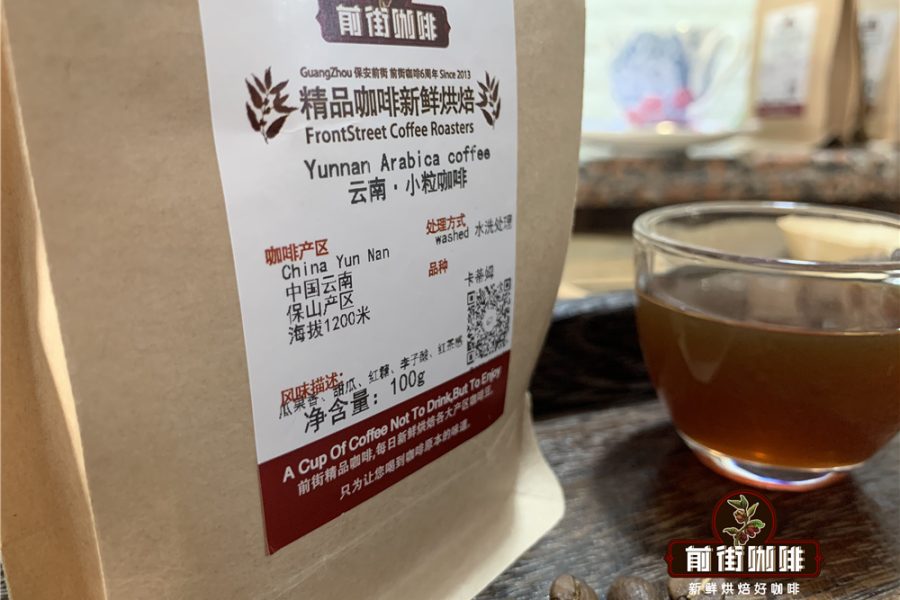
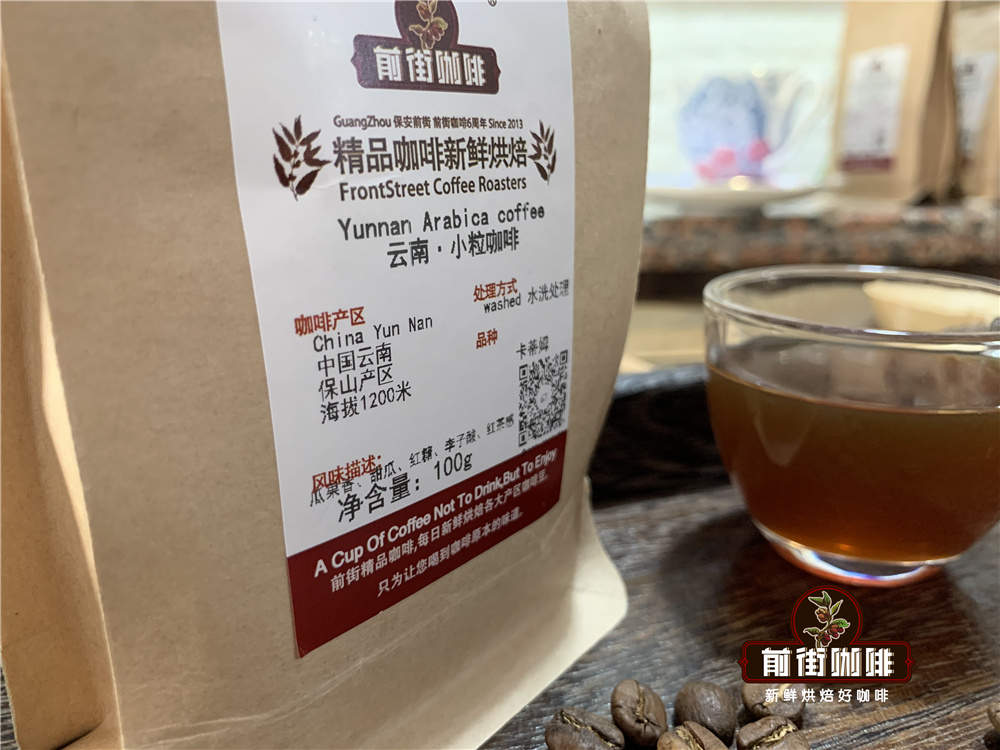
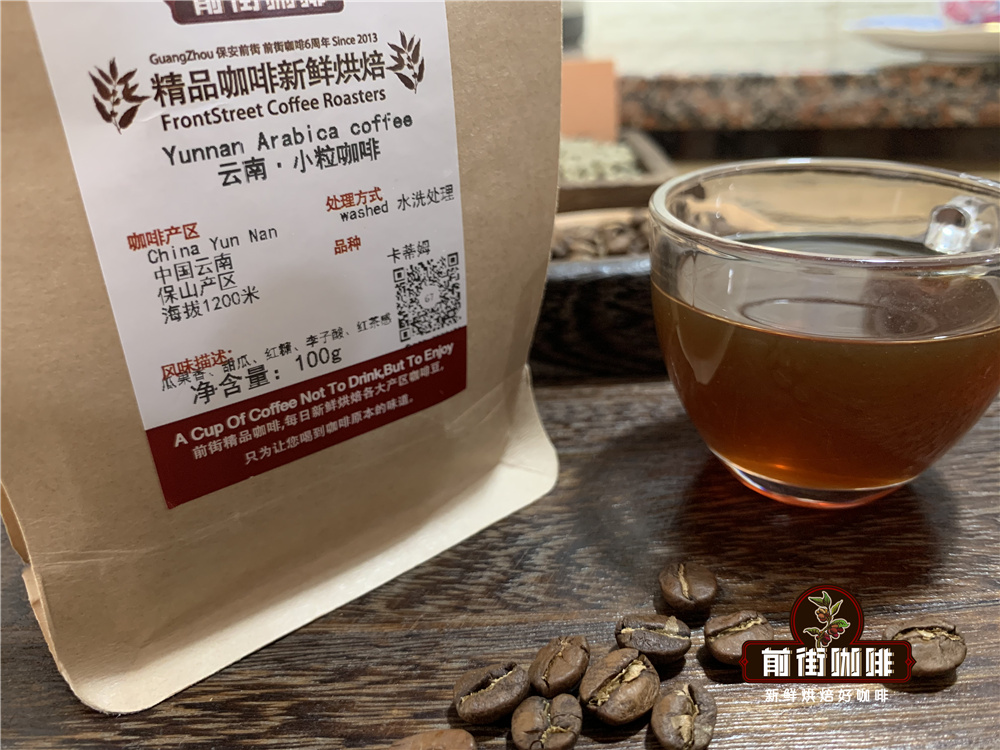
Yunnan's coffee industry is transforming from "quantity" to "quality." The province produces about 138,000 tons a year and, although it dominates national output, its beans were long used mainly as raw material for instant coffee due to quality limitations. Today Yunnan can produce premium coffee beans: coffee was introduced by French missionaries in the late 19th century; in 2007 the Dehong region drove cultivation with the backing of Haogude Coffee, China's largest instant coffee manufacturer; in 2013 the area's first professional specialty coffee exporter was born; and in 2018 it became Yunnan's largest specialty coffee exporter. Yunnan's main coffee-growing areas are distributed across Lincang, Baoshan, Pu'er (formerly Simao), Xishuangbanna and Dehong, and its natural conditions—low latitude, high altitude and large day-night temperature differences—resemble those of Colombia; the small-bean coffee (arabica) it produces has a full-bodied cup profile that meets international specialty standards, and is mainly exported to Germany and Japan.
Other domestic growing regions such as Fujian and Hainan mainly grow robusta, but because output is limited, most of this type of coffee bean consumed domestically relies on imports from Vietnam. Notably, Yunnan, as China's core coffee-growing region, has produced about 26,000 tons a year in recent years, accounting for 90% of national output, and its specialty transformation is driving an overall quality upgrade across China's coffee bean industry.
China's coffee bean market has broad prospects. A growing middle class and changing consumption preferences among young people are injecting strong momentum into the industry. Forecasts show that coffee consumption may grow at an average annual rate of 15% from 2020 to 2025, and the market size is expected to exceed 217.1 billion yuan by 2025. As the supply-demand gap widens, overseas producers are increasing the varieties they export to China, and domestic consumers' awareness of and demand for specialty coffee will continue to be unleashed.


