Yunnan Coffee Region: The Rise of Specialty Coffee from Farm to Flavor
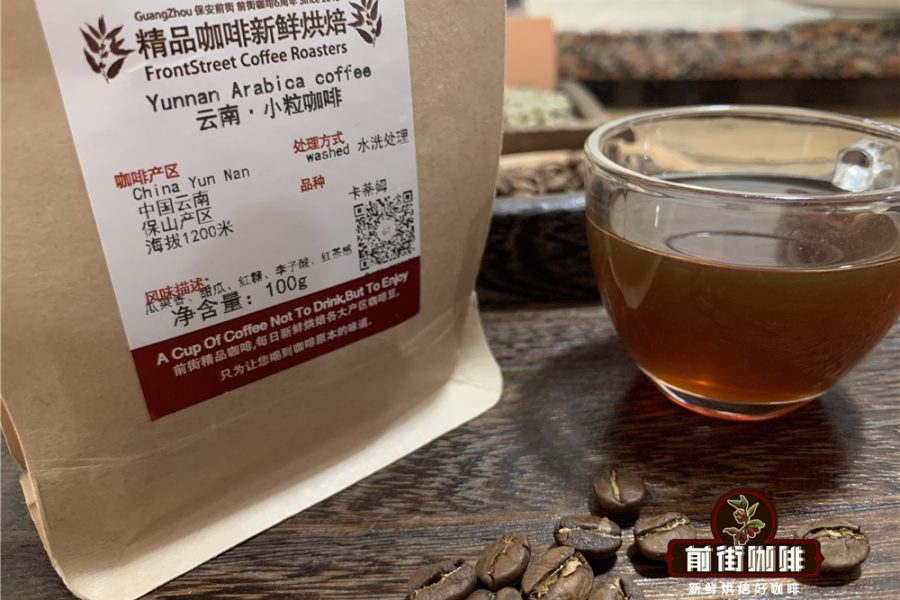
Introduction: China's coffee industry is undergoing unprecedented change, and Yunnan, as the core producing region, has entered the global specialty coffee map. This article takes you deeper into the flavor characteristics, regional distribution, variety evolution and market opportunities of Yunnan coffee beans, revealing how this high plateau has cultivated a coffee miracle that combines commercial value with flavor potential, and provides key parameter references for professional cultivation and tasting.
Chinese coffee beans are making a name for themselves in the international specialty coffee scene. High-quality Yunnan coffee typically shows bright citrus notes, accompanied by honey-like sweetness and moderate body, with a cleanliness comparable to premium South American regions. Over the past decade, through variety improvement and upgrades in processing technology, the quality consistency of Yunnan coffee has improved significantly, winning repeated honors in international green bean competitions.
Although China is known for its tea culture, it is one of the world's fastest-growing coffee consumer markets.The Yunnan region accounts for more than 80% of the country's coffee production, and with the advantage of high altitudes of 1800-2200 meters, it has microclimate conditions similar to well-known regions such as Colombia and Ethiopia. The large day-night temperature difference and organic-rich soil here create an ideal environment for coffee cherries to accumulate sugars.
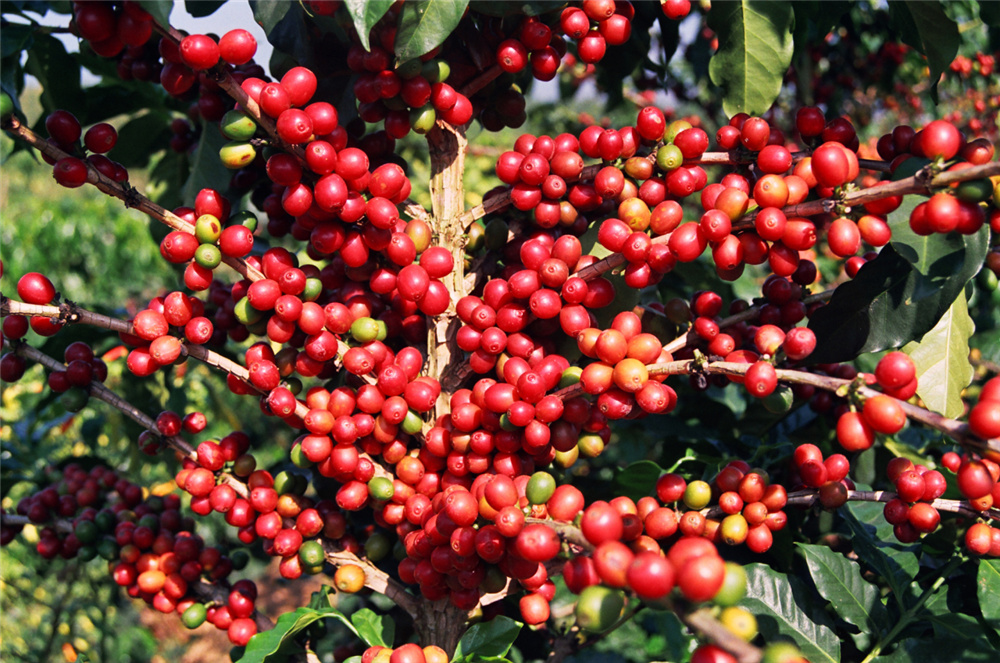
Yunnan's coffee industry began in the early 20th century with the Bourbon variety introduced by French missionaries, but true large-scale cultivation started in 1998. With technical support from the World Bank, the planted area expanded from an initial 4000 hectares to more than 23,000 hectares today. It is worth noting that **annual exports exceed 30,000 tons**, mainly shipped to the quality-demanding markets of Germany and Japan, while also becoming a regular source of raw material for international brands such as Starbucks.
The coffee varieties grown in Yunnan have undergone a major shift: early plantings were mainly Typica and Bourbon, while now about 70% is the disease-resistant Catimor hybrid. This variety, bred by crossing Caturra with Timor, can effectively resist leaf rust, but requires precise washed/natural processing to soften its characteristic herbal notes. Professional roasters recommend medium-light roasting (bean drop temperature of 200-210°C) to highlight its floral and fruity notes.
The local processing system generally runs wet-hulling and washing in parallel.Specialty-grade coffee usually undergoes 12-24 hours of anaerobic fermentation, which, combined with the slow ripening cycle characteristic of regions above 1300 meters, can significantly enhance sweetness complexity. For example, the Baoshan region beans selected for Luckin's SOE series use red honey processing to retain more pectin sugars, reaching the SCA 80+ scoring standard.
On the demand side, China's emerging middle class of about 150 million people forms the main consumer base, and their acceptance of the third wave of coffee is increasing year by year. Data shows that the number of specialty coffee shops in China has grown 300% in five years, driving up the premium commanded by Yunnan coffee beans. It is worth noting that **auction prices for some lots of green beans have exceeded the New York futures price by 30%**, reflecting market recognition of premium regions.
The industry still faces challenges: the overly high proportion of Catimor affects the specialty rate, and about 60% of annual output remains commercial grade. But the trend is positive—more and more estates are beginning to focus on single-estate cultivation. For example, Paliang Village in the Pu'er region, through altitude-layered planting (a gradient layout from 1400-1800 meters), has successfully cultivated high-altitude selected beans with blueberry aroma. Organic-certified area is growing 15% annually, laying the foundation for sustainable cultivation.
For coffee lovers, Yunnan beans have high tasting value: brewing with a V60 dripper at a 1:15 coffee-to-water ratio (92-94°C water temperature) is recommended to clearly present their distinctly layered tropical fruit flavors. For professionals, paying attention to emerging micro-regions such as Menglian in Pu'er and Lujiangba in Baoshan may be the key to discovering the next specialty coffee terroir.


