Costa Rica Coffee Regions: Tarrazú and Other Key Growing Areas
Introduction: Costa Rica is known worldwide for its high-altitude, high-quality Arabica coffee, which combines a full body, clear acidity and distinctive fruity aromas. This article takes an in-depth look at six key regions including Tarrazú, their terroir, representative varieties and flavor profiles, and provides practical growing parameters such as altitude and variety to help you choose the coffee beans you love with precision.
When Costa Rican coffee comes to mind, its signature full body and bright acidity are the first things that surface—this high-quality coffee from Central America is known for its layered flavors and just-right sweetness. The country's coffee cultivation is dominated by two Arabica varieties, Caturra and Catuai, with some regions also using hybrid varieties such as Mondo Novo; its unique geography and strict growing standards have made it a major player in the global specialty coffee market.
Although Costa Rica is a narrow coastal country, its volcanic soils and high-altitude terrain (most regions sit above 1,200 meters) give rise to coffees with distinctive flavors. The growing belt above 1,500 meters is especially important: this altitude not only slows the ripening of the coffee cherries, allowing more complex flavor compounds to accumulate, but also gives the beans bright acidity and a rich mouthfeel, meeting the criteria for specialty coffee.

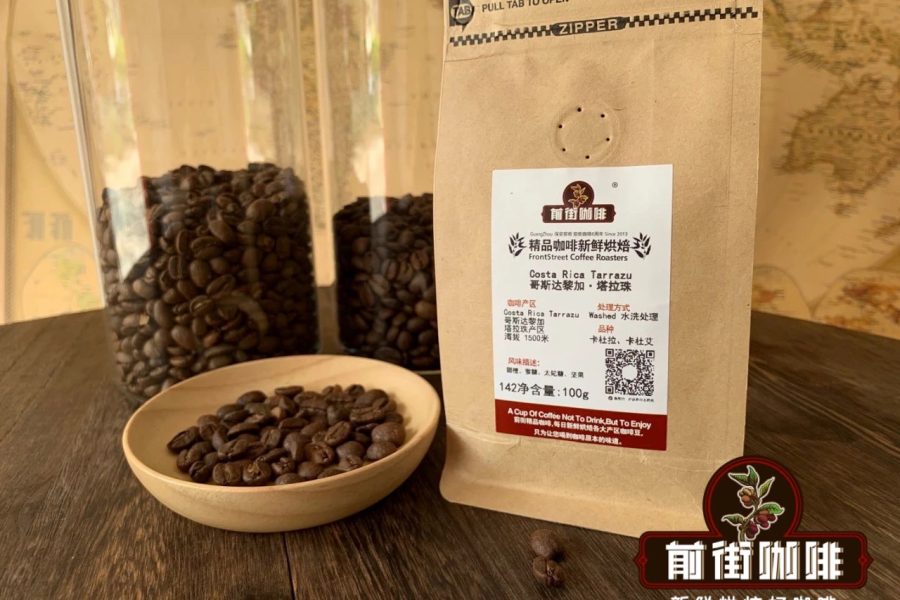
Among the many regions, Tarrazú is regarded as Costa Rica's "golden region." Located in the inland mountains, it has a capital, San Marcos, at about 1,350 meters, surrounding peaks reaching up to 1,700 meters, and a core growing belt generally around 1,500 meters—beans from this altitude are often considered the benchmark for specialty coffee. Tarrazú coffee is known for its full body and complex aroma; when brewed it shows pronounced caramel sweetness and citrus-like acidity, and some high-altitude lots also carry apricot-like fruit notes, with excellent overall balance. Notably, the town of San Marcos de Tarrazu (especially La Minita farm) is known for consistently high quality and is the source of what many coffee lovers regard as "benchmark beans."
Besides Tarrazú, Monte Crisol in the central-western valley also deserves attention. Here the coffee grows in valley terrain at moderate altitudes, and the flavor is dominated by a sweet, silky body and lively fruit notes; when brewed it often shows a fresh blueberry top note accompanied by a soft, buttery smoothness, suiting consumers who prefer sweet flavors.
Alajuela in the north-central area is another distinctive region. The terrain is steep, with cultivation concentrated at 1,200–1,600 meters; the steep slopes provide good drainage and ample sunlight, and the resulting coffee is marked by the crisp fruit notes of apple and apricot. Local plantings are still mainly Caturra and Catuai, which together with the high-altitude environment produce beans with clear flavors and bright acidity.
The Cartago region, near the Del Guarco valley, grows coffee mostly at 1,200–1,650 meters, and its flavor leans warm—spice (such as cinnamon and clove) and nut (such as almond and cashew) aromas interweave, with a rich yet still refreshing mouthfeel; Caturra and Catuai are likewise the main varieties. This character makes it a fine choice for milk-based coffee drinks, enhancing their layered complexity.
Heredia and Tres Ríos on the eastern coast are known for "delicate balance." Both sit at 1,200–1,650 meters; Tres Ríos, near the Pacific coast, is influenced by the maritime climate, giving its coffee a milder flavor with prominent sweetness and soft acidity, while Heredia, at a slightly higher altitude, has somewhat greater flavor intensity, overall rich yet still refreshing, suiting coffee lovers who seek complex flavors.
In terms of varieties, besides the mainstream Caturra (known for high, bright acidity) and Catuai (good balance and strong wind resistance), Costa Rica also has Mondo Novo (a cross of Bourbon and Sumatra, with a rich mouthfeel) and Villa Sarchi (a natural cross of Caturra and Bourbon, with a small tree shape suited to dense planting) as important supplements. Among them, Villa Sarchi, a locally improved variety, inherits the sweetness genes of Bourbon and, because of its compact shape, is better suited to high-altitude steep-slope planting; it is still grown in some micro-regions.


