Why Panama Geisha Coffee Costs So Much: Inside Hacienda La Esmeralda
Introduction: From a stunning Best of Panama (BOP) championship in 2004 to beans that now command tens of thousands of yuan per pound, how did Panama's Hacienda La Esmeralda Geisha become a benchmark in the specialty coffee world? This article takes a deep look at this legendary variety, which originated in Ethiopia yet flourished on Panama's volcanic highlands, revealing the secrets of its distinctive flavor, its demanding growing conditions, and the meticulous division of the estate's four producing areas and its grading system.
When people talk about the world's most expensive coffee, many first think of Jamaican Blue Mountain or Indonesian kopi luwak. Yet since the start of the 21st century, with the rise of specialty coffee culture, a coffee variety called Geisha has quickly climbed to the top of the pyramid with its unprecedented floral and fruity aromas and complex layers. Geisha from Panama's Hacienda La Esmeralda in particular is not only a perennial winner at global auctions but also represents the ultimate potential of coffee flavor.

The legend of Panama Geisha began in 2004. That year Hacienda La Esmeralda (La Esmeralda) won the Best of Panama (BOP) competition with this coffee, changing the landscape of global specialty coffee forever. Few people know that the genetic origins of these legendary beans can be traced back to the 1960s—they were initially cultivated by Costa Rica's Tropical Agricultural Research and Higher Education Center (CATIE), and seedlings numbered T2722 traveled across the ocean to Panama.
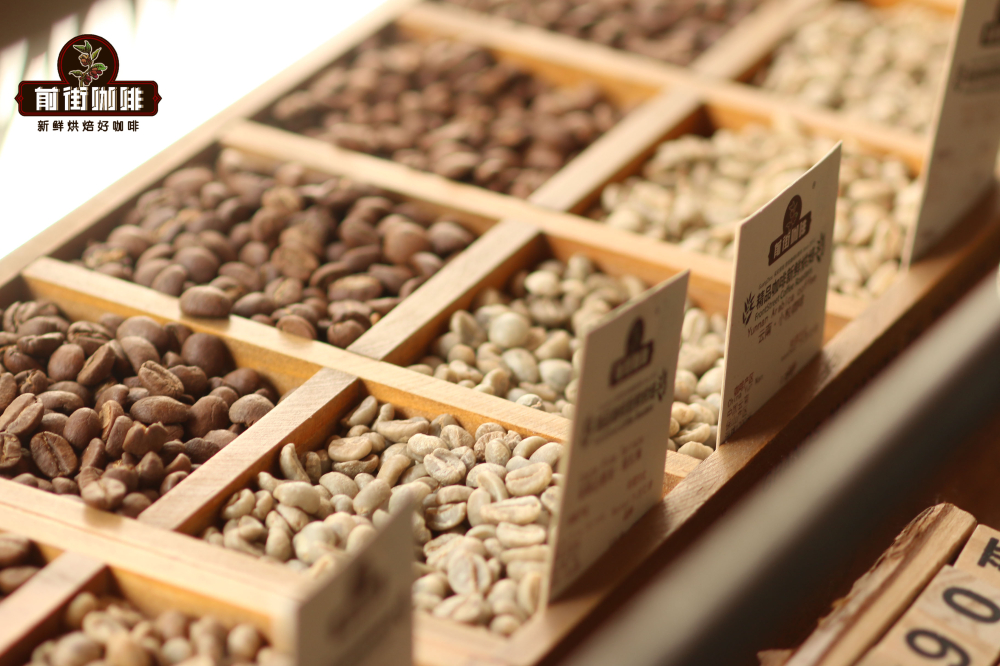
The most immediate impression of Hacienda La Esmeralda's Geisha beans is their elongated shape: slender, pointed at both ends, plump and bulging in the middle, and after roasting they often show a distinctive inward-curling form resembling a sausage roll. But what truly sets them apart is a flavor profile that overturns the traditional coffee experience—unlike the heaviness and bitterness of conventional dark roasts, Geisha displays qualities like a fresh floral-fruit tea, accompanied by layered aromas of citrus, tropical fruit, jasmine, and honey, revealing shifting flavor layers at different temperatures.

Geisha is extremely demanding about its growing environment. It needs a cool high-altitude climate, fertile soil rich in minerals, and moderate shade protection. Direct sun exposure damages the plants, so plantations must keep many shade trees to regulate light. The head of Hacienda La Esmeralda points out that only in mist-shrouded high-altitude areas with significant day-night temperature differences can Geisha ripen slowly and accumulate more complex flavor compounds. High altitude not only lengthens the fruit's ripening cycle but also reduces yields, further highlighting its scarcity.

Panama's high-quality coffee regions are mainly concentrated in the western highlands of Boquete, Volcán, and Renacimiento. Among them, the Boquete Valley and the surrounding Barú volcano area are highly regarded for their exceptional conditions. Located in the center of the Chiriquí volcanic belt, the region boasts fertile volcanic soil and primary forest at elevations between 1,000 and 2,000 meters. To the east it receives warm, humid air from the Caribbean, while to the west it is influenced by cold currents from the Atlantic, and together with the ecological protection barrier of Barú Volcano National Park, it forms a unique environment woven from seven microclimates. Year-round mist and abundant rainfall provide an ideal growing bed for Geisha.

The history of Hacienda La Esmeralda dates back to 1964, when American banker Rudolph A. Peterson bought the Palmira farm after retirement and transformed its operations. In 1987 his son introduced Caturra and Catuai varieties, laying the foundation for coffee cultivation, and named the estate "Hacienda La Esmeralda." In 1994 the estate built a washed-processing plant and formally entered professional coffee production. The turning point came in 1997—after third-generation manager Daniel took over, the specialty coffee wave was just rising. When he first cupped the Geisha variety in 2003, he keenly detected its distinctive floral and fruity character, and the following year he entered it in the BOP competition, where it won first place with an astonishing score.

Hacienda La Esmeralda's Geisha is grown in three core blocks: Jaramillo, Canas Verdes, and El Velo. Jaramillo is where Geisha was discovered; although its average elevation is only about 1,700 meters (lower than the other areas), its steep terrain and annual rainfall of 4,000 millimeters shape a unique microclimate. The area is subdivided into 6 red-label plots, including well-known sub-areas such as Mario and Noria.
Canas Verdes spans a wider elevation range (1,500–2,050 meters), and its complex terrain combined with the volcanic soil at the foot of Barú volcano produces a Geisha with both body and finesse. Its 11 small plots, such as Lino and Coronado, benefit from significant day-night temperature differences and average annual rainfall of 3,500 millimeters.
El Velo, added in 2012, is the newest Geisha-producing area and the estate's highest (1,650–1,900 meters) as well as its only systematically leveled plot. Besides Geisha, it also grows more than 400 experimental varieties provided by CATIE, such as Laurina and Pacamara, for variety research. Its 7 sub-plots (such as Guabo and Portón) are known for their stable high elevation and average annual rainfall of 4,000 millimeters.
Hacienda La Esmeralda divides its Geisha into four commercial brands, graded meticulously by cupping score, elevation, processing method, and producing area: Red Label (Esmeralda Special) is positioned highest, limited to top beans outside the auction lots, requiring elevations above 1,600 meters and cupping scores of ≥91, such as the 2024-season natural Red Label from the Cañas plot, known for jasmine, cranberry, and cinnamon aromas. Green Label (Private Collection) is a blend, at elevations of 1,600–1,800 meters, highlighting classic orange and citrus-berry notes, and since 2022 it has indicated the specific sub-estate. Both grades offer natural or washed processing; Red Label emphasizes intense florals and multi-layered sweetness, while Green Label highlights bright fruit acidity and a clean finish.