A Complete Guide to Rwandan Specialty Coffee: Regions, Varieties, and Flavor
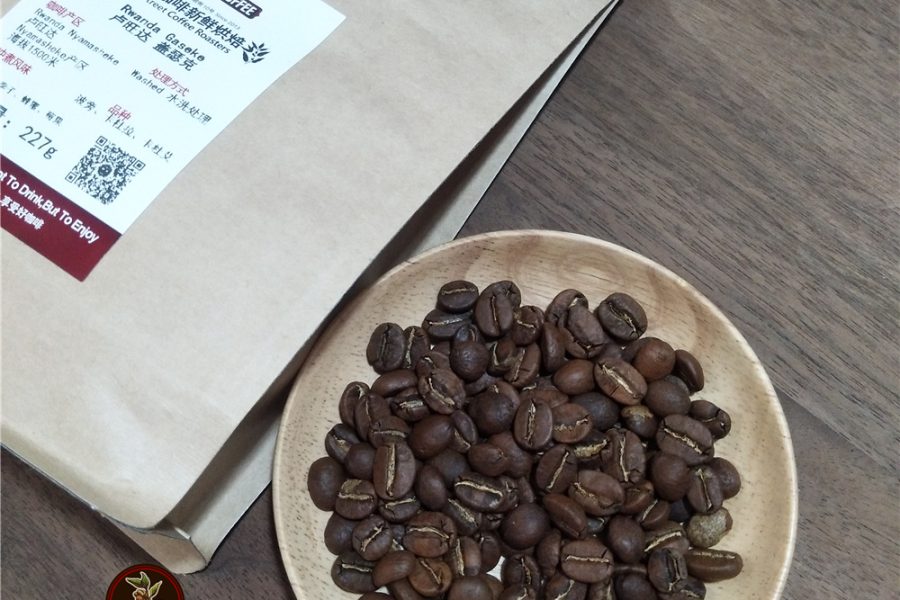
Introduction: As an important producer of African specialty coffee, Rwanda cultivates distinctive Arabica coffee thanks to its high altitude and fertile volcanic soil. This article takes an in-depth look at the origins of Rwandan coffee, the characteristics of its main producing regions, the traits of its classic varieties, and its unique washed processing method, helping coffee lovers understand how this 'Land of a Thousand Hills' creates layered, high-quality coffee.
Rwanda is a small landlocked country in central Africa, bordering Uganda, Tanzania, Burundi, and the Democratic Republic of the Congo, and lies in the famous East African Great Lakes region. The country's terrain is dominated by mountains and plateaus, and it is known as the 'Land of a Thousand Hills.' Because of its high altitude, although it lies near the equator, the climate is mild and pleasant, with a year clearly divided into dry and rainy seasons and abundant rainfall; together with mineral-rich volcanic soil, this provides ideal conditions for coffee cultivation. Coffee is not only an important cash crop for Rwanda but has also become one of the representatives of its international image.
Rwanda's coffee-growing history began in 1904, when German missionaries first introduced the old Bourbon coffee variety from Guatemala and planted the first coffee tree in a monastery in what is now Shangugu Province. In 1917, Rwanda began exporting its first coffee, but because production was small-scale, mainly grown by smallholders and processed collectively at central washing stations, it was classified as a 'micro-farmer' production model. Before 1993, under the influence of Belgian colonial policy, coffee farmers' returns were limited and coffee quality suffered. It was only after Rwanda's independence, with the establishment of the official coffee organization, that this situation gradually improved.
Rwanda mainly grows high-quality Arabica coffee, of which the Bourbon variety accounts for more than 95%, with the rest being Bourbon variants such as Caturra and Catuai. Rwandan coffee has a distinctive flavor profile, with fresh herbal notes alongside the sweetness of fresh fruit, a balance of acidity and sweetness, and a full body with clear layers. The finish often carries soft sweet notes of cinnamon, almond, and honey pomelo; the overall cup is clean and without astringency, making it very suitable for coffee lovers seeking flavor complexity.
Owing to limited economic conditions and human resources, Rwandan coffee production is dominated by smallholders, and total output is less than 1% of global coffee production. The main specialty coffee regions are concentrated around Lake Kivu in the west and near the capital, Kigali. Lake Kivu is one of Africa's highest volcanic lakes, with an eruption cycle of about 1,000 years; the surrounding soil is exceptionally fertile because of volcanic activity, and the mild, stable climate provides an excellent environment for coffee cultivation. In addition, the Rutsiro region in the west is known for growing the most original Bourbon variety and is a key area of interest for coffee lovers.
Rwandan coffee is generally processed using the washed method. Because smallholders grow coffee in scattered plots, most harvested coffee cherries are gathered at central processing stations for unified processing. Rwanda's washing process is especially meticulous: first, the picked coffee cherries are sorted and depulped, then left to rest for 12 hours of fermentation and washed; next, they are fermented again in water for 24 hours and washed; finally, a second 24-hour in-water fermentation and washing is repeated, and the beans are then fully sun-dried. This multi-stage fermentation and washing process relies on the abundant water resources of Lake Kivu and also creates the clean, bright, aromatic, and full-bodied style that is unique to Rwandan coffee.
Among the many producing regions, the Nyabihu region belongs to the Shyira cooperative, which focuses on picking ripe cherries from old Bourbon trees and sorting them according to strict grade standards; its coffee performs especially well in acidity and refinement.
The Mushonyi washing station is located in the Rutsiro region and is an internationally renowned coffee processing site. It won the Cup of Excellence (COE) championship in 2010 and ranked among the top in subsequent 2011 evaluations, including first place, 12th, 16th, and 28th.
Coocamu is also located in the Rutsiro region and belongs to MUSASA, a large Rwandan farmers' association. It uses organic farming methods and emphasizes ecological sustainability. The cooperative is also known for its gender-equal working environment, with women making up more than 20% of its employees.
Dukunde Kawa is located in the Rushashi region in the north and also belongs to the MUSASA farmers' association; it is a standout in Rwandan cupping competitions. Its growing altitude exceeds 2,000 meters, and the cool climate makes the washed fermentation process slower and more thorough, thereby improving the overall quality of the coffee. It is also one of the largest washing stations in Rwanda.


