Pour-Over Coffee Blooming Guide: Matching Time, Water and Roast Level
Introduction: Blooming is the first step in pour-over coffee and a key part of determining flavor. Why do different people brew the same coffee beans so differently? This article explains the scientific principles of blooming, teaches you how to adjust water temperature, water amount and time according to the characteristics of light and dark roasted beans, helps you avoid common operational mistakes, and improves extraction uniformity and aroma expression, from beginner to advanced.
Many coffee lovers have this question: with the same coffee beans, why does someone else's brew have a full aroma and rich layers, while your own is bland and unremarkable? The problem often hides in the details of brewing—especially the first step: blooming. This seemingly simple pouring action directly affects the degassing of the coffee grounds, water penetration and subsequent extraction efficiency, and can be called the "opening move" of pour-over coffee.
What professional baristas often call "Bloom" is what we call menzheng. Its core is to use a small amount of hot water to activate the coffee grounds and release the carbon dioxide produced during roasting. If these gases are not released in advance, they will hinder full contact between the hot water and the coffee grounds, causing uneven extraction and ultimately coffee that may be astringent or thin in flavor. Imagine if the coffee bed were like a blocked balloon—water could not penetrate at all, so how could you extract good flavor?
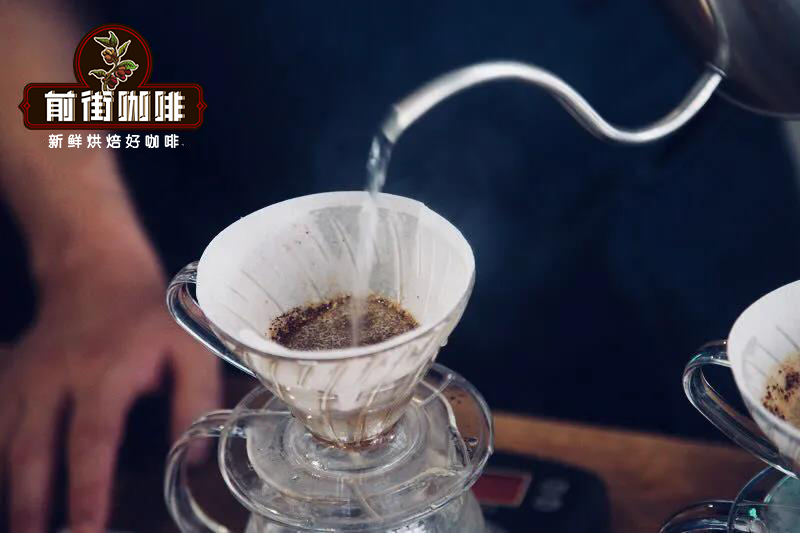
Coffee beans of different roast levels have clearly different blooming needs. Light and medium roasted beans (such as Ethiopian Yirgacheffe and Colombian Huila) have shorter roasting times, tight internal fiber structure, higher moisture content and relatively less carbon dioxide. For these beans, it is recommended to use 2 times the water amount by dose (for example, 30 ml of water for 15 g of grounds), control the water temperature at about 90°C, and bloom for 30–35 seconds. Sufficient water temperature and amount can gently activate the top notes of aroma and avoid the sharpness caused by excessive extraction at high temperature.
Dark roasted beans (such as Mandheling and Brazilian nutty beans) are completely different. Long roasting makes the beans less dense and softer, with higher carbon dioxide content and more obvious expansion. During blooming, use 3 times the water amount (45 ml of water for 15 g of grounds), lower the water temperature slightly to 88–90°C, and extend the time to 35–40 seconds. This can fully release the gas and neutralize the bitterness that dark roasting may bring, making the mouthfeel rounder.
If the coffee beans have finished resting but are not ground and brewed in time, note: long exposure to air will cause the beans to absorb moisture and become denser. At this time, reduce the bloom water to 2 times, keep the water temperature at about 90°C, and shorten the time to 20–30 seconds to avoid excessive extraction that highlights bitterness.
The specific blooming operation also has its details:
1. First use your finger or the back of a spoon to level the top layer of coffee grounds, ensuring the coffee bed in the dripper is even and avoiding local pooling or gaps;
2. When pouring, keep the stream thin and steady, moving in circles from the center of the coffee bed outward, avoiding too much force that disrupts the bed;
3. Adjust the water amount flexibly according to bean freshness and roast level—fresh beans degas vigorously, so you can add slightly more water;
4. Observe the dripping speed: if too much coffee liquid drips during the bloom stage (more than 1/3 of the total water), reduce the pouring amount; if less, increase it;
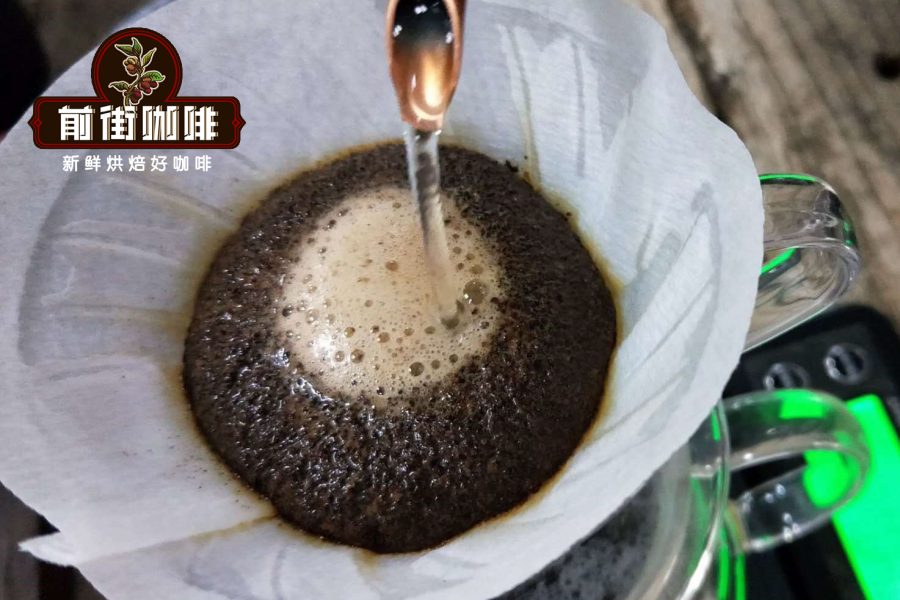
5. Judge the end point: when the coffee bed expands noticeably and then begins to contract (usually dense small bubbles appear on the surface and gradually subside), it means the carbon dioxide has been fully released, and you can proceed to the main extraction.
It is worth noting that light roasted beans have a tighter fiber structure and absorb water more slowly, so blooming may require a little more time for water to penetrate; dark roasted beans, due to cracks and porous structure created by roasting, degas faster and contract soon after expanding. These details all affect the final extraction result.
Many people only focus on the "expansion effect" during blooming, but what matters more is the material dissolution process behind it. Blooming is not only a visual "bloom" but also lays the foundation for subsequent extraction—evenly releasing gas allows subsequent pouring to penetrate the coffee bed more smoothly and extract the coffee's sweetness, acidity and body. In a sense, if you do blooming well, half the success of a good cup of coffee is already secured.