Which Coffee Varieties Does Yunnan Mainly Grow? Is Huaguoshan Specialty Coffee Arabica?
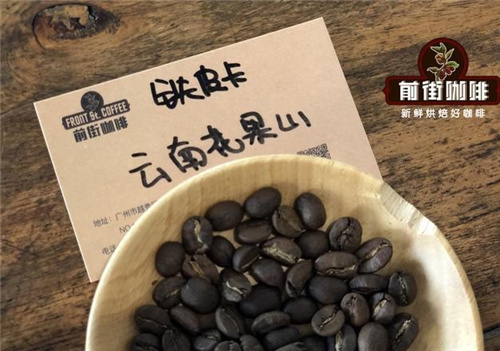
Introduction: Yunnan is China's largest coffee-producing region, contributing 98% of the country's coffee output. This article takes an in-depth look at the mainstream coffee varieties grown in Yunnan, including the internationally widely planted Arabica Catimor and Typica, and explains their flavor characteristics and cultivation background. It also answers common questions such as "Is Huaguoshan specialty coffee Arabica?" to help enthusiasts understand the true character of Yunnan coffee and key points for purchasing.
Coffee cultivation in China is highly concentrated in Yunnan Province, which borders Myanmar, Laos and Vietnam and has unique climate and elevation conditions suitable for coffee growing. In 1904, the French missionary Tian Deneng first introduced coffee seedlings to Yunnan in an attempt to achieve daily coffee self-sufficiency; for decades afterward, coffee cultivation remained at a small-scale experimental stage. It was not until 1989, when Nestlé introduced the rust-resistant variety Catimor, that Yunnan coffee truly entered the track of large-scale production and gradually developed into an important industry supporting the local economy.
The turning point for Yunnan's coffee industry came in 1988, when, with the coordinated efforts of the Chinese government, the World Bank and the United Nations Development Programme, modern cultivation techniques and management models began to be implemented. The following year, Nestlé promoted the cultivation of an improved Catimor variety in the province—a hybrid developed in 1959 that combines high yield, disease resistance and adaptability to dense planting, occupying little space per plant but with outstanding yield per unit area, providing a key foundation for the scaling up of Yunnan coffee.
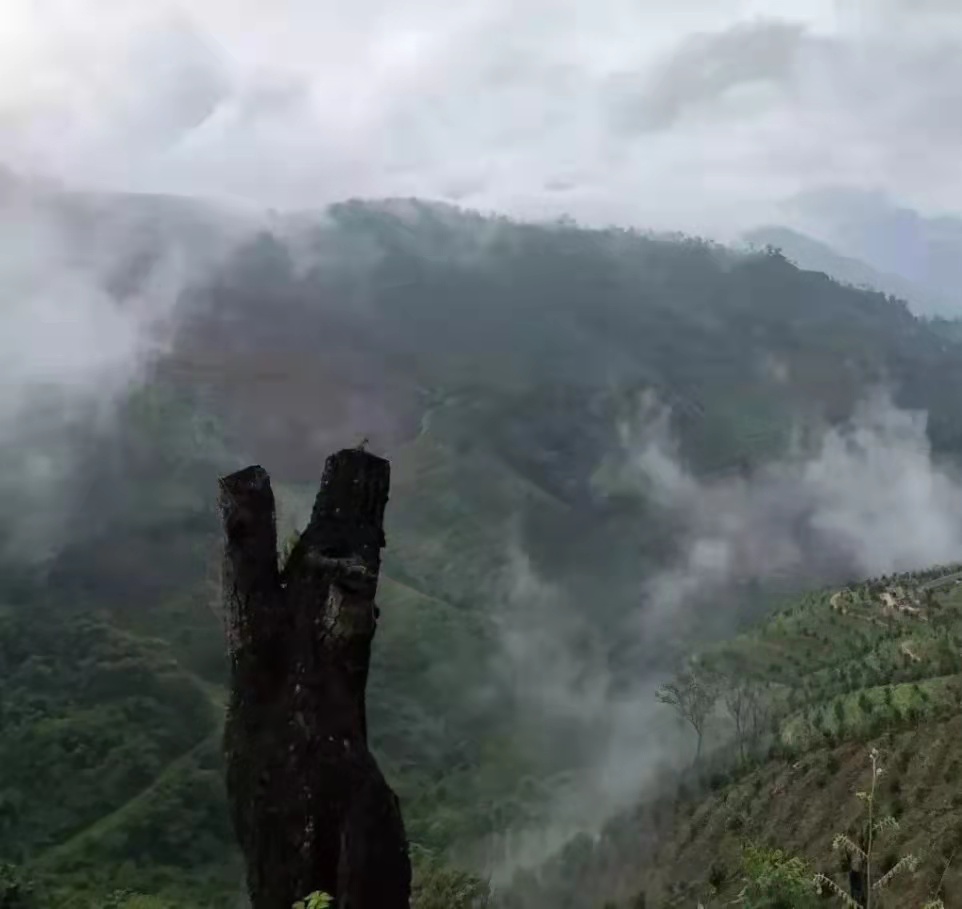
At present, almost all coffee produced in Yunnan belongs to the Arabica species; only scattered areas such as Fujian and Hainan grow Robusta. Coffee in the province is mainly processed using the washed method and graded by screening machines through perforated metal plates (even screen numbers are mostly used for Arabica) to ensure uniformity of bean shape and consistency of ripeness. It is worth noting that, limited by insufficient standardization of early cultivation techniques, some Yunnan coffees once showed considerable fluctuation in cupping flavor; in recent years, through agronomists' guidance in rural areas and the promotion of standardized harvesting and processing procedures, quality stability has improved significantly.
Take Typica grown at 1,200 meters elevation in the Baoshan production area as an example (a classic old variety that was long the main variety planted in Yunnan): after washed processing, it displays distinct floral aromas, with a clear, sweet melon-like flavor in the middle and a gentle black tea sensation in the finish, making it a specialty-grade Arabica that performs outstandingly at medium-light roasts. Although such traditional varieties have lower yields, their flavors are layered and rich, making them an important sample for understanding the original characteristics of Yunnan coffee.
As for the question consumers often ask—"Is Huaguoshan specialty coffee Arabica?"—the answer is yes: the vast majority of specialty-grade coffee commercially grown in Yunnan (including regional brand products such as the so-called "Huaguoshan") uses the Arabica species, because its flavor finesse and match with market demand are far higher than those of Robusta. When purchasing, it is advisable to prioritize processing method (washed/natural), elevation (flavor is usually better above 1,000 meters) and roast level (medium-light roasting helps highlight fruity acidity and floral aromas); these parameters reflect actual quality better than relying solely on regional names.


