Cold Brew vs. Iced Coffee: Flavor Differences and Home Brewing Guide

Introduction: Iced coffee, cold drip and cold brew—these terms often leave people bewildered. All are made at low temperatures, but how exactly do their processes, flavors and textures differ? This article takes a deep look at the brewing principles, flavor characteristics and suitable occasions for iced coffee, cold drip coffee and cold brew coffee, helping coffee lovers easily tell them apart and choose the one that suits them, while also offering practical home-brewing advice.
In the world of coffee, low-temperature drinks are growing ever more popular. Among them, iced coffee, cold brew (also called ice-brewed coffee) and cold drip coffee are often confused, but they actually differ markedly in brewing method, flavor expression and extraction efficiency. Understanding these differences not only helps you find a choice that better suits your taste, but also lets you easily try different cold coffee flavors at home.

Many people's impression of iced coffee may still be hot coffee with ice cubes added. In fact, true iced coffee usually refers to coffee drinks extracted over a long time with cold water, such as cold brew (also called ice-brewed) and cold drip. Both methods use cold water as the extraction medium, but their processes and results are quite different. In recent years, cold brew coffee has become a new favorite among many home users for its simple operation and mellow flavor.

Before cold drip coffee became widespread, most people who wanted a cup of truly low-temperature, slow-extracted coffee would go to a café. At that time, cold drip equipment was professional and rather expensive, making it hard for ordinary consumers to replicate at home. With the spread of household cold drip pots, nowadays for just a few hundred yuan you can buy a basic device and enjoy this low-temperature, slow-drip coffee experience at home.

By comparison, cold brew coffee (also often called "ice-brewed") has a lower threshold and a method closer to daily life. The basic approach is to mix coarsely ground coffee with room-temperature water in a certain ratio, put it in a sealed container and steep it in the refrigerator for 6 to 12 hours, then separate the grounds through a strainer or filter paper to obtain a cup of cold brew coffee. This method requires no complex equipment—just a glass bottle and filter material—making it very suitable for home use.

Although cold brew coffee is convenient to make, it differs significantly from cold drip coffee in flavor expression. The reason lies mainly in the different extraction methods, temperature control and time management of the two. Cold drip coffee uses ice water dripping slowly, undergoing continuous extraction over several hours or even a dozen-plus hours; the temperature throughout the process is close to 0°C, and the low-temperature environment makes flavor compounds release more slowly and gently while also limiting the dissolution of some impurities.

Cold brew coffee, on the other hand, usually uses room-temperature water (about 20-25°C) for immersion extraction; the higher temperature means soluble substances in the coffee are more easily released, including caffeine, acidity and sweetness components. Therefore, cold brew coffee often has a higher extraction rate, and its caffeine content is relatively higher. If the same coffee-to-water ratio is used, cold brew's overall concentration is usually higher than cold drip's, and its flavor is fuller.

In terms of flavor, cold drip coffee, thanks to low-temperature slow extraction, usually shows higher acidity and clearer layers, with a flavor leaning toward bright fruit notes such as smoked plum, mulberry or black plum. Cold brew coffee, because it is steeped for a long time at a relatively higher temperature, more easily brings out the coffee's sweetness and caramel flavors, accompanied by soft fruit acidity and herbal notes. Some cold brews also show a clean sweetness reminiscent of cane sugar, as well as a dark-fruit undertone similar to smoked plum.
In addition, cold brew coffee usually looks cloudy, because fine coffee particles easily pass through the filter cloth or filter bag, making the liquid less clear. If you don't mind, you can enjoy it directly; if you want a cleaner texture, you can use a fine strainer or coffee filter paper for a second filtration to improve clarity and smoothness.

Besides cold brew and cold drip, there is another common low-temperature coffee method—iced pour-over. This method usually involves first quickly extracting the coffee grounds with hot water, then adding ice cubes to cool it rapidly. Compared with cold brew and cold drip, iced pour-over can be completed faster, generally within a few minutes. Because hot water is used for the initial extraction, it can more fully release the coffee's aroma and flavor compounds, so the final product retains a full body and layers even after icing. This method suits those who want to quickly enjoy high-quality iced coffee.
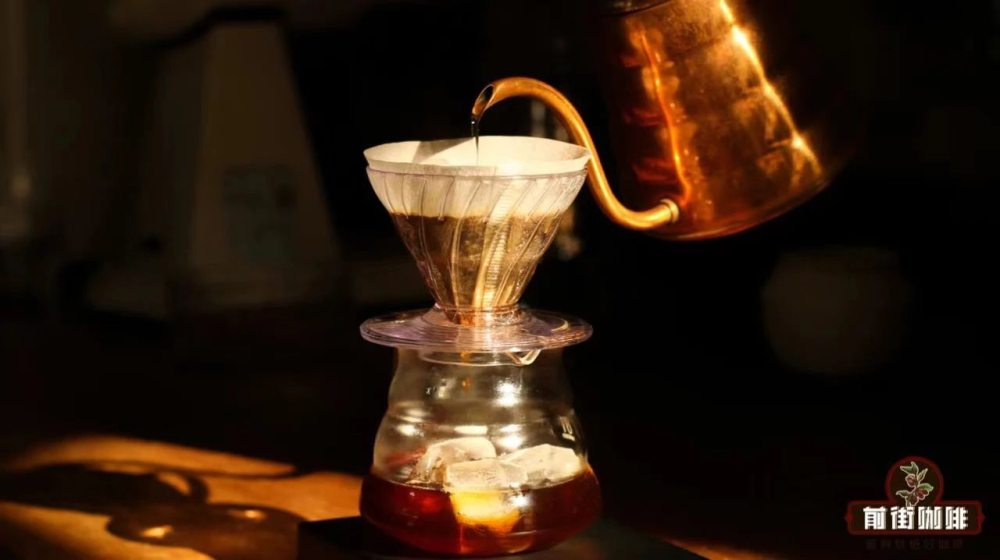
Compared with hot coffee, whether cold brew, cold drip or iced pour-over, all better highlight the coffee's pure flavor while reducing bitterness and astringency. Low-temperature extraction does not easily bring out the coffee's tannins and excess impurities, so such coffees tend to be smoother, with brighter acidity, and are also better suited to summer drinking. For those new to cold brew coffee, it is recommended to start with the simple, easy-to-operate cold brew, gradually exploring different ratios, grind sizes and steeping times to find the recipe that best suits your taste.


