Top 3 Costa Rican Specialty Coffee Brands and Tarrazú Flavor Guide
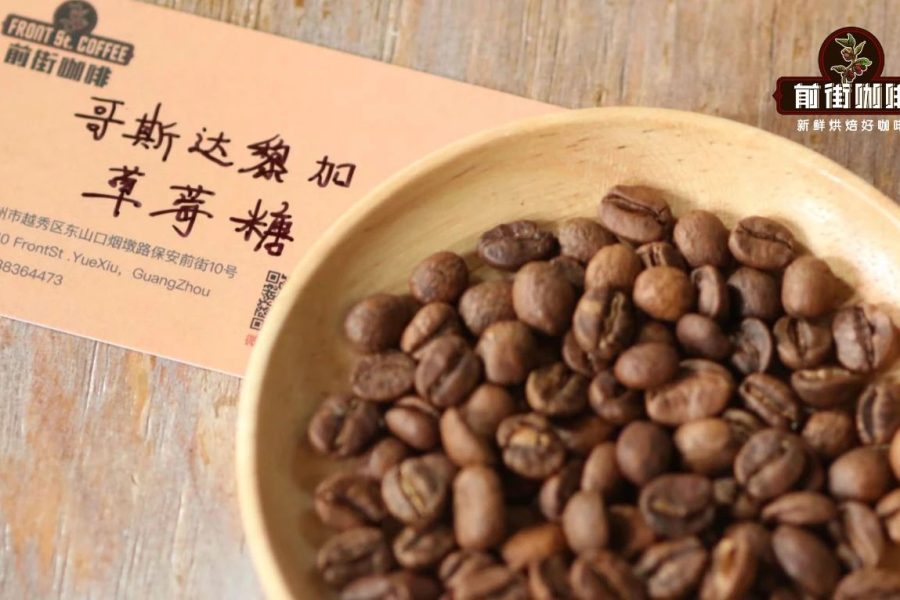
Introduction: An in-depth look at Costa Rica's three most representative coffee regions and brands, from Brumca's anaerobic honey-processed blueberry beans to Tarrazú high-altitude Arabica, detailing the distinctive flavors shaped by each region's elevation, varieties and processing methods. Includes pour-over parameters and flavor characteristics to help you precisely choose the specialty coffee beans that suit you.
As the jewel of Central America's coffee golden belt, Costa Rica's unique volcanic soils and microclimates produce globally recognized high-quality coffee. The country is divided into eight core regions, each with distinct flavor characteristics shaped by differences in elevation and processing. This article focuses on the three most representative regional brands, taking you on a journey from tropical fruit notes to bright acidity.

At the 1,700–1,800-meter-elevation Monolithic Stone Estate in the Brumca region, the anaerobically heavy honey-processed blueberry special-edition beans are a model of flavor experimentation. This lot uses a blend of Caturra and Catuai, undergoing 30 hours of multi-strain anaerobic fermentation (with natural catalysts such as blueberry fructose added), followed by more than 20 days of temperature-controlled sun-drying to complete the transformation. The dry aroma presents a complex blend of rose and honey; on the palate, a soft blueberry-candy sweetness contrasts with a subsequent minty coolness, and the finish carries a rich, dark-chocolate-like sweetness.
The Brumca region, Costa Rica's second-largest coffee region, accounts for about 20% of national annual output and is mainly distributed across mid-elevations of 800–1,200 meters. The area has a notably high proportion of HB-grade and above coffee, thanks to a stable maritime climate and fertile volcanic-ash soils. Notably, the nearby Monolithic Stone Estate takes its name from unearthed Maya stone carvings; its special microclimate allows coffee trees to maintain quality output even at relatively low elevations (800–1,700 meters), and a diurnal temperature range of 8–10°C promotes slow sugar accumulation.
Regarding advanced applications of honey processing, anaerobic heavy honey technology enhances flavor complexity through precise control of the fermentation environment. The standard process has two key stages: first, sorted parchment beans are placed in a sealed container and injected with a catalytic liquid containing yeast, lactic acid and natural fruit juice, undergoing 30 hours of anaerobic fermentation at 30°C to intensify fruit aroma; then they are transferred to African drying beds for 20–25 days of gradient sun-drying, during which temperature and humidity are adjusted (daytime ≤40°C/nighttime resting) to keep moisture content stable at 11%–15%. This process retains the sweetness characteristic of honey processing while developing more pronounced tropical fruit notes through the anaerobic environment.
Beyond distinctive niche beans, the Tarrazú region represents the benchmark of Costa Rica's traditional specialty coffee. Located on the southern slopes of the Central Cordillera (about a 2-hour drive from the capital, San Jose), the main growing area sits at 1,200–1,900 meters, with an average annual temperature of 18–22°C. The local volcanic-rock soil is rich in potassium, and the alternating morning mist and afternoon sunshine create coffee with bright citrus acidity and full body.
Tarrazú's core varieties are Caturra and Catuai: the former derives from a dwarf mutation of Bourbon, with trees only about 2 meters tall, weaker disease resistance but higher yield, and flavors of red-berry acidity such as blueberry and raspberry; the latter, a cross between Mundo Novo and Caturra, inherits wind and drought resistance, with more prominent nut and caramel flavors. Blended in specific proportions, the two maintain a bright acidity framework while adding a full, balanced mid-palate. The region receives more than 2,000 mm of annual rainfall, and shade-growing techniques effectively slow fruit ripening to enhance flavor concentration.

For home brewing of Costa Rican coffee, the following standardized recipe is recommended: use a V60 dripper, water temperature at 91±1°C, and a coffee-to-water ratio of 1:15 (a starting dose of 15 g is suggested). The operation is divided into three pours: first, 30 g of water for a 30-second bloom; then, with a thin stream in circular motions, pour to 125 g for the first stage; when the water level drops to the surface of the coffee bed, continue pouring to 225 g to complete extraction, with a total time of about 2 minutes 00 seconds. These parameters effectively highlight the bright acidity and sweetness layers of regional beans, especially suited to expressing Tarrazú's citrus notes and the fruit aromas of Brumca honey-processed beans.

Buying advice: beginners can start with everyday beans from the Tarrazú region to establish a taste baseline through their balanced flavor profile; more advanced enthusiasts are recommended to try experimental processed lots from distinctive regions such as Brumca, noting how different elevations and processing methods influence flavor direction. For storage, keep the bean bag sealed and place it in a cool, dark place; the best flavor is recommended within 2–4 weeks after roasting.


