Medium-Dark Sumatra Mandheling vs Brazil Coffee: Which Has Lower Acidity?
Introduction: Many coffee lovers, when choosing medium-dark roast coffee, often struggle with the acidity difference between Sumatra Mandheling and Brazilian coffee. This article will provide an in-depth comparison of these two classic coffee beans, from actual flavor performance and roasting characteristics to brewing suggestions, to help you find the low-acid choice that better suits your taste, and reveal the source of Mandheling's unique herbal flavor.
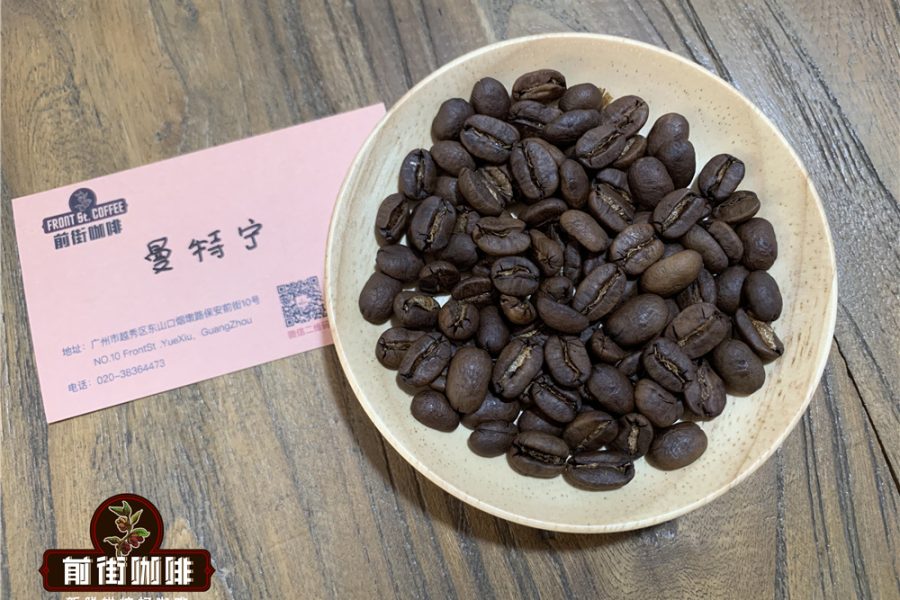
When Sumatra Mandheling coffee is mentioned, the first thing that often comes to mind on the palate is that hard-to-ignore herbal aroma. This coffee, produced on the Indonesian island of Sumatra, occupies a unique position in the global specialty coffee market thanks to its rich, full-bodied mouthfeel and extremely low acidity. Unlike the bright fruity acidity common in South American or African coffees, Mandheling's flavor is more restrained—the balance of earthy texture, herbal notes, and sweet chocolate forms its signature taste memory.
The Lintong region of North Sumatra (near Lake Toba) is the core producing area of Mandheling. Here, the volcanic soil is rich in minerals, and together with an altitude of 2,000–2,200 meters (though not extremely high), it provides a unique environment for the flavor development of the coffee beans.
{{IMG}}
During medium-dark roasting, these characteristics are further amplified: the dark nutty aroma and slight spiciness produced by caramelization reactions precisely neutralize the green, unripe note that the raw beans may have.
Compared with Brazilian coffee, which is also suitable for medium-dark roasting, the acidity difference between the two is particularly obvious. Brazilian coffee beans are generally grown in places such as Minas Gerais at altitudes of 800–1,200 meters. Although their acidity is also low (pH about 5.0–5.2), they often have a mild citrus finish and a nutty-chocolate base. Mandheling's pH is usually stable in the 4.8–5.0 range, and on the palate one can hardly perceive acidity in the traditional sense; instead, there is a complex experience of brown-sugar-like sweetness and woody herbal aroma.
The influence of roast level on the two coffees is worth noting: for Mandheling, medium roasting (from dense first crack to the end of first crack) can retain more layers of spice flavor, but some consumers may find the herbal note too strong; dark roasting (the beginning of second crack) is more suitable for people who prefer intense flavors. At this point, Brazilian coffee shows a more pronounced caramel macchiato flavor, while Mandheling's earthy and smoky notes become more prominent. Professional roasters suggest that if used for espresso, both can be chosen at medium-dark to dark roast (Agtron 35–25), but Mandheling needs appropriately extended development time to avoid excessively sharp acidity and astringency.
In terms of brewing parameters, Mandheling is better suited to coarse grinding (similar to sea salt granules) with water at 92–94°C; using a French press or V60 slow extraction (more than 2 minutes) can enhance the full-bodied feel. Brazilian coffee, on the other hand, can show a cleaner sweet-acid balance through pour-over with medium-fine grinding (fine sugar size) and 88–92°C. Beginners who want to try low-acid coffee can start with medium-dark roasted Mandheling; its stable low acidity (acidity value <0.8%) hardly irritates the stomach and pairs extremely well with milk.
In summary, if you seek absolutely low acidity and a heavy body, Mandheling is undoubtedly the better solution; while Brazilian coffee, while maintaining mild acidity, offers more possibilities for flavor variation. After understanding these differences, the next time you buy medium-dark roasted beans, you will be able to make a more precise choice based on your personal taste preferences.