Panama Geisha Coffee: Japanese Name, Origins, and Flavor Guide
Introduction: Geisha coffee has taken the world by storm with its distinctive floral and fruity notes, but many people still have questions about its origins, its Japanese name, and its best growing regions. This article traces Geisha's legendary journey from Ethiopia to Panama, explains its demanding growing conditions, and focuses on the environmental characteristics of Panama's core producing regions. Drawing on on-site regional data and cupping experience, it shows why Hacienda La Esmeralda's Geisha has become a benchmark for specialty coffee, and offers beginner-friendly flavor descriptions and brewing references.
Geisha is pronounced similarly to the Japanese word for "geiko" (geisha), so it is also called geisha coffee. A noble variety in the Arabica family, Geisha is extremely particular about its growing environment—it needs mountain mist at altitudes above 1,500 meters, fertile soil rich in minerals, and a mild climate with average annual temperatures steady between 16 and 25°C. These demanding conditions give rise to its richly layered flavor profile.

In 1931, a botanist discovered this variety near Geisha Village in southwestern Ethiopia and later introduced the seeds to Kenya for cultivation. In 1936, Geisha spread to Uganda and Tanzania, and in 1953 Costa Rica's CATIE research institute obtained samples from Tanzania for scientific study. What truly made Geisha famous came in the 1960s, when the founder of Panama's Hacienda Don Pachi introduced it from Costa Rica; ultimately, Hacienda La Esmeralda cultivated champion-level quality through meticulous selection.
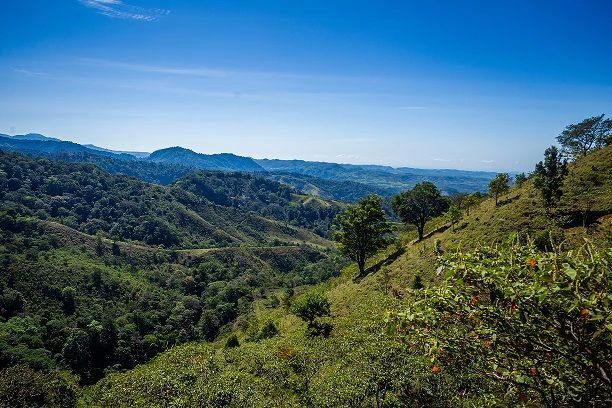
The Boquete region of Chiriquí Province in western Panama is Geisha's core growing belt. Adjacent to the Pacific, it receives annual rainfall of up to 3,500 millimeters, and its year-round misty climate provides a natural shade barrier for the coffee trees. Besides Boquete, regions such as Volcán and Santa Clara also produce high-quality Geisha, but Boquete, with its distinctive volcanic rock soil and microclimate, stands as the region representing flavor complexity.
The key to Hacienda La Esmeralda's Geisha winning the Panama coffee competition year after year lies in precise altitude control (1,600–1,800 meters) and shade-growing techniques. In cupping, it commonly shows bright citrus notes, tropical fruit aromas, and honey-like sweetness; on the palate it is silky smooth, and the finish often carries the sweet, mellow aftertaste of black tea or oolong tea. This "tea-like coffee" quality makes it an ideal choice for beginners experiencing specialty beans.

As for the origin of the Japanese name, although there is no official documentation, it is generally believed to stem from the strong similarity between the pronunciation of "Geisha" and the Japanese word "geisha" (げいしゃ). In Japan's specialty coffee market, Geisha is usually rendered directly in English transliteration as "ゲイシャ," and professional baristas prefer to emphasize its core characteristic of "delicate acidity dominated by floral and fruity notes."
For consumers who want to try Geisha, it is advisable to prioritize washed-process lots—this method better preserves bright acidity and a clean mouthfeel. For pour-over, a water temperature of 90–93°C and a 1:15 coffee-to-water ratio are recommended; staged extraction better highlights its layered flavors. If you prefer milk coffee, Geisha's medium body also balances well with fresh milk.

Other Panama regions such as Candela and Río Sereno have smaller yields, but some micro-farms have cultivated Geisha variants with distinctive herbal aromas through organic farming. These niche lots often fetch high prices at competition-grade auctions, becoming targets for coffee collectors.
In summary, Geisha's success depends not only on exceptional natural conditions but also on growers' deep understanding of the variety's characteristics. From a wild variety in Ethiopia to a champion bean in Panama, this century-spanning journey attests to the specialty coffee industry's relentless pursuit of terroir and technique.