Beginner's Guide to Hand-Grind Coffee: Full Steps and Tips from Grinding to Brewing
Introduction: Want to easily make a cup of excellent pour-over coffee at home? Hand-grind coffee not only brings you closer to the essence of coffee, but also lets you adjust the grind size and extraction parameters to your personal preference. This article details the complete process from coffee bean selection and grind size control to pouring technique and water temperature control, helping beginners master the key skills of hand-grind coffee, avoid common mistakes, and brew a delicious coffee with rich layers.
Coffee has become an indispensable drink in modern life; whether for a workday pick-me-up or an afternoon pairing with dessert, a good cup of coffee always brings pleasure. For those who like to make coffee by hand, hand-grind coffee not only preserves the original flavor of the beans but also reveals different layers of taste by adjusting the grind size and brewing technique. Below is a detailed guide to the entire hand-grind coffee process to help you easily brew your ideal flavor.
First, before brewing, it is recommended to warm the coffee cup and dripper with hot water. This step is often overlooked, but preheating the equipment effectively keeps the temperature stable during brewing and prevents flavor loss caused by temperature differences. Pour hot water into the cup and dripper you are about to use, then discard it after a few seconds.
Next is the grinding stage, one of the key steps affecting the final flavor of the coffee. The grind size for hand-grind coffee should be adjusted flexibly according to the characteristics of the beans; generally, light-to-medium roasted beans suit a slightly finer grind, similar to the texture of fine sugar, while medium-dark roasted beans can be slightly coarser, close to the size of sea salt granules. Pour an appropriate amount of coffee beans into the hand grinder and grind evenly according to the amount of powder needed, keeping the grind particles consistent to avoid particles that are too large or too small affecting extraction uniformity.
Pour the ground coffee into the filter paper; here it is recommended to use a fan-shaped filter paper with a cone-shaped dripper. After placing the filter paper, gently tap the edge of the dripper to level the coffee grounds, which helps the water flow evenly during pouring and prevents local over-extraction or under-extraction. A level bed allows hot water to contact every coffee particle more evenly, releasing a more balanced flavor.
Before the main brewing, a blooming step is needed, an important stage to awaken the coffee grounds. Using a narrow-spout pour-over kettle, slowly pour 85-95°C hot water (adjusted according to the roast level of the beans) from directly above the center of the bed, using just enough water to wet all the grounds, usually about twice the weight of the grounds (for example, 40 ml of water for 20 g of grounds). Let it bloom for about 30 seconds; the grounds will expand and release carbon dioxide, giving off a rich aroma.
After blooming, begin the main pouring and extraction. With the center dimple of the dripper as the center point, slowly pour in circles, keeping the stream steady and fine. It is recommended to pour from the center outward in circles, then back to the center, repeating until the target extraction amount is reached (usually 15-20 g of coffee beans per cup, extracting 240-300 ml of coffee). The entire pouring process should be completed within 2-3 minutes to ensure the flavor compounds dissolve fully while avoiding over-extraction that causes bitterness.
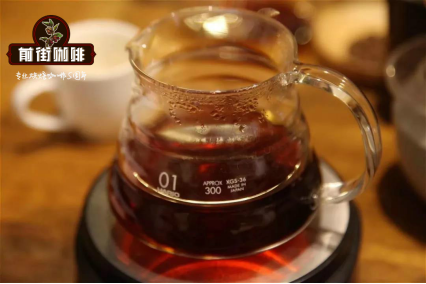
After extraction, pour the coffee from the dripper directly into the pre-warmed cup. You can observe the color and flow rate of the coffee to judge whether the extraction is even. If the coffee color is uneven or the flow rate is too fast or too slow, you may need to adjust the grind size or pouring technique for the next brew. Freshly brewed coffee has the liveliest flavor; it is recommended to taste it as soon as possible to enjoy its bright acidity, rich layers, and mellow finish.
Mastering hand-grind coffee is all about practice and observation. Each time you brew, record the coffee bean type, grind size, water temperature, coffee-to-water ratio, and brewing time, and find the parameter combination that best suits your taste through subtle adjustments. Remember, there is no absolutely correct brewing method, only the flavor that best suits your personal preference. Enjoy the process of making coffee by hand and explore the unique flavor world brought by different beans.


