Peru Coffee Regions: Processing, Flavor and Pour-Over Guide
Introduction: As the world's fifth-largest exporter of arabica coffee, Peru's highland regions produce coffee known for its soft acidity and nutty notes. This article takes an in-depth look at the core growing zones of Peru's central highlands, explains how washed and natural processing affect flavor, describes the characteristics of varieties such as Typica, and offers professional roasting advice and pour-over parameters to help you grasp this low-key but high-quality coffee origin with precision.
On the coffee map of South America, Peru may not be as loud as its neighbor Colombia, but it is a genuine heavyweight in arabica bean exports. This country, which stretches across the western slopes of the Andes, consistently ranks as the world's fifth-largest exporter of arabica coffee, with its specialty beans mainly shipped to the US and German markets.
Peru's golden growing region is concentrated in the central highlands on the eastern side of the Andes, where elevations generally range from 1,200 to 1,800 meters. The unique climate, with day-night temperature swings of more than 10°C, creates ideal conditions for coffee cherries to accumulate sugars slowly. After the rainy season from March to September each year, local farmers insist on fully manual harvesting of ripe cherries to ensure every coffee cherry reaches optimal ripeness, and post-harvest processing is usually completed right on the farm.
In terms of processing, Peruvian coffee farms generally use two classic methods: washed processing highlights bright citrus notes and a clean mouthfeel, requiring the parchment beans to be fermented in running clean water for 18-36 hours to remove the mucilage, then dried until the moisture content reaches 11%; natural processing gives a richer caramel sweetness and vinous aroma, requiring fresh cherries to be sun-dried continuously for 15-20 days on concrete patios or African raised beds, with turning 3-4 times a day to prevent mold.
In terms of variety composition, Peruvian plantations are dominated by the disease-resistant Typica (over 40%), an ancient variety originating from Yemen that shows clear citric acidity and a black tea finish; Bourbon accounts for about 25%, bringing a rounder mouthfeel and caramel sweetness; Caturra (15%) enhances floral and fruity notes; and the recently introduced Pache and Catimor (20% combined) have increased overall yield and resistance to leaf rust.
In terms of flavor characteristics, Peruvian coffee generally has a 'three-stage' flavor profile: it opens with soft malic or peach acidity, mid-palate reveals a balanced sweetness of roasted almonds and caramel, and the finish often carries a faint cedar wood aroma. Professional roasters recommend medium-dark roasting (Agtron #55-#65), which preserves the bright acidity while developing rich nutty and chocolate layers.
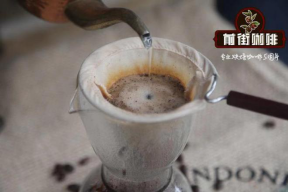
For home brewing, a V60 dripper with a 1:15 coffee-to-water ratio is recommended, with a grind size equivalent to fine granulated sugar (70% passing a Chinese standard No. 20 sieve) and water temperature controlled at 90-92°C. When pouring, use a center pour plus spiral circling technique: pour the first stage of 30% of the total water for a 30-second bloom, then add the remaining water in two stages up to the target volume, keeping total extraction time around 2 minutes 10 seconds to fully reveal the clean sweet acidity and nutty foundation of Peruvian coffee.
When buying, note that high-quality Peruvian green beans should show a blue-green luster, make a crisp sound when hand-shaken, and smell of fresh grass and light floral notes. If the bean surface looks oily or carries a fermented off-odor, it may indicate improper storage that has degraded quality.


