Nicaragua Coffee Regions: Maragogype Flavor and Brewing Tips
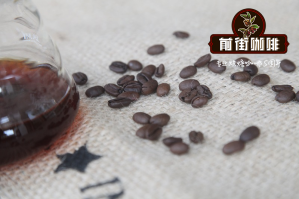
Introduction: As an important coffee-producing region in Central America, Nicaragua's Maragogype variety attracts attention for its distinctive flavor. This article takes an in-depth look at the geographical characteristics of Nicaragua's four core coffee regions, explains in detail the growing characteristics and processing methods of the Arabica-derived Maragogype variety, and provides professional flavor descriptions and pour-over parameter references to help coffee enthusiasts better understand and appreciate this distinctive bean variety.
Nicaragua is located in the center of Central America and has the largest land area in the region. Its coffee cultivation is mainly concentrated in the higher-altitude mountainous areas of the north-central part of the country. The country has four main coffee regions: the Segovia region, the Matagalpa/Jinotega region, the Boaco region, and the Pacific Coast region. Among them, the Matagalpa/Jinotega region, with its exceptional natural conditions, has become Nicaragua's most important coffee-growing area.
The special microclimate of this region—including suitable altitude, volcanic soil, and the temperature difference between day and night—provides an ideal environment for coffee tree growth. The main coffee varieties grown in Nicaragua include traditional Arabica and its derived varieties, such as Caturra, Bourbon, Pacamara, and the distinctive Maragogype. Most of these coffee beans are washed-processed, while some also use natural or semi-natural (honey) processing.
Nicaraguan coffee as a whole presents a deep and full-bodied base, with bright and refreshing acidity, often accompanied by noticeable caramel sweetness, achieving a good balance among the flavor elements. This balance makes Nicaraguan coffee popular both for drinking on its own and for use in blends.
Particularly noteworthy is Nicaragua's Maragogype variety. As a giant mutant of Arabica, Maragogype beans are noticeably larger than regular coffee beans, with bean length usually exceeding 20 mm and higher hardness, requiring more careful roasting control. This variety inherits the elegant base flavors of the Arabica family while developing a distinctive character of its own.
The flavor profile of Maragogype coffee is characterized by a balance between mild slight acidity and pronounced sweetness, along with a rich, multi-layered aroma. When natural processing is used, the variety's traits become even more prominent, often displaying bright citrus fruit sweetness while maintaining a full-bodied base.
For coffee enthusiasts, when trying Nicaraguan Maragogype, a medium roast is recommended to fully bring out its flavor complexity. Pour-over parameters for reference: medium-coarse grind (similar to fine sugar), water temperature controlled at 90–92°C, coffee-to-water ratio of 1:15 to 1:16, and staged extraction time controlled at around 2 minutes 30 seconds. This approach helps balance the large particle characteristics of Maragogype and avoids the bitterness caused by over-extraction.
It should be noted that because Maragogype beans are large, compatibility should be confirmed when using home coffee equipment. Some grinders may need their grind setting adjusted or a dedicated adapter used. In addition, the density of Maragogype differs from that of regular coffee beans, so a uniform and steady water flow should be maintained during pouring to ensure even extraction.
Overall, Nicaraguan coffee, especially its Maragogype variety, offers coffee enthusiasts a high-quality choice for exploring the terroir characteristics of Central American coffee. By understanding the microclimate differences and variety characteristics of different regions, one can more deeply appreciate the unique story behind each cup of coffee.


