Pour-Over Coffee Gear Guide: From Grinder to Thermometer
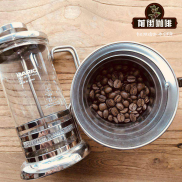
Introduction: The appeal of pour-over coffee lies in precise control and flavor expression, and a suitable set of equipment is the foundation. This article introduces the core tools of pour-over coffee in detail—the grinder, digital scale, Clever dripper, pour-over kettle and thermometer. It not only explains their functions and features but also offers practical buying advice and operating details to help beginners build a complete pour-over system, avoid common pitfalls, and improve extraction stability and coffee taste.
With coffee consumption becoming more widespread today, pour-over coffee is favored for its flexibility and layered flavors. To consistently present a coffee's regional characteristics and roasting style, several key tools must work together. From grinding to pouring, every step affects the final cup.
The grinder is the first step in the pour-over process, and its performance directly determines the uniformity and freshness of the coffee grounds. Prioritize burr grinders with conical or flat burrs; these designs produce a more consistent particle distribution through cutting, avoiding the heat and uneven grinding caused by the high-speed rotation of blade grinders. An adjustable grind setting is equally important: adjust flexibly according to the coffee's roast level (medium-fine for light roasts, slightly coarser for medium-dark roasts). A range of 18-22 steps (referencing standard conical burr markings) typically covers most pour-over scenarios.
The accuracy of a digital scale directly affects how faithfully a recipe can be reproduced. Choose a model with 0.1-gram precision that also supports a timer; it can accurately weigh coffee grounds (generally 15-20 grams per cup) and simultaneously monitor the water amount (common coffee-to-water ratios range from 1:15 to 1:18). Some high-end models also have a tare function, making it easy to record values precisely when adding a filter or pouring water.
The Clever dripper, as an immersion extraction tool, combines the simplicity of a French press with the controllability of pour-over. Before use, pre-wet the filter with a small amount of hot water (about 50 milliliters); this improves filtration efficiency and removes papery off-flavors. Pour the ground coffee (medium-coarse suggested, similar to the texture of granulated sugar) into the wetted filter, then add 90-95°C hot water (adjust according to the bean) until the cup is eight-tenths full. Stir evenly and let it sit for 90 seconds. Finally, place the Clever dripper on a server and let it drip naturally by gravity (usually completed within 30 seconds). This method effectively balances concentration and flavor layers.
The choice of pour-over kettle must balance controllability and water-flow stability. A gooseneck kettle (spout diameter about 3-5 millimeters) is better suited for precisely controlling where the water lands, while the long curved spout of an elephant-neck kettle makes circular pouring easy. As for material, stainless steel kettles retain heat well, while copper kettles help maintain water temperature but add weight. Beginners are advised to choose a model with a capacity of 500-800 milliliters and an adjustable spout angle, and to practice until they can form a steady "column of water," avoiding too thick a stream that causes uneven extraction.
The thermometer is a key tool for controlling extraction parameters. Pour-over water temperature typically falls between 88-96°C: light-roasted beans (such as Ethiopian natural) suit higher temperatures (92-96°C) to bring out floral and fruity acidity, while medium-dark roasts (such as Sumatra Mandheling) are better with slightly lower temperatures (88-92°C) to avoid over-extracting bitterness. When measuring, place the thermometer probe in the middle of the water stream and read once the value stabilizes. Avoid letting the thermometer touch the bottom of the kettle or the heating base directly, to prevent inaccurate readings.
By pairing these tools sensibly and mastering the basic parameters, even beginners can consistently recreate a café-level pour-over experience. Remember, tools are only tools; continuous practice of pouring technique and observing the expansion of the coffee bed are what truly unlock coffee's diverse flavor potential.


