Pour-Over Coffee Guide: Master These Variables to Improve Extraction
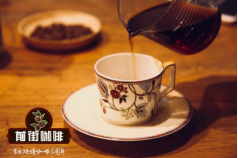
Introduction: Pour-over coffee looks simple, but it actually demands precision in grind size, water temperature, and pouring technique. This article explains the core factors that affect pour-over coffee quality, from basic equipment selection to scientific parameter control, helping you avoid common mistakes and extract layered, rich flavors with consistent technique.
Many coffee enthusiasts, when first trying pour-over, are often misled by its simple toolset—all you need is a dripper, a pouring kettle, and a grinder to get started. But it is precisely this seemingly casual brewing method that hides an extreme demand for detail. From the first grind onward, every step directly affects the flavor in the final cup.
Grind size is the primary factor determining extraction efficiency. Ideal pour-over coffee grounds should be uniform particles resembling fine granulated sugar. Powder that is too fine makes it difficult for water to pass through, which not only prolongs extraction time but also over-releases bitter compounds; conversely, particles that are too coarse let hot water pass through quickly, causing insufficient extraction of flavor compounds and producing a sharp acidity. It is recommended to adjust to a medium-fine setting according to your grinder's scale, and observe whether the ground layer is fluffy and free of clumps.
Water temperature control can be called the "thermometer art" of pour-over coffee. Medium-light roasted beans (such as Ethiopian Yirgacheffe) are suited to a high water temperature of 90±2°C, which effectively draws out floral and fruity acidity and sweetness; dark-roasted Mandheling or Brazilian beans need to be lowered to the 80-85°C range to avoid high temperatures intensifying charred flavors. In practice, you can use a thermometer to calibrate, or adjust by adding a small amount of cold water to the kettle; note that water temperature typically drops about 1-2°C per minute.
The pouring stage can be called the "dynamic balance act" of the pour-over process. A fine-spout pouring kettle is recommended, as its concentrated stream helps precisely control flow rate. The standard pouring duration should be controlled between 1 minute 30 seconds and 2 minutes, pouring slowly in a center-outward radial or spiral path, keeping the water surface slightly rotating but not overly agitated. A common beginner mistake is suddenly increasing the water flow to hit the coffee bed, which causes local over-extraction and under-extraction at the edges, forming an uneven flavor structure.
Professional baristas usually employ a "staged extraction" technique: first pour a small amount of hot water and bloom for 30 seconds (the water amount is about twice the weight of the coffee grounds) to awaken the coffee grounds and release carbon dioxide; then pour the remaining water in 2-3 stages, with 5-10 seconds between each to observe changes in flow rate. Throughout the process, keep the dripper's tilt angle stable to avoid the coffee bed collapsing and causing channeling.
After mastering these basic parameters, you can also explore personal preferences by fine-tuning variables: increasing grind size or water temperature enhances body, while lowering the parameters highlights fresh acidity. Remember that the charm of pour-over coffee lies in its repeatable experimentation—each adjustment is a new opportunity to understand the code of flavor.


