Yunnan Small-Bean Coffee Guide: Latte and Cappuccino Potential, Flavors and Regions
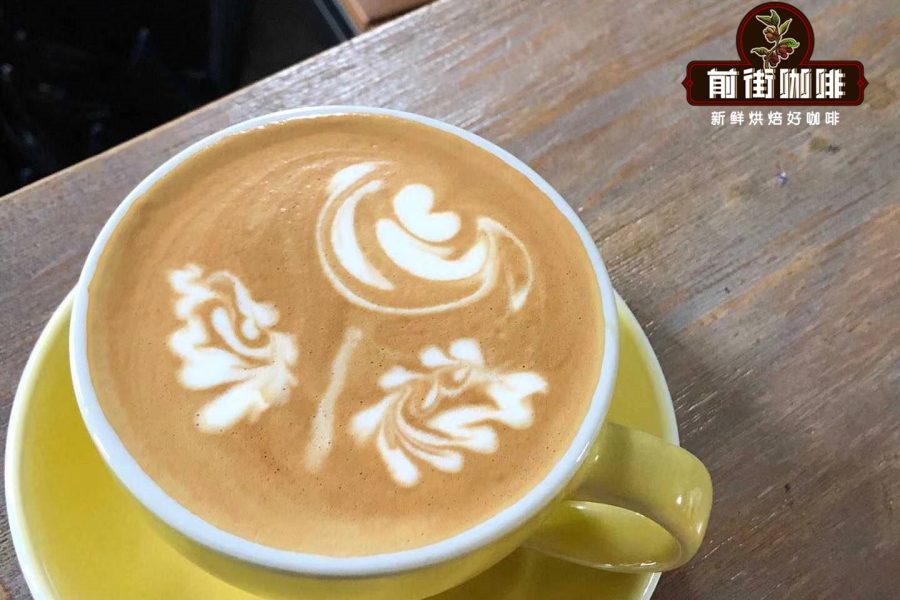
Introduction: As China's largest coffee-producing region, Yunnan has seen its small-bean coffee draw increasing attention in recent years. This article takes an in-depth look at the characteristics of Yunnan coffee, explores whether Yunnan small-bean coffee is suitable for classic coffee drinks such as lattes and cappuccinos, and details the terroir, mainstream varieties and processing methods of Yunnan's main coffee-producing regions, helping coffee lovers better understand and choose Yunnan coffee beans.
In recent years, with the rise of specialty coffee culture, Yunnan coffee has gradually entered the public eye. As China's largest coffee-growing base, Yunnan produces small-bean coffee with considerable potential thanks to its unique climate and geography. Many well-known coffee brands, such as Starbucks, have launched Yunnan reserve series for several consecutive years, with new releases coming out continuously since 2017, such as the latest Pu'er Baoshan Blend coffee beans and Qingkai Farm Reserve coffee beans, both produced in Yunnan. These moves have not only enhanced the international reputation of Yunnan coffee but also confirmed the reliability of its quality.
Take Starbucks' Fengwu Xiangyun series as an example; it has been around for ten years since its launch. Since first launching single-origin Yunnan coffee beans in 2017, Starbucks has continued to deepen its work in the Yunnan coffee market, fulfilling its promise to "bring Yunnan coffee to the world" through constant new releases. This is not only recognition of the quality of Yunnan coffee beans but also reflects the brand's important role in advancing the development of Yunnan's coffee industry.
The Qingkai Farm Reserve coffee beans come from Qingkai Farm in Pu'er, Yunnan, and use a dryer processing method, a technique that effectively addresses the overlap between the coffee harvest season and the rainy season, reduces the risk of mold, and ensures more stable quality for sun-dried coffee beans. Its flavor shows a smooth chocolate mouthfeel with herbal spice notes such as sage and thyme, rich and unique in layers.

Another bean worth noting is the Pu'er Baoshan Blend, Starbucks' first Yunnan reserve blend launched in the Chinese market. It is blended from coffee beans from Baoshan Zuoyuan Coffee and the Puer Menglian County Jinshan Coffee Cooperative, both washed. This bean uses Starbucks' "light elegant roast profile," applied for the first time in the Chinese domestic market, and is a light roast. Its flavor combines the spice of bell pepper with fruity sweet-and-sour notes, with a syrupy, full-bodied mouthfeel that lingers.

Yunnan is located in southwest China, with the Tropic of Cancer running through its south. The terrain is mostly mountainous plateau, with mid-altitude areas of 1,000–3,500 meters accounting for about ninety percent of the province's area. The region has a subtropical plateau monsoon climate, with large temperature differences between day and night and abundant rainfall, very suitable for growing high-quality coffee. Because of this, Yunnan has become China's main coffee-producing region, accounting for more than 98% of the country's coffee output and representing almost the entire Chinese coffee-growing industry.

Yunnan's coffee is mainly grown in the south and west, including Pu'er, Baoshan, Dehong and Lincang. Among them, the Baoshan region began growing coffee in the 1950s, with coffee seedlings first introduced from Southeast Asia by patriotic overseas Chinese. Today, the small-bean coffee produced in Lujiangba is renowned in international markets and well loved by customers in Europe, America and the Middle East, and was approved as a national geographical indication product in 2010. Baoshan coffee is known for being strong without being bitter and fragrant without being harsh, with a distinct regional character.

Dehong is known as "China's hometown of coffee," with most of its coffee grown above 1,000 meters in altitude, and some areas even above 1,600 meters. Organic fertilizers and organic pesticides are widely used locally, and the growing environment is green and healthy, making it one of the rare high-quality coffee regions in the world. Lincang, with its unique geographical and climatic advantages, has attracted many coffee companies to set up seedling bases and has gradually developed into an emerging coffee-growing region. Pu'er, a famous tea town, also has more than 150 years of coffee-growing history and has treated coffee as a key agricultural industry since the 1990s.

The history of coffee cultivation in Yunnan can be divided into four important stages. The earliest can be traced back to the 1880s, when, after the Sino-French War, Mengzi was opened as a trading port and foreign merchants entered one after another, opening the prelude to coffee trade between Yunnan and the outside world. In 1902, the French missionary Tian Dener introduced coffee from Vietnam to Zhukula Village in Binchuan County, Dali, and the descendants of those coffee trees are still preserved in the village today. In 1952, the Yunnan Academy of Agricultural Sciences distributed 80 kilograms of coffee seeds to farmers in Lujiangba, Baoshan, and guided large-scale planting, promoting the initial industrialization of Yunnan coffee. In 1988, Nestlé launched a coffee-growing project in Yunnan, further driving the modern development of the local coffee industry; to this day, international brands such as Nestlé and Starbucks have deep operations in Yunnan.

At present, the most widely planted coffee variety in Yunnan is Catimor, a hybrid of Arabica and Robusta with strong disease resistance and high yields. In addition, small amounts of Typica and Bourbon are still grown in Baoshan and other places. Typica is one of the oldest Arabica coffee varieties, with elegant flavor but weak disease resistance and low yields, suitable for small-scale growing that pursues high-quality flavor. Bourbon is a variant of Typica, with bright red fruit when ripe and a flavor with wine-like acidity and a sweet finish, but its yield is likewise not high.

Although Catimor's flavor is not as refined as some traditional varieties, it has strong resistance to leaf rust, is rich in oils, and inherits some of Typica's flavor characteristics, with high growing returns; it is currently the main variety planted in Yunnan coffee. It is worth mentioning that the internationally renowned Indonesian Golden Mandheling also selected the Catimor variety in its latest batch, showing that this variety's potential is being reassessed.

In terms of processing, Yunnan coffee mainly uses the washed method, which preserves the coffee beans' original flavor to the greatest extent, making the mouthfeel cleaner and brighter and reducing interference from off-flavors. The washed method removes the mucilage layer before fermenting and washing, which helps highlight the coffee's acidity and layers, and is very suitable for showing the regional character of Yunnan coffee.

Overall, Yunnan small-bean coffee is not only suitable for making classic black coffee but can also certainly be used in milk coffee drinks such as lattes and cappuccinos. With moderate acidity and a full-bodied mouthfeel, it shows rich layers when paired with milk, neither masked by the milk's sweetness nor failing to enhance the drink's overall flavor expression. Whether for home brewing or commercial use, Yunnan coffee beans offer high adaptability and cost-effectiveness.