Where does Americano come from, and does it have more caffeine than pour-over?
Introduction: Americano is a daily choice for many coffee lovers, but do you really understand its origins and composition? This article will take you through the history of Americano, analyze how its caffeine content differs from fresh-ground coffee (such as pour-over and French press), and use practical details to help you better understand this classic drink.
Regarding the origin of Americano, many accounts link it to the World War II period, but its name may have appeared earlier. As early as the late 1920s, the British writer Somerset Maugham mentioned in his work that someone drank ‘Americano,’ although he did not detail how it was made.
The most widely accepted account, however, still traces it to the U.S. military during World War II. At the time, coffee was an important military supply, and each soldier consumed more than 32 pounds of coffee per year on average. To meet the huge demand, the military roasted, ground, and shipped large quantities of coffee beans to the European battlefield, but supply was still often insufficient.
American soldiers stationed in Italy were not used to the locally popular espresso, finding it too strong and bitter. So they came up with a simple solution: diluting espresso with hot water to make its taste closer to the everyday coffee they were familiar with. Locals therefore jokingly called this drink “Americano.” Over time, the name and the way of drinking it gradually spread and became part of global coffee culture.
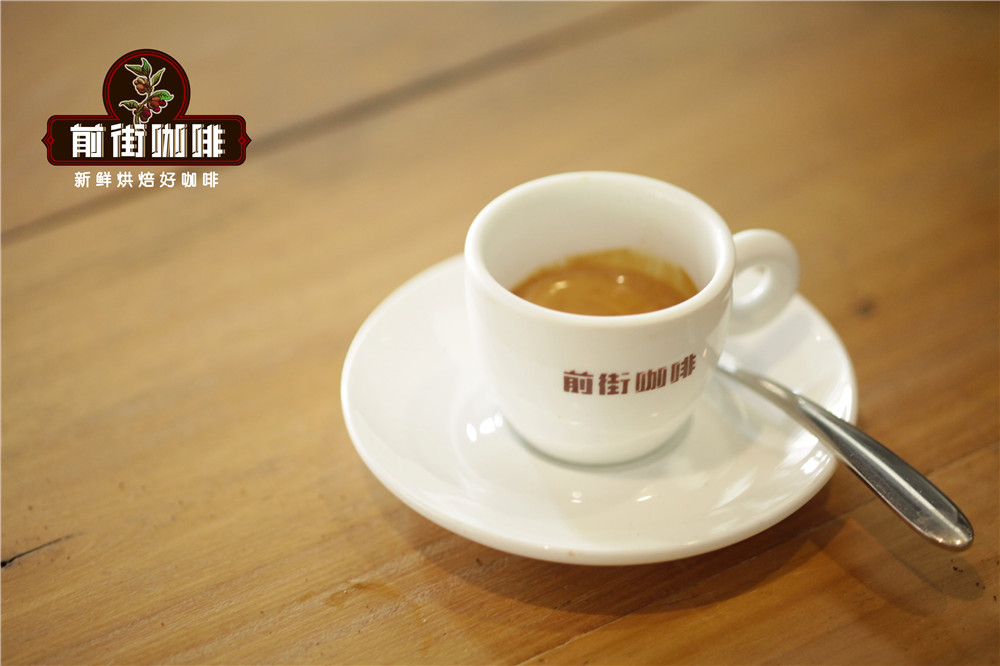
Strictly speaking, Americano is a coffee drink based on espresso. Its standard method is to mix one or two shots of freshly extracted espresso with an appropriate amount of hot water, ultimately making a drink close in volume to ordinary drip coffee. This method not only retains the core flavor of coffee but also reduces the overall concentration, better matching most people's taste preferences.
Many people often confuse “Americano” with “fresh-ground coffee,” but the two are clearly different. Fresh-ground coffee broadly refers to coffee made from freshly ground coffee powder through various brewing methods (such as pour-over, French press, siphon, cold brew, etc.). Its brewing process is usually gentler, takes relatively longer, and does not rely on high-pressure extraction.
So, compared with fresh-ground coffee (such as common pour-over coffee), which has a higher caffeine content? This question actually cannot be answered in general terms.
Generally speaking, espresso has a higher caffeine concentration per unit volume, meaning that each ounce (about 30 milliliters) of espresso contains more caffeine than the same volume of ordinary drip coffee. But Americano is usually made by diluting one or two shots of espresso with hot water, so the overall volume is larger. A standard cup of pour-over coffee usually contains 240–360 milliliters of liquid, uses generally 15–20 grams of coffee powder, and has an extraction time mostly of 2–4 minutes.
According to common data, a standard cup of Americano (about 360 milliliters, using one or two shots of espresso) has a caffeine content of roughly 150–225 milligrams; a cup of pour-over coffee of the same volume usually has a caffeine content in the range of 150–300 milligrams, with the specific value closely related to the coffee bean variety, grind size, coffee-to-water ratio, and extraction time.
In summary, although espresso has a higher caffeine concentration per unit, because the total volume of Americano is often not small, its total caffeine intake is usually comparable to that of the same volume of fresh-ground coffee, or even slightly lower or slightly higher, depending on the recipe and brewing method. So if you care about caffeine intake, you may want to pay attention to overall drinking volume and brewing parameters rather than simply comparing drink types.


